Cooking ahead
A pot that actually goes on the stove feeds a weekday better than a flawless menu left on paper. Repeating one plate in the spirit of MyPlate sits closer to the guidelines than a perfect day that was never cooked.

A repeat against an uncooked ideal
The guidelines describe a pattern of eating that can be built on an ordinary day, not a display of one successful Sunday. Half the plate is fruit and vegetables, half of the grains are whole, protein foods vary, and dairy is low-fat or fat-free, or it is fortified soy. If that pattern is cooked once and divided across several days, it exists. A perfect menu in a note does not feed anyone.
CDC ties a keepable pace to a lifestyle that continues: food, activity, sleep, and how a person handles stress. Cooking ahead is what makes the food repeatable when the evening is short. A fast slogan and an empty refrigerator leave that page, even if the day looked correct on paper.
What is worth putting in the box
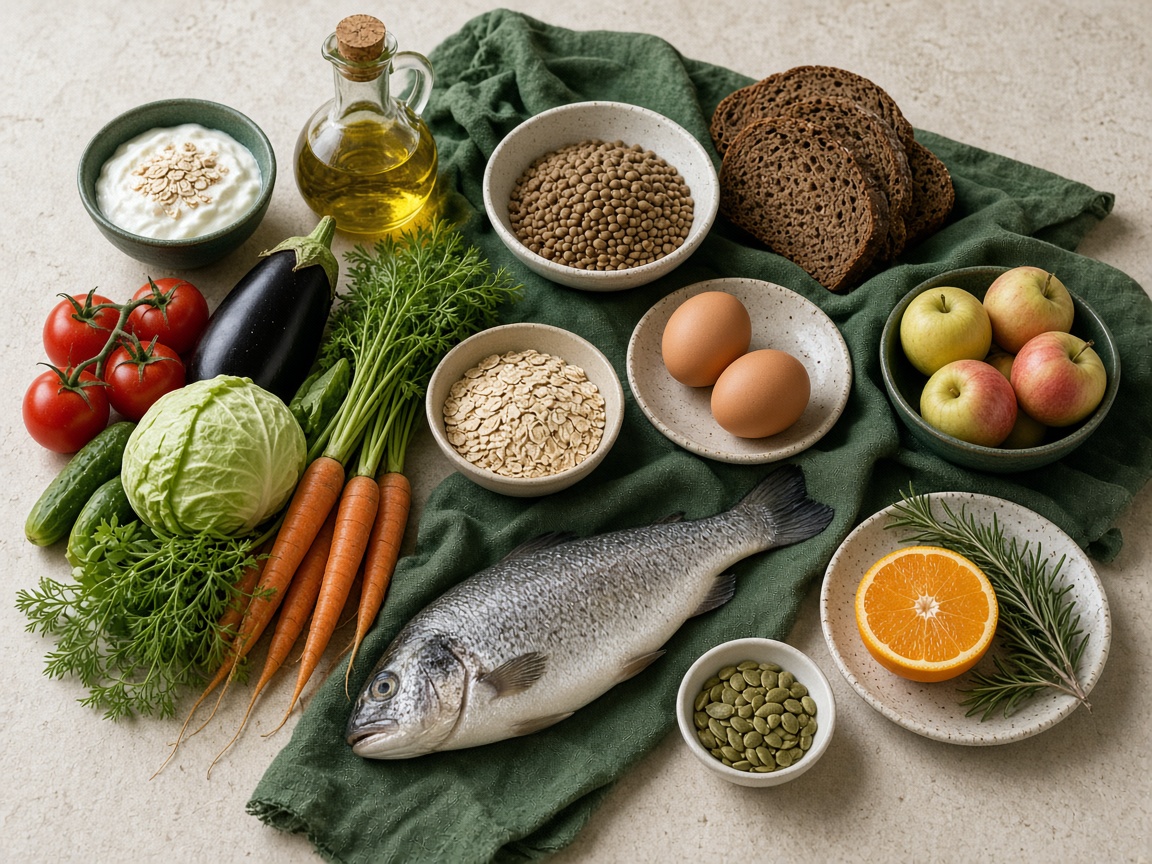
Nutrient-dense food in the United States guidelines is fitted to culture and budget, so the box can be a soup, grain with vegetables, or beans with fish, rather than one unfamiliar recipe. Fruit and vegetables in that set support the guide of at least 400 g a day. A whole grain and a varied protein do not wait for a separate “correct” day in order to appear.
Adult fiber is at least 25 g a day from food, and beans, grain, and vegetables cooked ahead belong to that food. This article does not promise that one box covers 25 g. It says food that has already been cooked sits closer to the guide than a day when there was no time to cook.
A large pot does not cancel salt and fat
Salt under 5 g a day and sodium under 2,300 mg a day are counted on what was eaten, not on the fact that the pot was “homemade.” If salt went in once for four portions, the day’s log gets a quarter of that salt, not zero. Fat stays under 30% of energy, saturated fat under 10%, industrial trans fat under 1%, and the oil used to dress a whole tray enters those shares.
Free sugars stay under 10% of energy, and the fact sheet links a further benefit with a share below 5%. A sweet sauce used to “improve” a whole week of food spends that share every day, not once on a holiday. Unsaturated fats are preferred — fish, avocado, nuts, vegetable oils — and that preference does not vanish because the food was packed into boxes.
Two or three goals, not a perfect week
Goals on the CDC page are specific, and the focus is two or three at a time. The page’s own examples are water instead of a sugary drink, a 15-minute walk, and a vegetable with supper. A box that already holds a vegetable makes the third example easier. It does not oblige anyone to rewrite sleep, work, and the whole house in the same week.
The page treats setbacks as expected, and the reward in its text is not food. If one evening the box stayed in the refrigerator, the next day returns to the same plate pattern, rather than to a punishment of an empty plate. A gradual pace of about 1 to 2 pounds a week is discussed across a run of weeks, not from one perfectly packed Monday.
What this text draws on
- Dietary Guidelines for Americans, 2020–2025, and USDA MyPlate: a nutrient-dense pattern shaped by culture and budget; added sugars <10% of calories from age 2; saturated fat <10%; sodium <2,300 mg/day; half the plate fruits and vegetables; half of grains whole; varied protein foods; low-fat or fat-free dairy or fortified soy. Drinking less is better than drinking more; not drinking is an option.
- CDC, Steps for Losing Weight (January 17, 2025): a gradual pace of about 1 to 2 pounds a week is more likely to be kept than quicker loss; losing 20 pounds in 2 weeks is the example of an unrealistic goal. Modest loss, CDC’s example: 5% of 200 pounds is 10 pounds, can improve blood pressure, cholesterol, and blood sugar and could lower risk of heart disease, prediabetes, and type 2 diabetes — not a personal guarantee. Log food and drinks, activity, sleep, and stress. Goals are specific, two or three at a time; examples include water instead of a sugary drink, a 15-minute walk, a vegetable with supper. Setbacks are expected. Rewards are not food. Medicines, illness, stress, genes, hormones, environment, and age affect weight. Weight and medicine questions go to a clinician. Medicines and bariatric surgery are clinical options, not DIY.
- WHO Healthy diet fact sheet: energy intake in balance with expenditure; fruit and vegetables ≥400 g/day; free sugars <10% of energy (below 5% for further benefit); fat <30%; saturated fat <10%; trans fat <1%; salt <5 g/day; unsaturated fats (fish, avocado, nuts, vegetable oils) preferred to saturated and industrial trans fats.
A short paraphrase of open guides and reviews (WHO, national recommendations, peer‑reviewed summaries). Not a quotation and not a treatment protocol.
Short answers
Does MyPlate require a new menu every day?
No. The guidelines describe a plate pattern, not a duty of novelty. A repeated nutrient-dense meal that you actually cook sits closer to the text than a perfect day with no cooking.
Does a homemade pot automatically fit the salt limit?
No. Salt under 5 g a day and sodium under 2,300 mg are counted on the share that was eaten. Salt put into the whole batch does not become zero because the food was homemade.