
Travel does not cancel the limits
The limits on sugar, salt, and fat travel with the person and do not stay in the refrigerator at home. On the road, what can be seen is what gets logged, and the week of balance includes the travel days along with the days at home.
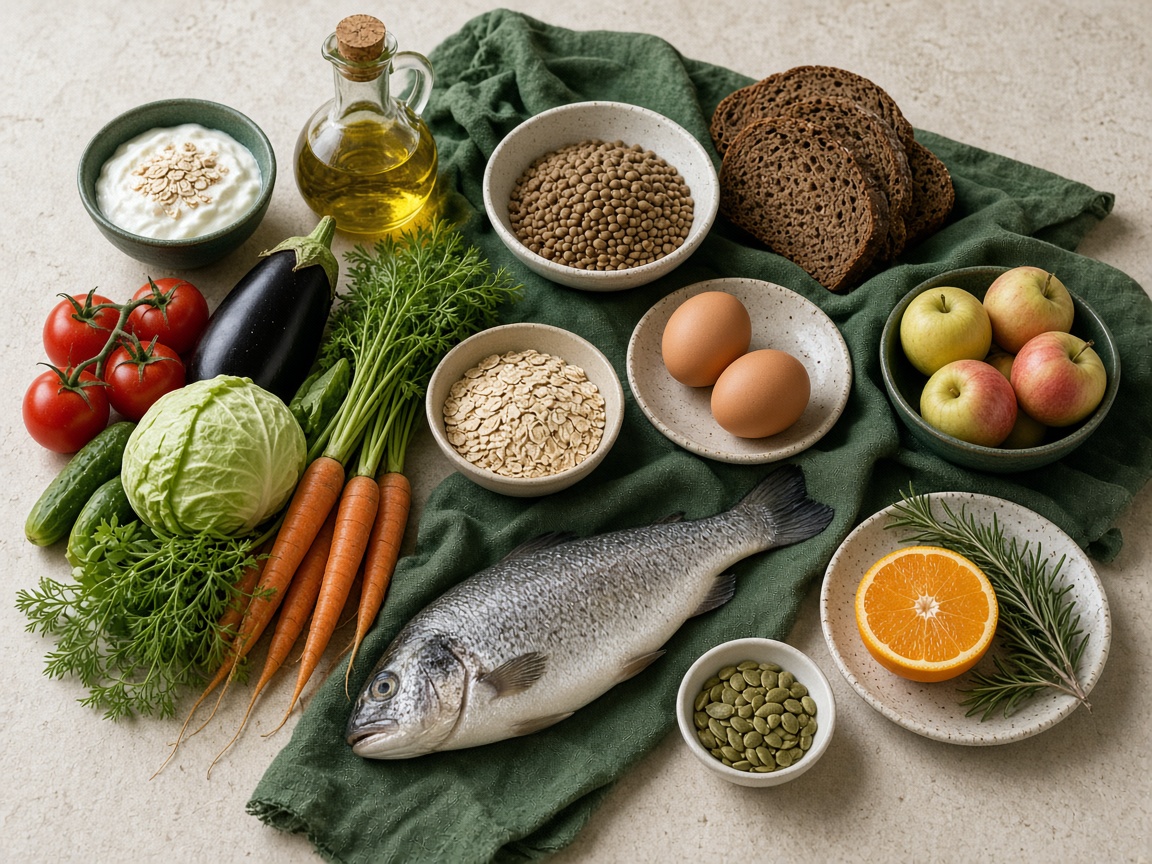
The same shares, a different counter
Free sugars under 10% of energy, fat under 30%, saturated fat under 10%, trans fat under 1%, and salt under 5 g a day have no clause that says “except airports and hotels.” Added sugars under 10% of calories and sodium under 2,300 mg a day from the Dietary Guidelines are not paused by a ticket either. Food on the road enters the same shares as food from an ordinary kitchen.
Fruit and vegetables of at least 400 g a day remain a line on a trip, if a vegetable can be found at all. Half the plate as fruits and vegetables in MyPlate describes the day, not only lunch at home. If the counter is poor, what was there gets logged, and the figure is not declared cancelled for the length of the journey.
Log what can be seen
CDC asks for a log of food and drinks, activity, sleep, and stress, and travel does not release a person from that list. A short note — station, sandwich, sugary drink, almost no walking — is more honest than an empty day that later looks light. The stress of the move also belongs in what gets logged, because stress is among the factors in weight.
A drink on the road is often the main sugar of the day. Water instead of a sugary drink is a ready example of a specific goal, and it does not need a kitchen. If a package has a label, energy is stated per labeled serving, and a bottle can contain several servings. A labeled serving is not always 100 g.
A trip inside the week
Energy balance compares intake and expenditure over the days that were lived, and days in transit are among them. Five days at home plus an invisible journey do not equal a week. A gradual pace of about 1 to 2 pounds a week is read across all seven days, not only on the evenings when the person is back at their own stove.
A setback on the road is expected: the schedule, someone else’s food, and fatigue are the environment CDC has already named. The reward is not food, and the text does not teach anyone to “make up” for a hotel supper with punitive hunger. Two or three goals for the next ordinary days are enough, without a plan to catch an unrealistic 20 pounds in 2 weeks.
A walk that fits a connection
Some activity is better than none, and sedentary time in a seat is worth limiting as far as the journey allows. Fifteen minutes of walking through a station or around the block by a hotel enter the weekly sum of moderate minutes. The 150 minutes do not have to be collected at home.
Two strength days are not always possible in a room, and this article does not demand a workout on an airport carpet. A missed strength day is returned to an ordinary week, not replaced with harsher food. A question about moving while treatment is already underway belongs with a clinician, not with a heroic loop with a suitcase.
What this text draws on
- WHO Healthy diet fact sheet: energy intake in balance with expenditure; fruit and vegetables ≥400 g/day; free sugars <10% of energy (below 5% for further benefit); fat <30%; saturated fat <10%; trans fat <1%; salt <5 g/day; unsaturated fats (fish, avocado, nuts, vegetable oils) preferred to saturated and industrial trans fats.
- Dietary Guidelines for Americans, 2020–2025, and USDA MyPlate: a nutrient-dense pattern shaped by culture and budget; added sugars <10% of calories from age 2; saturated fat <10%; sodium <2,300 mg/day; half the plate fruits and vegetables; half of grains whole; varied protein foods; low-fat or fat-free dairy or fortified soy. Drinking less is better than drinking more; not drinking is an option.
- CDC, Steps for Losing Weight (January 17, 2025): a gradual pace of about 1 to 2 pounds a week is more likely to be kept than quicker loss; losing 20 pounds in 2 weeks is the example of an unrealistic goal. Modest loss, CDC’s example: 5% of 200 pounds is 10 pounds, can improve blood pressure, cholesterol, and blood sugar and could lower risk of heart disease, prediabetes, and type 2 diabetes — not a personal guarantee. Log food and drinks, activity, sleep, and stress. Goals are specific, two or three at a time; examples include water instead of a sugary drink, a 15-minute walk, a vegetable with supper. Setbacks are expected. Rewards are not food. Medicines, illness, stress, genes, hormones, environment, and age affect weight. Weight and medicine questions go to a clinician. Medicines and bariatric surgery are clinical options, not DIY.
- FDA Nutrition Facts: energy is stated per labeled serving; a package can contain several servings. A labeled serving is not always 100 g.
- WHO Physical activity fact sheet: adults 18–64 at least 150–300 minutes of moderate aerobic activity a week, or 75–150 minutes vigorous, plus muscle-strengthening on 2 or more days; some activity is better than none; sedentary time should be limited. From age 65, the same plus balance and coordination on 3 or more days.
A short paraphrase of open guides and reviews (WHO, national recommendations, peer‑reviewed summaries). Not a quotation and not a treatment protocol.
Short answers
Can sugar and salt be left uncounted for a trip?
No. Free sugars under 10% of energy, salt under 5 g, and sodium under 2,300 mg have no travel pause. Log what you can, and return to two or three goals, without a punishment day.
Are unload days required after a trip?
No. CDC expects setbacks and links a keepable course with a pace of about 1 to 2 pounds a week. Losing 20 pounds in 2 weeks remains the example of an unrealistic goal, not a way to “close” a trip.