Who can help
CDC’s steps for losing weight do not leave the work to willpower alone. Beside the food log, the page counts on support: family, a program, a dietitian, or a clinician, and a question about weight or medicines goes to a clinician in any case.

Willpower is not named as the method
The page describes specific actions: log food and drinks, activity, sleep, and stress, and keep two or three clear goals. That list has no line that says “cope by character.” If a day rests only on the effort not to slip, that is not yet the plan the page treats as more likely to be kept.
Setbacks are expected, and after them you return to the same goals, not to shame. Rewards are not food. A person nearby who knows those two or three goals is more useful than an inner speech about weakness, because the environment itself is named among the factors that affect weight.
Family and a program are support, not a verdict
Family can help with shared food, with a walk, and with keeping a setback from becoming a public score. That is the support the page’s step talks about, not a duty for the household to watch and punish. A program, if a person has chosen one, repeats the same steps: a log, specific goals, a return after a setback.
An example goal — water instead of a sugary drink, a 15-minute walk, a vegetable with supper — is easy to say aloud to another person. The goal then stays specific, rather than turning into the slogan “be stronger.” Two or three such sentences are the size of help the page suggests keeping in focus.
A dietitian and a clinician occupy different places
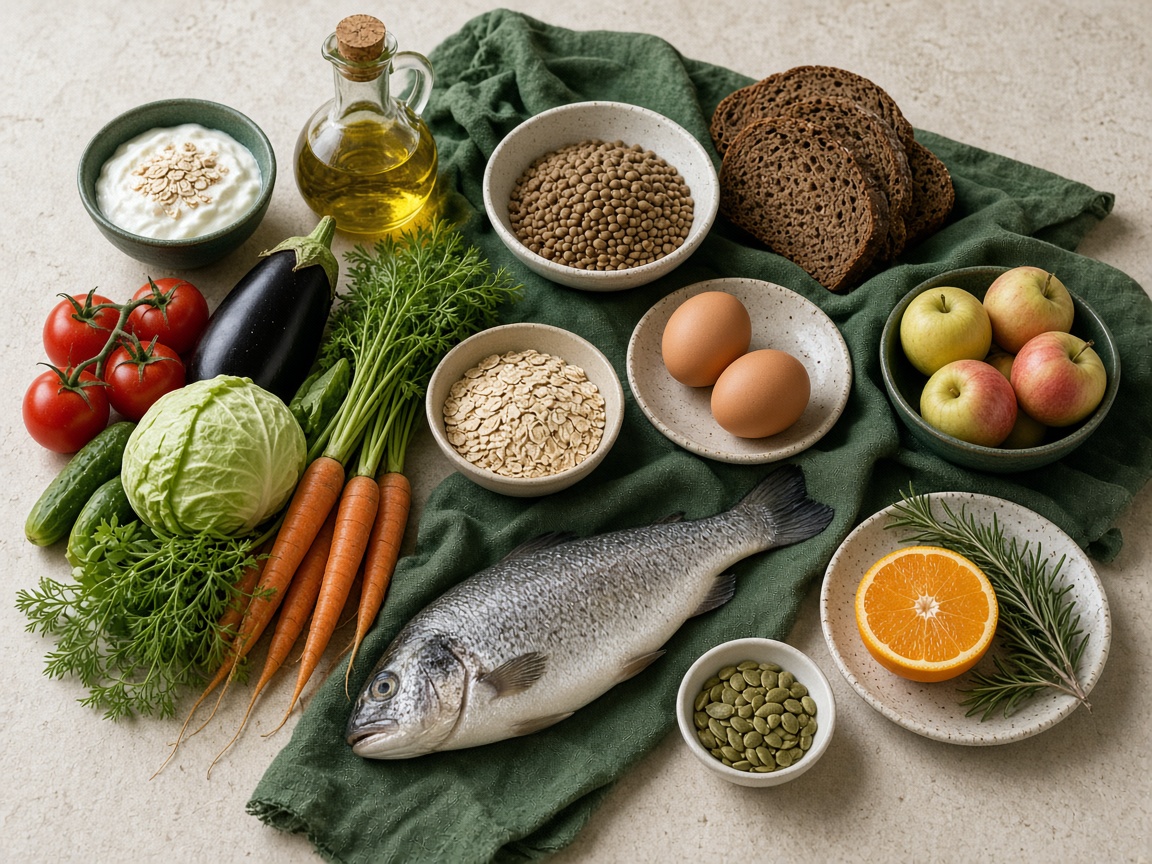
A dietitian can look at food that has already been logged and help build a plate pattern: fruit and vegetables, whole grains, varied protein, low-fat or fat-free dairy or fortified soy. That is practical support for the pattern of eating. It does not replace a clinician where the question is weight as a medical question or medicines already prescribed.
Medicines and bariatric surgery on the page are clinical options, not do-it-yourself and not a service a program offers “on request.” Illness, hormones, genes, and age affect weight along with stress and environment. Those lines explain why one conversation in the kitchen is sometimes not enough, and why this article does not prescribe treatment.
Support does not cancel the limits or the pace
A person nearby does not cancel free sugars under 10% of energy, fat under 30%, and salt under 5 g. They help those shares stay visible in ordinary food. The guide of at least 400 g of fruit and vegetables and fiber of at least 25 g from food do not become a personal norm because of support either: they stay the public background of the conversation.
A gradual pace of about 1 to 2 pounds a week is not sped up by a group promise. The example of an unrealistic goal, 20 pounds in 2 weeks, does not become more realistic if several people repeat it. A modest shift, 5% of 200 pounds as 10 pounds, is still described with the word “can” and is not a program’s guarantee.
What this text draws on
- CDC, Steps for Losing Weight (January 17, 2025): a gradual pace of about 1 to 2 pounds a week is more likely to be kept than quicker loss; losing 20 pounds in 2 weeks is the example of an unrealistic goal. Modest loss, CDC’s example: 5% of 200 pounds is 10 pounds, can improve blood pressure, cholesterol, and blood sugar and could lower risk of heart disease, prediabetes, and type 2 diabetes — not a personal guarantee. Log food and drinks, activity, sleep, and stress. Goals are specific, two or three at a time; examples include water instead of a sugary drink, a 15-minute walk, a vegetable with supper. Setbacks are expected. Rewards are not food. Medicines, illness, stress, genes, hormones, environment, and age affect weight. Weight and medicine questions go to a clinician. Medicines and bariatric surgery are clinical options, not DIY.
- Dietary Guidelines for Americans, 2020–2025, and USDA MyPlate: a nutrient-dense pattern shaped by culture and budget; added sugars <10% of calories from age 2; saturated fat <10%; sodium <2,300 mg/day; half the plate fruits and vegetables; half of grains whole; varied protein foods; low-fat or fat-free dairy or fortified soy. Drinking less is better than drinking more; not drinking is an option.
- WHO Healthy diet fact sheet: energy intake in balance with expenditure; fruit and vegetables ≥400 g/day; free sugars <10% of energy (below 5% for further benefit); fat <30%; saturated fat <10%; trans fat <1%; salt <5 g/day; unsaturated fats (fish, avocado, nuts, vegetable oils) preferred to saturated and industrial trans fats.
A short paraphrase of open guides and reviews (WHO, national recommendations, peer‑reviewed summaries). Not a quotation and not a treatment protocol.
Short answers
Is willpower enough if the goals are already written down?
The page describes actions and support, not character as the method. Family, a program, a dietitian, or a clinician belong in the steps, and setbacks are expected without “weak will.”
Can a program replace a clinician if medicines are involved?
No. CDC sends a question about weight and medicines to a clinician. Medicines and bariatric surgery are clinical options, and a program and a family do not prescribe them.