Drinking less is better than drinking more
The Dietary Guidelines say drinking less is better than drinking more, and not drinking is an option. That is not a quota of glasses and not an exchange of alcohol for minutes of walking.
What is not in the sentence
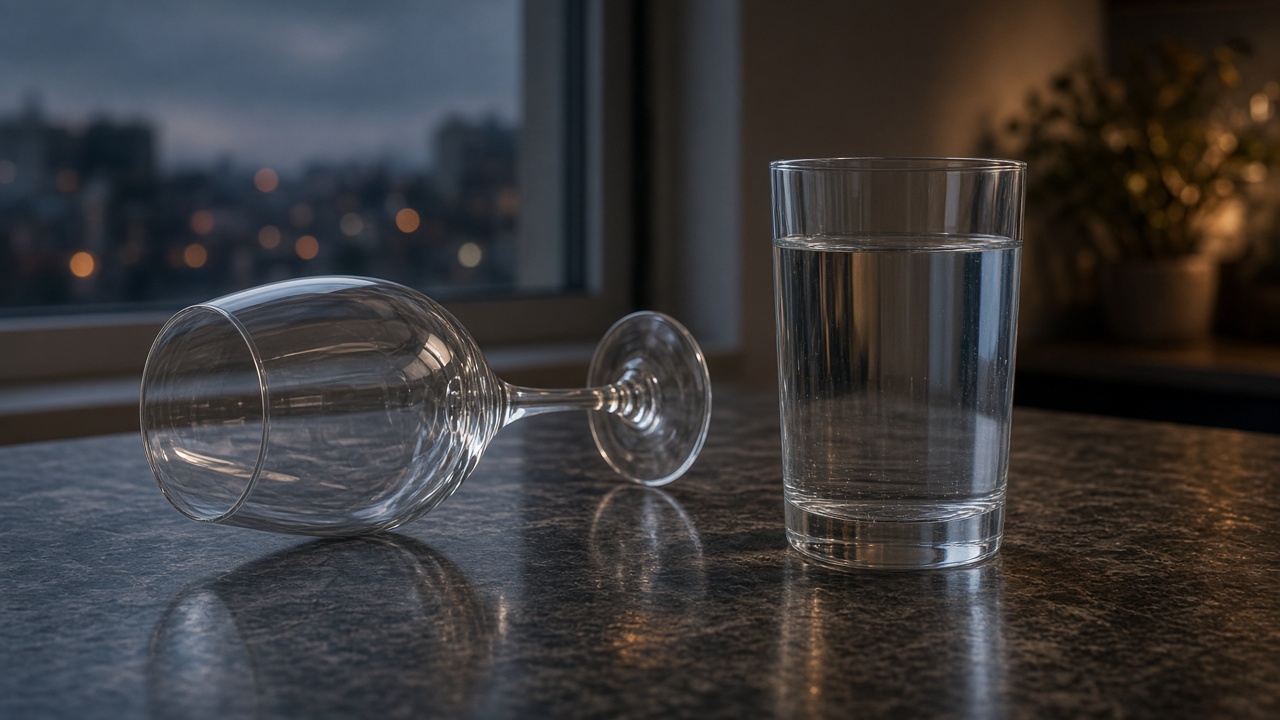
There is no number of glasses this page would have a right to assign. There is no “healthy dose for the heart.” There is no permission to drink because half the plate was vegetables. The sentence compares less and more and leaves zero as an available choice.
Alcohol does not become water. The CDC goal example is water instead of a sugary drink, not “wine instead of water.” A sugary drink and alcohol are not glued into one line in the sources, and the paraphrase does not glue them.
The calories of a glass are not subtracted by a walk
150–300 moderate minutes do not pay for a drink. The CDC reward is not food and, still less, not alcohol: the reward is not food. A setback is expected, but a setback is not declared a reason to drink.
A photo of a drink in ScanDish, if the person photographs it as food, stays a draft until the meal and the day are confirmed. Juice, a sugary drink, and alcohol in the product’s logic are food, not the water counter. This article does not invent a calorie value for them.
Sugar and alcohol are different limits
Free sugars are limited to 10 percent of energy. That is not a rule about a glass. Added sugar from age two is also about sugar, not about alcohol. “Drink less” and “sugars under 10%” cannot be confused: both limits exist, and one does not fulfill the other.
WHO does not advise sweeteners for weight control. They are not named as a replacement for alcohol. The conditional recommendation about them is not about a glass.
For whom the sentence does not replace a clinician
Dependence, medicines, pregnancy, and liver disease are not settled by this sentence. For pregnancy WHO speaks of activity when there is no contraindication, not of a glass. This article does not permit alcohol in pregnancy and does not dose it.
The question “is it allowed for me” with a medicine goes to a clinician. The encyclopedia compares less and more. It does not hold a clinic.
What this text draws on
- Dietary Guidelines for Americans, 2020–2025, and USDA MyPlate: a nutrient-dense pattern shaped by culture and budget; added sugars <10% of calories from age 2; saturated fat <10%; sodium <2,300 mg/day; half the plate fruits and vegetables; half of grains whole; varied protein foods; low-fat or fat-free dairy or fortified soy. Drinking less is better than drinking more; not drinking is an option.
- CDC, Steps for Losing Weight (January 17, 2025): a gradual pace of about 1 to 2 pounds a week is more likely to be kept than quicker loss; losing 20 pounds in 2 weeks is the example of an unrealistic goal. Modest loss, CDC’s example: 5% of 200 pounds is 10 pounds, can improve blood pressure, cholesterol, and blood sugar and could lower risk of heart disease, prediabetes, and type 2 diabetes — not a personal guarantee. Log food and drinks, activity, sleep, and stress. Goals are specific, two or three at a time; examples include water instead of a sugary drink, a 15-minute walk, a vegetable with supper. Setbacks are expected. Rewards are not food. Medicines, illness, stress, genes, hormones, environment, and age affect weight. Weight and medicine questions go to a clinician. Medicines and bariatric surgery are clinical options, not DIY.
- WHO non-sugar sweeteners guideline, 15 May 2023: conditional recommendation not to use NSS to control weight or reduce NCD risk. The review found no long-term benefit for body fat in adults or children. Possible undesirable links with type 2 diabetes, cardiovascular disease, and mortality may be confounded. Does not apply to people with existing diabetes, to polyols, or to toothpaste, creams, and medicines. The list includes acesulfame K, aspartame, stevia, sucralose, and other NSS.
A short paraphrase of open guides and reviews (WHO, national recommendations, peer‑reviewed summaries). Not a quotation and not a treatment protocol.
Short answers
How many glasses are allowed?
There is no number of glasses in the paraphrase of this sentence. It says less is better than more, and not drinking is an option.
Does a workout compensate for alcohol?
No. Minutes of activity do not subtract a drink from the day. In the CDC texts the reward is not food.