A restaurant without a table
At a restaurant without a table, the log receives what can be said honestly: sauce, oil, the drink, and the size. The calorie count of a chain dish that is not on this fact sheet is not invented.

What is not on the table
Many dishes eaten out have neither your label nor a row that would match the recipe of that room. FoodData Central gives guides per 100 g for known foods, not a chain’s hidden menu, and brands differ. Inserting a “restaurant average” invents a source. An invented source is worse than an empty cell.
FDA describes energy per labeled serving, and a package can contain several servings. The plate in the dining room often has no such package, so there is nothing to divide. A restaurant day does not pretend to be a household label. It gets worse if it is filled with someone else’s confident total.
What can be said
The dish can be named in words, and the size noted as it was seen: an ordinary plate, a large one, half left over. Visible sauce, cheese, breading, oil on the surface, and bread at the edge can be named. The drink is named separately, because CDC puts drinks in the same log as food. Those words are observation, not a chemical analysis.
If part of the plate was left, that is what gets written: not all of it was eaten. Bread and oil before the main dish do not dissolve into the word “salad.” Size without contents is still not an energy figure. It only keeps a later line from pretending the portion was abstract.
Sauce, oil, and the drink
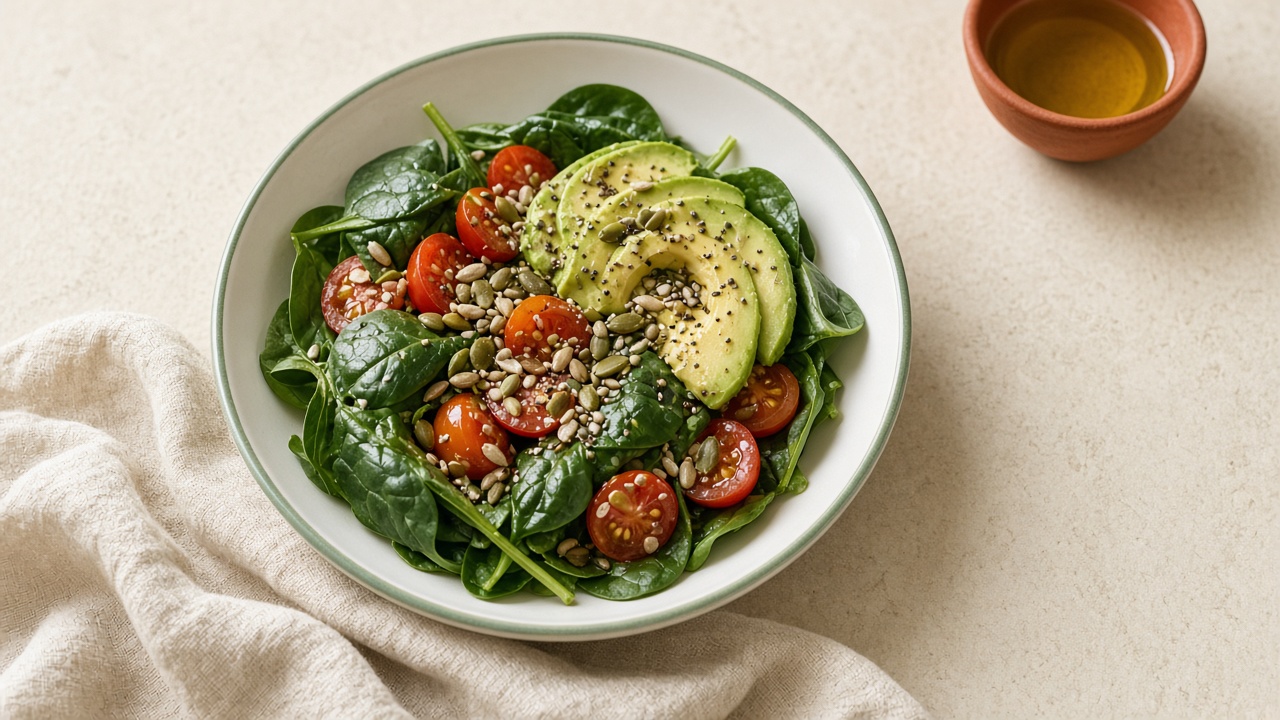
Sauce and oil eaten out can easily carry more than the leaves they sit on, and they are named separately even when there are no grams. The drink is named by what it was, and by volume as far as the volume is clear. A sugary drink belongs with WHO’s free-sugar topic not because a percent was calculated in the dining room, but because the drink was there at all. Water instead of that drink is exactly one of CDC’s examples of a specific goal.
The “usefulness of the vegetables” is not subtracted from uncounted sauce. Vegetables stay vegetables, and sauce stays sauce. DGA wants half the plate, in an ordinary pattern, to be vegetables and fruit, and that does not zero out the oil on a salad eaten away from home. The log keeps both parts. A handsome half does not erase the other.
A gap is more honest than an invention
A line can end in words and a note that energy is not being invented, because there is no source. That line is visibly incomplete. An incomplete line can be filled later if a real table for that kitchen appears, or if the dish is repeated at home and weighed. False precision does not get filled in: it already looks finished.
CDC suggests logging in order to see what happened, and treats setbacks as expected. An evening out can be an ordinary supper or a day that came out differently, but it does not become invisible. The reward for keeping the log is not food here either. The log is words about sauce, oil, the drink, and the size, plus a refusal of a figure taken from nowhere.
What this text draws on
- CDC, Steps for Losing Weight (January 17, 2025): a gradual pace of about 1 to 2 pounds a week is more likely to be kept than quicker loss; losing 20 pounds in 2 weeks is the example of an unrealistic goal. Modest loss, CDC’s example: 5% of 200 pounds is 10 pounds, can improve blood pressure, cholesterol, and blood sugar and could lower risk of heart disease, prediabetes, and type 2 diabetes — not a personal guarantee. Log food and drinks, activity, sleep, and stress. Goals are specific, two or three at a time; examples include water instead of a sugary drink, a 15-minute walk, a vegetable with supper. Setbacks are expected. Rewards are not food. Medicines, illness, stress, genes, hormones, environment, and age affect weight. Weight and medicine questions go to a clinician. Medicines and bariatric surgery are clinical options, not DIY.
- USDA FoodData Central: guides per 100 g; brands differ. A dry-food row is not a cooked portion, because water changes the weight. Do not use a “rice triples” factor.
- FDA Nutrition Facts: energy is stated per labeled serving; a package can contain several servings. A labeled serving is not always 100 g.
- WHO Healthy diet fact sheet: energy intake in balance with expenditure; fruit and vegetables ≥400 g/day; free sugars <10% of energy (below 5% for further benefit); fat <30%; saturated fat <10%; trans fat <1%; salt <5 g/day; unsaturated fats (fish, avocado, nuts, vegetable oils) preferred to saturated and industrial trans fats.
- Dietary Guidelines for Americans, 2020–2025, and USDA MyPlate: a nutrient-dense pattern shaped by culture and budget; added sugars <10% of calories from age 2; saturated fat <10%; sodium <2,300 mg/day; half the plate fruits and vegetables; half of grains whole; varied protein foods; low-fat or fat-free dairy or fortified soy. Drinking less is better than drinking more; not drinking is an option.
A short paraphrase of open guides and reviews (WHO, national recommendations, peer‑reviewed summaries). Not a quotation and not a treatment protocol.
Short answers
Can typical calories for a chain’s dish be written in?
Not if that table is not a source you actually have. The fact sheet contains no chain menus, and this article does not compose one.
What is written instead of a number?
Sauce, oil, the drink, and the size, as you saw them. An honest line in words is better than an invented total.