A canteen plate
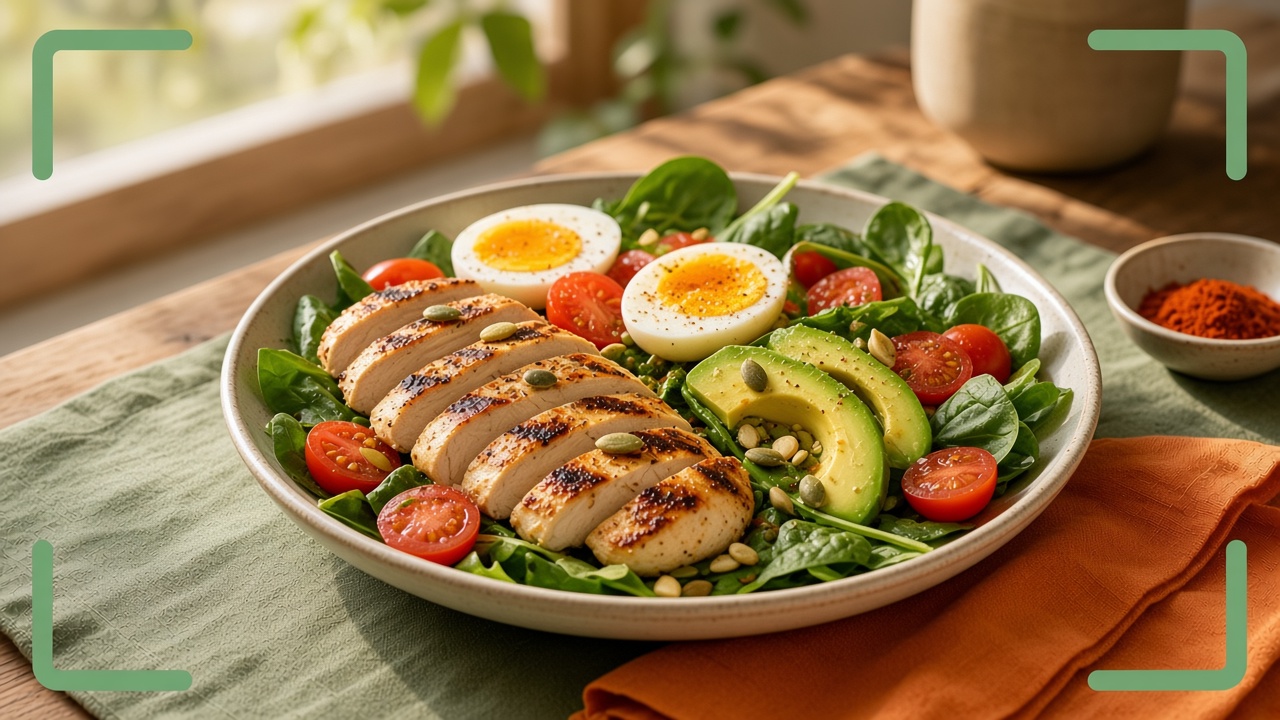
A canteen is not rebuilt to match a fact sheet, but the serving line usually already has a vegetable, a grain, and a protein food. The plate is built from those parts, and the sugary drink is left behind, because it builds none of the MyPlate shares.

Take what is already on the line
A person does not run the canteen kitchen and does not have to bring a perfect lunch from home for the day to have a shape. If a vegetable is on the line, it goes on the plate. If there is a grain or bread, that is the grain part, and a piece of fish, poultry, an egg, or beans names a protein food from the Dietary Guidelines list.
Half the plate as fruits and vegetables works here as a way of looking at the tray, not as a diagram the canteen is obliged to draw. A vegetable side beside a cutlet already shows the share, even when the vegetable is plain. An empty tray of one bun and a sauce does not contain that half.
The sugary drink stays on the line
A drink with sugar does not replace the vegetable, the grain, and the protein food. WHO keeps free sugars under 10% of energy and calls a share under 5% a further benefit. Added sugars in the Dietary Guidelines stay under 10% of calories from age two. A glass that is easy to take at the end of the line often spends that share before the meal has earned it.
Among concrete short goals, CDC names water instead of a sugary drink. That is exactly a canteen gesture: the drink can be left even when the food on the line is not ideal. Water does not build the plate, and it also does not spend the sugar line the fact sheet has already limited.
Sauce, fried food, and salt do not vanish
A cutlet and a gravy can carry a lot of saturated fat even when a vegetable sits beside them. WHO keeps total fat under 30% of energy and saturated fat under 10%, with a preference for unsaturated sources: fish, nuts, vegetable oils. If the line offers fish, beans, or poultry without the fatty cut, that is closer to this swap than a deep-fried crust.
Salt stays a daily limit: under 5 g at WHO and sodium under 2,300 mg in the Dietary Guidelines. A salty soup and a sauce can take a noticeable part of that limit in one lunch. The vegetable on the plate does not stop being a vegetable because of that, but the lunch note is more honest when it includes both the side and the gravy.
Lunch is one meal, not the whole pattern
The canteen covers one meal. Four hundred grams of fruit and vegetables, and at least 25 g of fiber for adults, are gathered across the day, not from one tray. If the line had almost no vegetable, a vegetable with supper is the short goal CDC names on its own.
CDC asks for a log of food and drinks. A canteen line is useful when it states what was taken, including the drink, not a verdict of ate fine. A photo draft does not become grams until the person confirms the meal and the day. The tray then stays a choice among what existed, not a failure against an ideal plate.
What this text draws on
- Dietary Guidelines for Americans, 2020–2025, and USDA MyPlate: a nutrient-dense pattern shaped by culture and budget; added sugars <10% of calories from age 2; saturated fat <10%; sodium <2,300 mg/day; half the plate fruits and vegetables; half of grains whole; varied protein foods; low-fat or fat-free dairy or fortified soy. Drinking less is better than drinking more; not drinking is an option.
- WHO Healthy diet fact sheet: energy intake in balance with expenditure; fruit and vegetables ≥400 g/day; free sugars <10% of energy (below 5% for further benefit); fat <30%; saturated fat <10%; trans fat <1%; salt <5 g/day; unsaturated fats (fish, avocado, nuts, vegetable oils) preferred to saturated and industrial trans fats.
- WHO carbohydrate guideline, 2023: at least 25 g of fiber a day for adults, from food.
- CDC, Steps for Losing Weight (January 17, 2025): a gradual pace of about 1 to 2 pounds a week is more likely to be kept than quicker loss; losing 20 pounds in 2 weeks is the example of an unrealistic goal. Modest loss, CDC’s example: 5% of 200 pounds is 10 pounds, can improve blood pressure, cholesterol, and blood sugar and could lower risk of heart disease, prediabetes, and type 2 diabetes — not a personal guarantee. Log food and drinks, activity, sleep, and stress. Goals are specific, two or three at a time; examples include water instead of a sugary drink, a 15-minute walk, a vegetable with supper. Setbacks are expected. Rewards are not food. Medicines, illness, stress, genes, hormones, environment, and age affect weight. Weight and medicine questions go to a clinician. Medicines and bariatric surgery are clinical options, not DIY.
A short paraphrase of open guides and reviews (WHO, national recommendations, peer‑reviewed summaries). Not a quotation and not a treatment protocol.
Short answers
What if the line has no vegetable?
Take the grain and the protein food that are there, and do not replace them with a sugary drink. The vegetable is then planned in another meal, for example with supper.
Can a sweet fruit drink count as the fruit?
No. A sugary drink belongs with free and added sugars, not with the half of the plate that is fruits and vegetables.