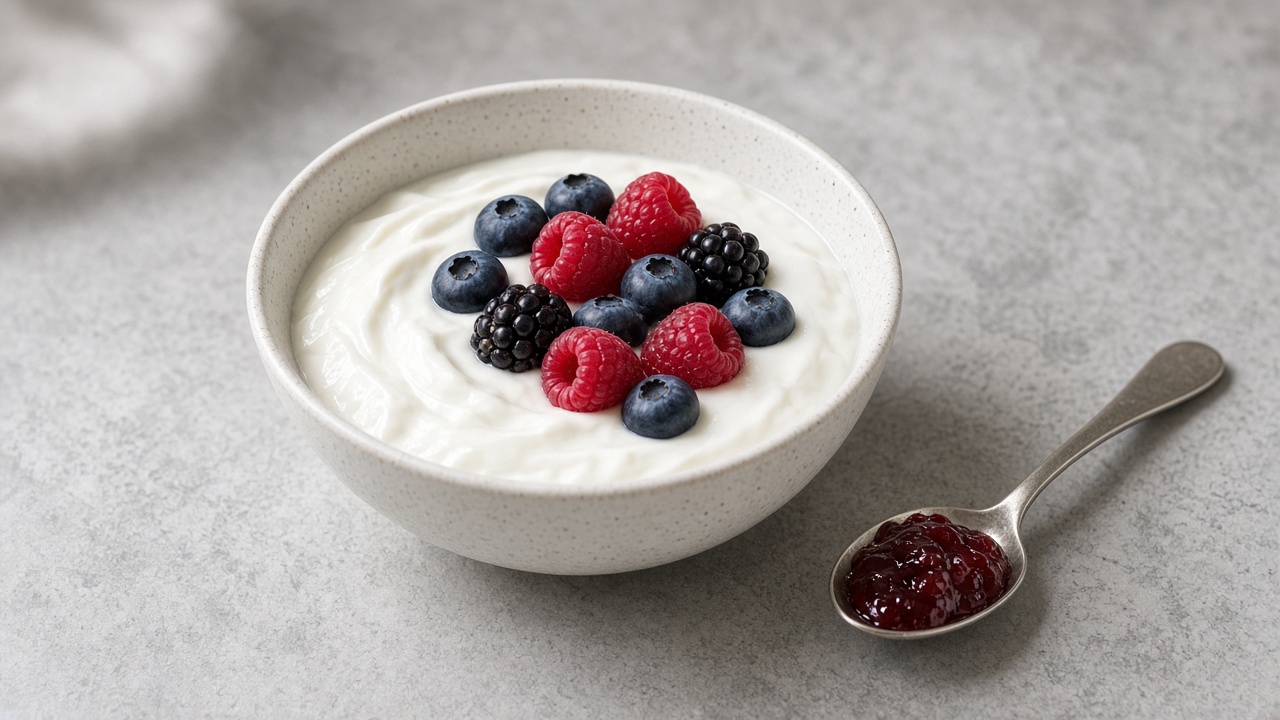
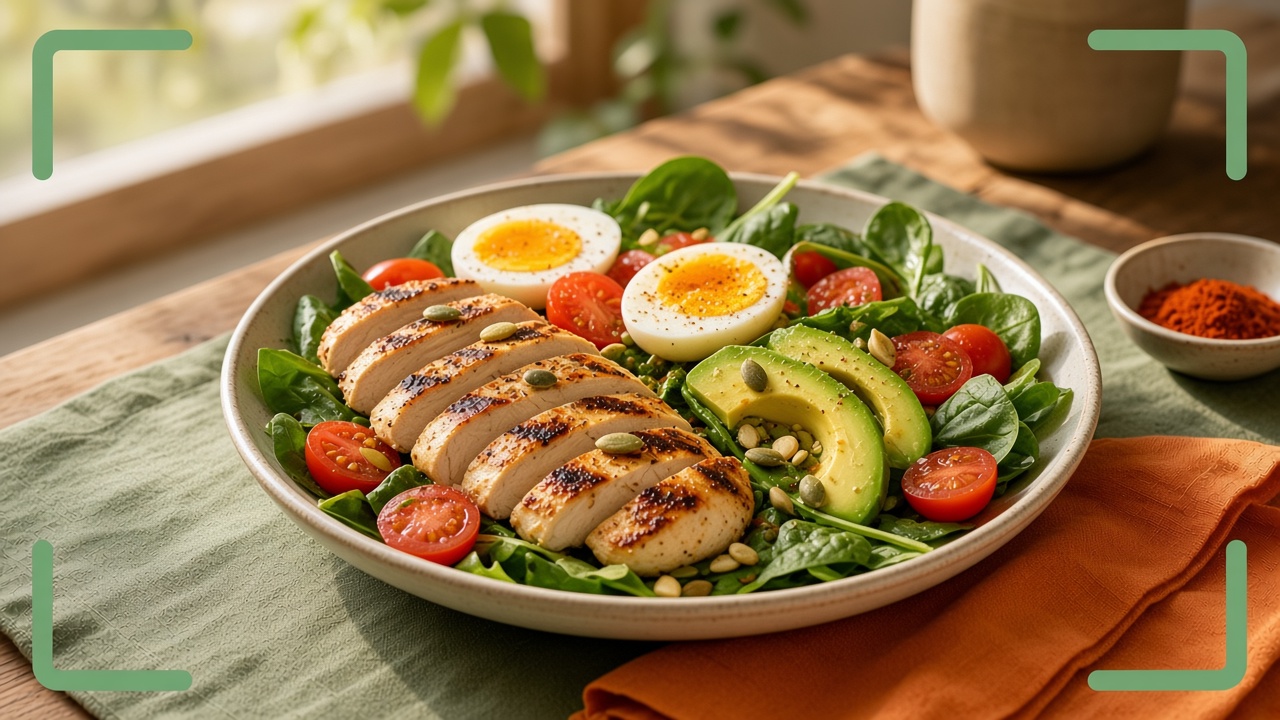
Free sugars: under 10% of energy, below 5% is further benefit
WHO limits free sugars to ten percent of energy and says separately that below five percent there is additional benefit. From age two, the Dietary Guidelines limit added sugars to ten percent of calories. These are neighboring wordings, not permission for sweets “in the rest of the plate.”
What 10% is not
Ten percent is the top of a share, not a target to approach as closely as possible. Below five percent WHO names additional benefit, in the same kind of language as activity above the main range: additional, not a new minimum. Sweets do not become a duty.
Added sugar in the American guidelines is, from age two, under 10 percent of calories. The children’s line is not turned here into a child’s calorie target and does not copy an adult plate. It speaks only about the share of added sugar.
A vegetable and fiber do not cancel sugar
400 g of vegetables and fruit and 25 g of fiber from food sit in other lines. A salad does not switch off a sugary drink. Half a MyPlate does not switch it off either. Water instead of a sugary drink is a separate CDC goal example, precisely because the drink is a goal of its own, not the tail of a vegetable.
In its 2023 guideline WHO does not advise non-sugar sweeteners for weight control or for reducing the risk of noncommunicable disease. Replacing a spoon of sugar with a packet is not declared as meeting the ten percent. The conditional recommendation does not apply to people with existing diabetes, to polyols, or to toothpaste, creams, and medicines.
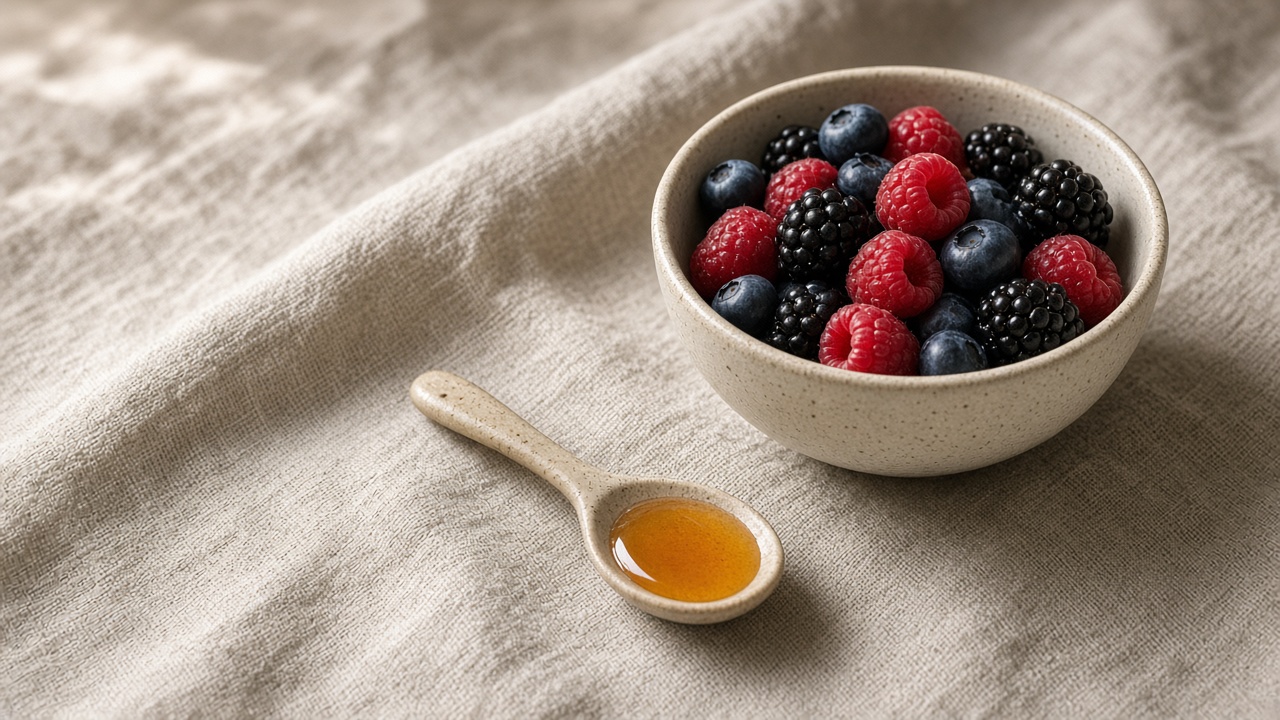
The share is not read from a photo of honey
A photo in ScanDish is a draft until the person confirms the meal and the day. A picture of a spoon of honey does not calculate the day’s percent of energy. A label counts its serving, and a package can contain several servings. A labeled serving is not always 100 g.
A percent of energy is about the day and the diet, not about one product that is “bad forever.” The source does not publish a list of forbidden desserts. It publishes a share.
Sweets do not pay for a walk
150 minutes of walking do not give a right to a sugar share above ten percent. The CDC reward is not food. A setback is expected, but a setback does not rewrite the share after the fact as “compensation.”
The question of sweets in diabetes belongs with a clinician. The sweetener recommendation explicitly sets people with existing diabetes outside its scope. This article does not prescribe them a scheme.
What this text draws on
- WHO Healthy diet fact sheet: energy intake in balance with expenditure; fruit and vegetables ≥400 g/day; free sugars <10% of energy (below 5% for further benefit); fat <30%; saturated fat <10%; trans fat <1%; salt <5 g/day; unsaturated fats (fish, avocado, nuts, vegetable oils) preferred to saturated and industrial trans fats.
- WHO non-sugar sweeteners guideline, 15 May 2023: conditional recommendation not to use NSS to control weight or reduce NCD risk. The review found no long-term benefit for body fat in adults or children. Possible undesirable links with type 2 diabetes, cardiovascular disease, and mortality may be confounded. Does not apply to people with existing diabetes, to polyols, or to toothpaste, creams, and medicines. The list includes acesulfame K, aspartame, stevia, sucralose, and other NSS.
- Dietary Guidelines for Americans, 2020–2025, and USDA MyPlate: a nutrient-dense pattern shaped by culture and budget; added sugars <10% of calories from age 2; saturated fat <10%; sodium <2,300 mg/day; half the plate fruits and vegetables; half of grains whole; varied protein foods; low-fat or fat-free dairy or fortified soy. Drinking less is better than drinking more; not drinking is an option.
A short paraphrase of open guides and reviews (WHO, national recommendations, peer‑reviewed summaries). Not a quotation and not a treatment protocol.
Short answers
Must sugar be made up to 10%?
No. 10% is the top of a limit. Below 5% WHO names additional benefit. It is not a quota that must be met with sweets.
Does a sweetener count as meeting the limit?
No. WHO does not advise non-sugar sweeteners for weight control. Replacing sugar with a packet is not named as closing the share.