
How the 400 g can add up
The WHO fact sheet keeps fruit and vegetables at least at 400 g a day, inside a diet whose energy intake stays in balance with expenditure. That sum is several vegetables and a fruit across different meals, not one pile saved for supper.
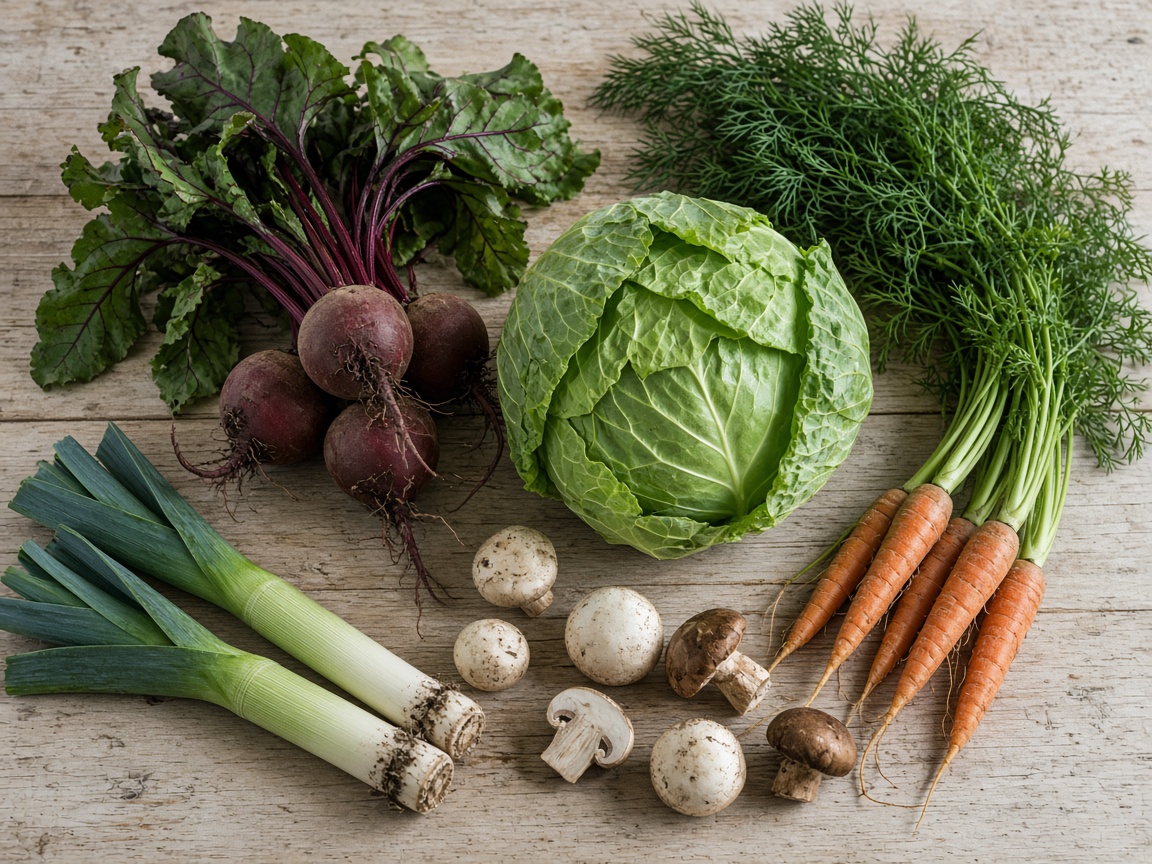
A day's sum, not one bowl
Four hundred grams on the fact sheet is the volume of fruit and vegetables across a whole day, not a bowl to finish in one sitting. Breakfast can carry a fruit, lunch a vegetable beside the grain and a protein food, supper another serving of vegetables, with room for one more small piece between meals. The guide is then made of ordinary food, when appetite does not have to be heroic.
One evening mountain of salad looks decisive and still leaves the day empty if the hours before it were only bread, cheese, and a sugary drink. A huge portion at night is also hard to finish, even when it covers the plate in a photo. Several smaller parts across the day sit closer both to how people eat and to the MyPlate picture, where half the plate is given to fruits and vegetables.
What those grams include
Vegetables and fruit as food of the day are what enter this line, not every plant food at once. Grain, bread, and beans do not fill it: grain has its own share on MyPlate, and half of grains there are whole. Protein foods, among them fish, poultry, eggs, beans, nuts, and soy, stand apart even when they themselves come from plants.
A sugary drink does not take the vegetable's place. WHO keeps free sugars under 10% of energy and calls a share under 5% a further benefit. A drink can spend that share and still fail to build the half of the plate that the Dietary Guidelines give to fruits and vegetables.
Fiber sits beside it and is counted apart
The 2023 WHO carbohydrate guideline asks adults for at least 25 g of fiber a day, and the source is food. Fruit and vegetables help a person approach it, but 400 g of produce is not itself 25 g of fiber: the texts give no such conversion. Whole grains and beans sit beside vegetables when a day is built toward the second line, not in place of it.
If the vegetable stays a garnish on the rim, the day usually misses both a real share of fiber and the 400 g. A note with a name and a rough amount shows whether the vegetable was food or only a word in the dish name. Among the short goals from CDC is a vegetable with supper: a step toward the sum, not the whole sum at once.
A market basket, not one perfect item
Several different vegetables and one fruit are easier than hunting a food that weighs exactly 400 g. What is in season, an ordinary apple, and vegetables already at home meet the same fact-sheet line. The Dietary Guidelines build a nutrient-dense pattern around culture and budget, without a required expensive set.
Oil, salt, and sauce on those vegetables do not cancel the grams of vegetable and do not vanish from the day. WHO keeps total fat under 30% of energy, saturated fat under 10%, and salt under 5 g a day. A vegetable in a salty sauce is still a vegetable and at the same time spends the fat and salt shares, so the note shows both the vegetable and what is on it.
What this text draws on
- WHO Healthy diet fact sheet: energy intake in balance with expenditure; fruit and vegetables ≥400 g/day; free sugars <10% of energy (below 5% for further benefit); fat <30%; saturated fat <10%; trans fat <1%; salt <5 g/day; unsaturated fats (fish, avocado, nuts, vegetable oils) preferred to saturated and industrial trans fats.
- WHO carbohydrate guideline, 2023: at least 25 g of fiber a day for adults, from food.
- Dietary Guidelines for Americans, 2020–2025, and USDA MyPlate: a nutrient-dense pattern shaped by culture and budget; added sugars <10% of calories from age 2; saturated fat <10%; sodium <2,300 mg/day; half the plate fruits and vegetables; half of grains whole; varied protein foods; low-fat or fat-free dairy or fortified soy. Drinking less is better than drinking more; not drinking is an option.
- CDC, Steps for Losing Weight (January 17, 2025): a gradual pace of about 1 to 2 pounds a week is more likely to be kept than quicker loss; losing 20 pounds in 2 weeks is the example of an unrealistic goal. Modest loss, CDC’s example: 5% of 200 pounds is 10 pounds, can improve blood pressure, cholesterol, and blood sugar and could lower risk of heart disease, prediabetes, and type 2 diabetes — not a personal guarantee. Log food and drinks, activity, sleep, and stress. Goals are specific, two or three at a time; examples include water instead of a sugary drink, a 15-minute walk, a vegetable with supper. Setbacks are expected. Rewards are not food. Medicines, illness, stress, genes, hormones, environment, and age affect weight. Weight and medicine questions go to a clinician. Medicines and bariatric surgery are clinical options, not DIY.
A short paraphrase of open guides and reviews (WHO, national recommendations, peer‑reviewed summaries). Not a quotation and not a treatment protocol.
Short answers
Does every vegetable need a scale?
No. Four hundred grams is WHO's guide for the day. It is enough to see that vegetables and a fruit passed through several meals, not only the word salad in the name of supper.
Does one large fruit close the whole day?
No. The line is fruit and vegetables together, gathered across the day. One piece stays part of the sum, even when it is large.