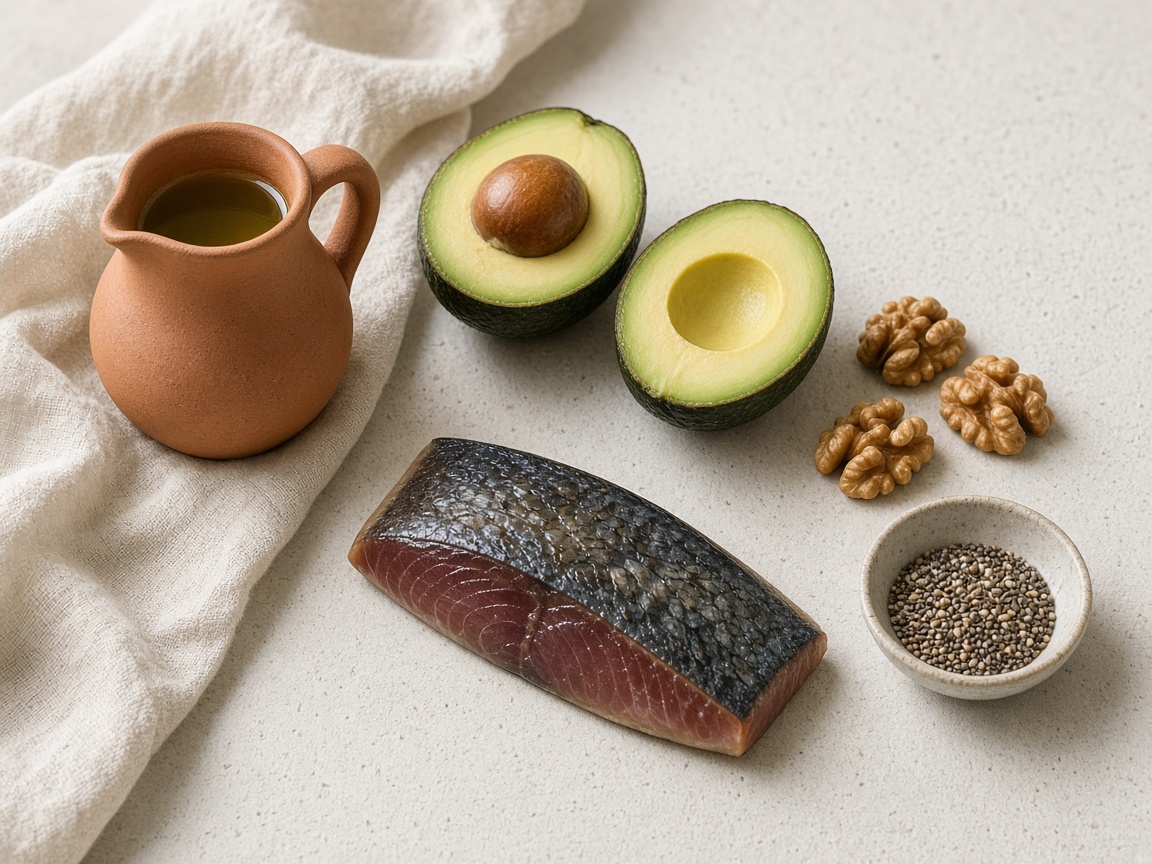
A filling plate without expensive foods
Balance does not require berries out of season or fish every day. Eggs, oats, legumes, cabbage, carrots, frozen vegetables, chicken, fermented milk, and seasonal fish cover an ordinary week.

What holds the day
Oats and eggs in the morning. Lentils, beans, or chicken at lunch. Cabbage, carrots, beet, a frozen mix. Kefir or cottage cheese. Oil by the spoon, not by the bottle. A seasonal apple instead of an imported mango if the mango is out of reach: fruit remains fruit.
Expensive “superfoods” almost never do what an ordinary shelf does not. Chia seeds do not cancel oats. Protein powder is not required if there are eggs and legumes.
Where a plate can still be poor
Instant noodles and sweet tea three times a day meet hunger and do not meet protein. That is not a moral failure. It is a gap an egg and a can of beans can close more cheaply than a stack of bars. If there is truly not enough money for food, that is a social question, not a task to “eat more correctly.”
What this text draws on
- WHO: Healthy diet fact sheet — sugars <10% energy, fat ≤30%, salt <5 g/day, vegetables and fruit.
- WHO carbohydrate guideline, 2023 (NCBI Bookshelf NBK594788) — fiber ≥25 g/day for adults.
- USDA and HHS: Dietary Guidelines for Americans (periodic editions).
A short paraphrase of open guides and reviews (WHO, national recommendations, peer‑reviewed summaries). Not a quotation and not a treatment protocol.
Short answers
Is salmon required?
No. Mackerel, herring, eggs, and flax cover different parts of the conversation. A clinician decides whether an omega-3 supplement is needed.