One food does not burn fat
The WHO healthy-diet fact sheet describes energy in balance with expenditure and a whole pattern of food, not a single food that burns fat. At least 25 g of fiber a day from food, and a plate that is half fruit and vegetables in the US guidelines, belong to that same whole pattern.

What is on the sheet instead of one name
The fact sheet starts from balance: energy that comes with food stands in relation to expenditure. It then assembles a pattern, not a hero. Fruit and vegetables are given as at least 400 g a day. Free sugars are under 10 percent of energy, and below 5 percent the sheet notes a further benefit.
Fat on the same sheet is split into shares, not declared an enemy inside one food. Total fat is under 30 percent of energy, saturated fat under 10 percent, trans fat under 1 percent. Salt is under 5 g a day. Unsaturated fats from fish, avocado, nuts, and vegetable oils are preferred to saturated fats and industrial trans fats.
Why “burns” does not follow
The verb burns fat would require a food that by itself takes energy below zero or cancels the rest of the day. The fact sheet names no such food. The sheet describes food that has a place in the overall balance. A single name on a package does not receive a special physics in this text.
Preferring unsaturated fats is a swap inside the pattern, not a license to eat one “right” fat without measure. Fish, avocado, nuts, and vegetable oils remain food that carries energy. They are placed instead of saturated fats and industrial trans fats in the pattern of the day. They are not placed instead of the whole balance.
Fiber comes inside food
The WHO carbohydrate guideline of 2023 sets fiber apart from an advertisement for one root vegetable. Adults need at least 25 g of fiber a day, and the source of that fiber is food. The page does not prescribe a gram above that frame and does not pick a vegetable that supposedly burns fat with its fiber. Twenty-five grams describe a sum from food, not the character of one hero.
If an advertisement says that a packet or a single fruit closes the question of fat, it is speaking past both documents. Fiber in the guideline comes from food in general. Energy balance comes from the whole diet. Neither text hands a single food the role of a burner.
The plate in the US guidelines
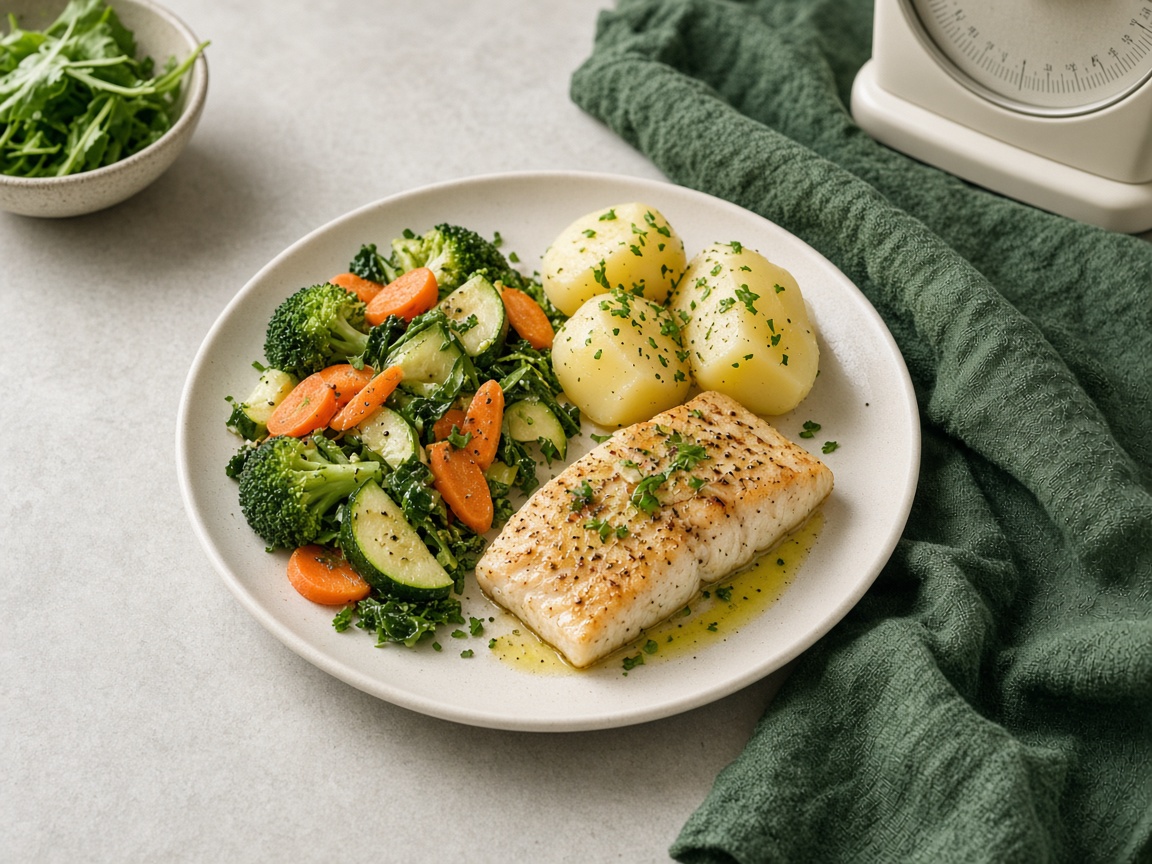
The Dietary Guidelines for Americans, 2020–2025, and MyPlate build a plate differently from a slogan about one food. Half the plate is fruit and vegetables, half of grains are whole, protein foods are varied, and dairy is low-fat or fat-free, or fortified soy. Added sugars are under 10 percent of calories from age 2, saturated fat under 10 percent, sodium under 2,300 mg a day. That is again a pattern, shaped with culture and budget in view.
Drinking less, in the same guidance, is better than drinking more, and not drinking is an option. That sentence is also about the place of a drink in the whole day, not about a berry that cancels the rest of the food. One food can enter such a plate. It does not replace half the plate, the shares of sugar and fat, and the energy balance with a single name.
What this text draws on
- WHO Healthy diet fact sheet: energy intake in balance with expenditure; fruit and vegetables ≥400 g/day; free sugars <10% of energy (below 5% for further benefit); fat <30%; saturated fat <10%; trans fat <1%; salt <5 g/day; unsaturated fats (fish, avocado, nuts, vegetable oils) preferred to saturated and industrial trans fats.
- WHO carbohydrate guideline, 2023: at least 25 g of fiber a day for adults, from food.
- Dietary Guidelines for Americans, 2020–2025, and USDA MyPlate: a nutrient-dense pattern shaped by culture and budget; added sugars <10% of calories from age 2; saturated fat <10%; sodium <2,300 mg/day; half the plate fruits and vegetables; half of grains whole; varied protein foods; low-fat or fat-free dairy or fortified soy. Drinking less is better than drinking more; not drinking is an option.
A short paraphrase of open guides and reviews (WHO, national recommendations, peer‑reviewed summaries). Not a quotation and not a treatment protocol.
Short answers
Does the WHO fact sheet name a food that burns fat?
No. The sheet describes energy balance and the whole diet: fruit and vegetables, shares of sugar, fat, and salt, and a preference for unsaturated fats. It has no separate burner.
Do 25 g of fiber mean one vegetable settles the question of fat?
No. The figure is at least 25 g of fiber a day from food for adults. That is a sum in the diet, not a property of one food that burns fat.