Appetite smaller with age
A smaller appetite with age is not a reason to cross out protein foods and the vegetable pattern of the plate. If weight leaves without a plan, that is not a diet’s success but a question for a clinician: age, illness, and medicines themselves affect weight.
What is not crossed off the plate
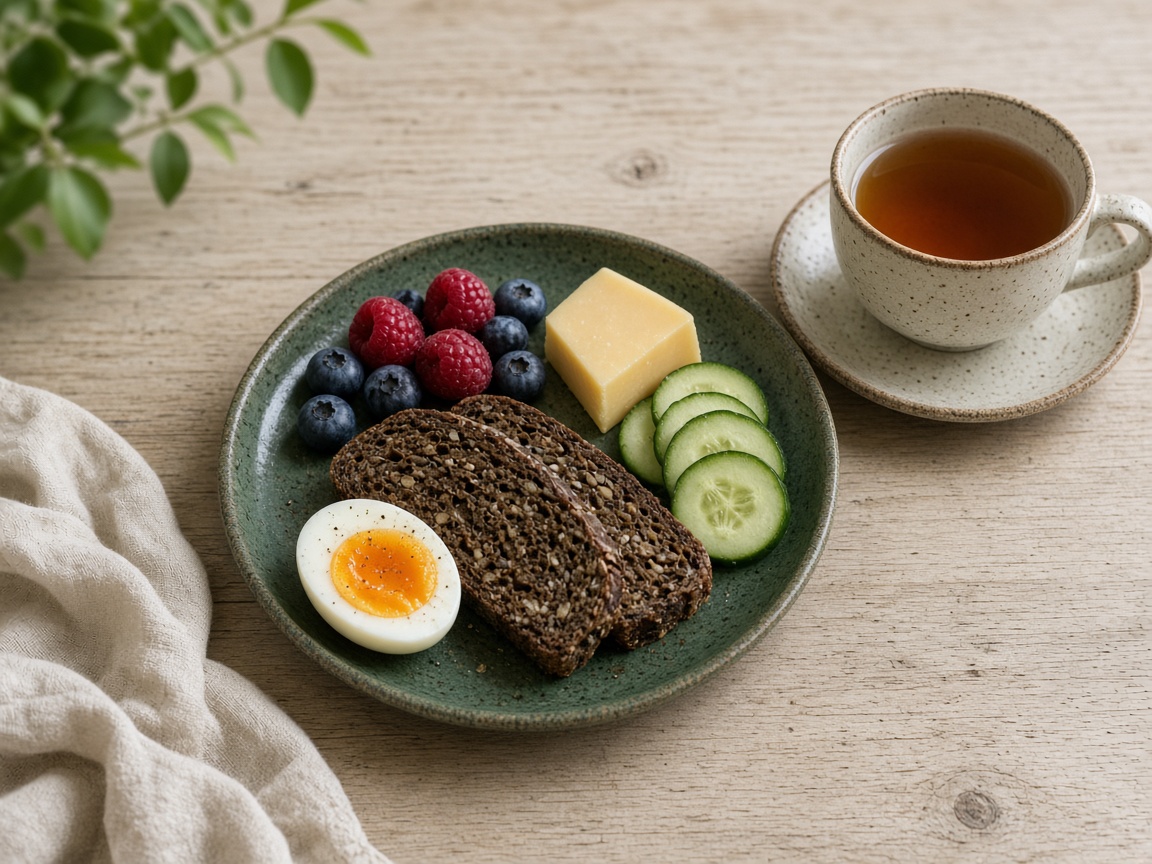
When the portion itself grows smaller, fish, beans, eggs, dairy, or meat are often the first to go, and vegetables follow. The population safe level of protein, 0.83 g per kg per day, is not an invitation to remove protein foods: it is a reference for adults, not a muscle-gain plan and not an order to eat less. The article does not convert it into a personal quota and does not use it as a reason to empty the plate.
Fruit and vegetables in the WHO fact sheet stay at least 400 g a day, beside the limits on free sugars, fat, and salt. A smaller appetite does not cancel that pattern and does not turn 400 g into a duty to finish the plate by force at any cost. The pattern means a vegetable stays on the plate even when less is eaten overall, not that age cancels the vegetable.
A small appetite and the ordinary food limits
Salt under 5 g, free sugars under 10% of energy, fat under 30%, and the preference for unsaturated fats stay boundaries of quality, not an order to increase volume. Tea with a biscuit instead of a meal can fit a small volume and still miss a protein food and a vegetable. A log shows that substitution, if it is kept honestly.
Energy in the fact sheet stays in balance with expenditure. A small appetite does not prove that expenditure can be ignored or that the plate is “small and therefore correct.” The balance is not calculated in this article: the page publishes no calorie target by age and does not declare undereating a success.
Weight that leaves without a plan
CDC names age, illness, medicines, stress, genes, hormones, and environment as factors in weight. A loss the person did not plan falls into that row as a question, not as an achievement of modest loss. The example of 5% of 200 pounds belongs to intentional modest loss on the weight-loss page and does not celebrate an unplanned departure of weight.
The CDC page sends questions about weight and medicines to a clinician. If appetite fell together with weight and there was no plan for that, the material for the visit is the fact itself and a log of what is actually eaten. The article does not prescribe a supplement, does not raise protein above the 0.83 reference by its own decision, and does not advise “just eat less, since you do not feel like it.”
Kidney disease and someone else’s figure
If kidney disease is added to a small appetite, the population figure of 0.83 g per kg is even less something to copy onto the plate. The source says plainly that kidney disease changes the safe level through a clinician. The article chooses neither the side of “more protein” nor the side of “less protein.”
Until that conversation, the practical boundary is narrow: do not delete protein foods and the vegetable pattern only because appetite is smaller, and do not declare a fall in weight a victory. Two strength days and walks, if a clinician has not closed them, stay activity lines, not a way to “justify” a plate that is too empty.
What this text draws on
- FAO/WHO/UNU, 2007: the safe protein level for adults is 0.83 g per kg body weight per day. A population figure, not a muscle-gain plan. Kidney disease changes it through a clinician.
- WHO Healthy diet fact sheet: energy intake in balance with expenditure; fruit and vegetables ≥400 g/day; free sugars <10% of energy (below 5% for further benefit); fat <30%; saturated fat <10%; trans fat <1%; salt <5 g/day; unsaturated fats (fish, avocado, nuts, vegetable oils) preferred to saturated and industrial trans fats.
- CDC, Steps for Losing Weight (January 17, 2025): a gradual pace of about 1 to 2 pounds a week is more likely to be kept than quicker loss; losing 20 pounds in 2 weeks is the example of an unrealistic goal. Modest loss, CDC’s example: 5% of 200 pounds is 10 pounds, can improve blood pressure, cholesterol, and blood sugar and could lower risk of heart disease, prediabetes, and type 2 diabetes — not a personal guarantee. Log food and drinks, activity, sleep, and stress. Goals are specific, two or three at a time; examples include water instead of a sugary drink, a 15-minute walk, a vegetable with supper. Setbacks are expected. Rewards are not food. Medicines, illness, stress, genes, hormones, environment, and age affect weight. Weight and medicine questions go to a clinician. Medicines and bariatric surgery are clinical options, not DIY.
A short paraphrase of open guides and reviews (WHO, national recommendations, peer‑reviewed summaries). Not a quotation and not a treatment protocol.
Short answers
Appetite is small. Can the meal be only tea and porridge?
A small volume does not cancel a protein food and a vegetable. The population food limits and the 0.83 protein level describe ordinary background, and an unplanned fall in weight goes to a clinician.
Is a fall in weight without a plan a successful result?
No. CDC treats age, illness, and medicines as factors in weight and sends weight questions to a clinician. The modest-loss example is about something else: an intentional change, and even that without a personal guarantee.