A child at the adult table
A child can share the nutrient-dense food that MyPlate and the Dietary Guidelines describe, and that shared food is not an adult deficit. The pace of about 1 to 2 pounds a week and the example built on 200 pounds stay on the adult side of the table.

What can sit on a shared table
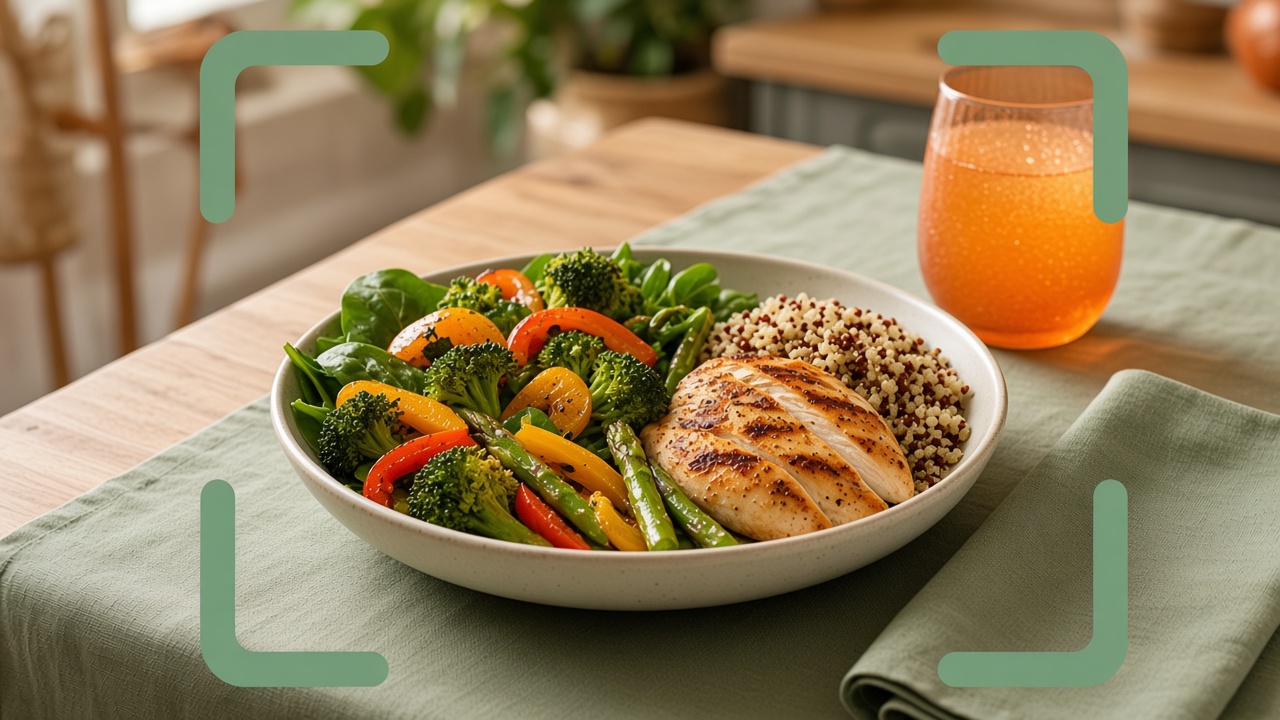
The Dietary Guidelines and MyPlate describe a nutrient-dense pattern shaped by culture and budget: half the plate fruits and vegetables, half of grains whole, varied protein foods, and low-fat or fat-free dairy or fortified soy. A family can put that food on one table without turning lunch into a child’s calorie allowance. The article does not shrink the plate to a child’s ceiling and does not calculate how many grams a child is “owed”.
Shared food does not oblige a child to copy an adult loss goal. An adult can choose a vegetable, a whole grain, and varied protein and still not issue their own deficit as a household rule. Culture and budget, in the guidelines’ own words, leave room for different tables rather than one cut for everybody.
What stays adult
CDC’s gradual pace, the unrealistic goal of losing 20 pounds in 2 weeks, and the modest example of 5% of 200 pounds are written as adult loss steps. A child is not a scaled-down adult profile, and those pounds are not carried over. The product floors, 1500 kcal on a male profile and 1200 kcal on a female profile, are an adult product setting, not a child’s portion.
The activity steps 1.2, 1.375, 1.55, and 1.725 are not a WHO table and not a target for a person who is growing. Putting a child’s age into an adult draft and calling that caution is not allowed by this page. If a child’s weight is a worry, the conversation is with a clinician, not with a profile calculator.
Sugar from age two is about quality
The guidelines set added sugars under 10% of calories from age two, saturated fat under 10%, and sodium under 2,300 mg a day. They also say drinking less is better than drinking more, and that not drinking is an option. The line that starts at age two is about dietary quality, not permission for an adult pace of loss.
The article does not turn the sugar percentage into a child’s daily calorie total and does not hand out 2,300 mg of sodium as a child’s personal dose. A sugary drink an adult swaps for water does not become a penalty system for a child. The reward in the CDC steps is not food anyway, and a child’s plate is neither a prize nor a punishment.
The adult logs their own day
An adult can log their own food, drinks, activity, sleep, and stress the way the CDC steps describe. Logging a child as though the child were an adult loss project is a different act. That kind of record easily shames, and it easily replaces care with surveillance.
The setbacks CDC calls expected belong to adult habits, not to a grade of a child’s appetite. Two or three specific goals at a time are also about an adult changing their own day, such as water instead of a sugary drink or a vegetable with their own supper. Care at a shared table looks like the food in the guidelines and like a clinician if a child’s weight has become a question, not like someone else’s deficit on a smaller plate.
What this text draws on
- Dietary Guidelines for Americans, 2020–2025, and USDA MyPlate: a nutrient-dense pattern shaped by culture and budget; added sugars <10% of calories from age 2; saturated fat <10%; sodium <2,300 mg/day; half the plate fruits and vegetables; half of grains whole; varied protein foods; low-fat or fat-free dairy or fortified soy. Drinking less is better than drinking more; not drinking is an option.
- CDC, Steps for Losing Weight (January 17, 2025): a gradual pace of about 1 to 2 pounds a week is more likely to be kept than quicker loss; losing 20 pounds in 2 weeks is the example of an unrealistic goal. Modest loss, CDC’s example: 5% of 200 pounds is 10 pounds, can improve blood pressure, cholesterol, and blood sugar and could lower risk of heart disease, prediabetes, and type 2 diabetes — not a personal guarantee. Log food and drinks, activity, sleep, and stress. Goals are specific, two or three at a time; examples include water instead of a sugary drink, a 15-minute walk, a vegetable with supper. Setbacks are expected. Rewards are not food. Medicines, illness, stress, genes, hormones, environment, and age affect weight. Weight and medicine questions go to a clinician. Medicines and bariatric surgery are clinical options, not DIY.
A short paraphrase of open guides and reviews (WHO, national recommendations, peer‑reviewed summaries). Not a quotation and not a treatment protocol.
Short answers
Can a child eat the same household food as the adult?
Shared food in the spirit of MyPlate can sit on one table: fruits and vegetables, whole grains as half of the grains, varied protein, and low-fat dairy or fortified soy. An adult deficit is not attached to that food.
What deficit is suitable for a child?
The article does not publish one and does not shrink the adult pace down to a child. The CDC examples on this shelf are written about adults, and a question about a child’s weight is taken to a clinician.