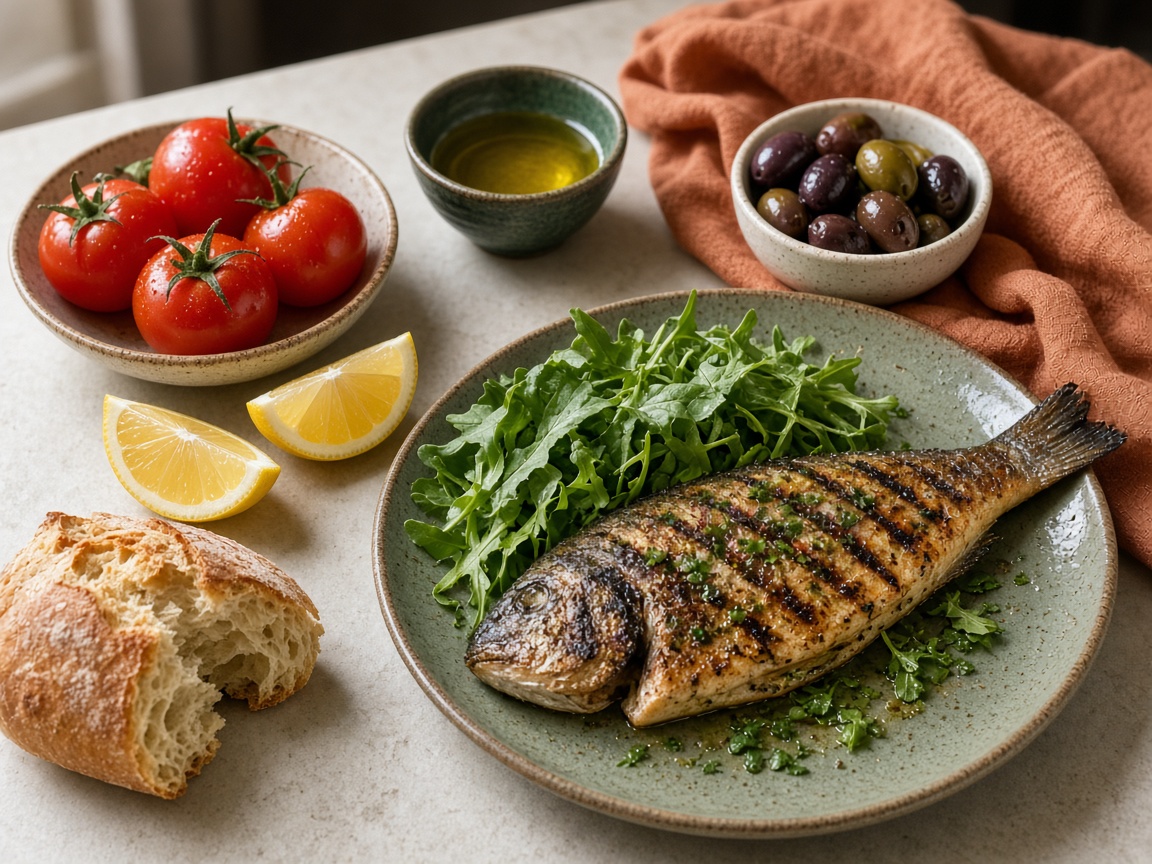
DASH on top of pills
The DASH plan describes a real eating pattern studied for blood pressure, and that pattern is not permission to change treatment that has already been prescribed. The tablet stays with a clinician, and a plate of vegetables, grains, fish, and low-fat dairy does not replace the regimen.

A pattern that exists
NHLBI describes DASH as a set of foods: vegetables, fruits, whole grains, low-fat dairy, fish, poultry, beans, nuts, and vegetable oils. Fatty meat, sweets, and sugary drinks are smaller in the plan. This is not a list invented for an article and not the slogan “eat healthy.”
The same plan was studied for blood pressure, and the trial showed lower blood pressure than a typical American control diet with fewer vegetables, fruits, and low-fat dairy and more saturated fat. This page passes on that finding without a blood-pressure figure. The trial does not hand the reader a right to assemble a new medicine regimen.
What the plan does not license
NHLBI leaves two caveats on the plan: it is not a crash pattern and not permission to eat everything. A DASH plate does not become a reason to double a portion because “the plan is healthy,” and it does not become a reason to cross food off for a week in order to “boost the tablet.” Sodium in the description is named as 2,300 mg or as a 1,500 mg version, and the article assigns neither level on top of treatment already underway.
Cutting the plate hard in order to “help” a medicine breaks both caveats at once. The plan was studied as a pattern of eating, not as an amplifier of homemade hunger. Whether a stricter sodium level fits the current regimen goes to the visit, not into a heading.
The tablet does not move from an article
CDC sends questions about weight and about medicines to a clinician, and it names medicines and bariatric surgery as clinical options, not as do-it-yourself projects. That sentence does not yield a stop, a reduction, or a swap of a drug because supper moved closer to DASH. Medicines, illness, and other factors affect weight, so a change in weight after a change of plate is material for a conversation, not a signal to act alone.
Modest loss, which CDC calculates in its example as 5% of 200 pounds, that is 10 pounds, can improve blood pressure, and that is not a personal guarantee. The example about weight is not an instruction to interrupt treatment if the scale moved. This page does not promise that the plate will make a tablet unnecessary.
How the plate and the regimen sit together
Until a clinician says otherwise, treatment already prescribed continues, and from the DASH plan a reader can only learn which foods that plan actually gathers. Bringing a list of ordinary suppers to the visit is more useful than bringing a decision to skip a dose on days with a “good” plate. A skip is described neither in DASH nor on the CDC page.
A food log shows whether a sugary drink, fatty meat, or a vegetable was there. It does not know a dose and it does not know whether a tablet was taken. The article’s boundary sits exactly there: the eating pattern is real, and a self-made edit of treatment does not come with it.
What this text draws on
- NHLBI DASH Eating Plan: vegetables, fruits, whole grains, low-fat dairy, fish, poultry, beans, nuts, vegetable oils; less fatty meat, sweets, and sugary drinks; sodium 2,300 mg or a 1,500 mg version. Studied for blood pressure, not as a crash plan and not as permission to eat everything.
- DASH, Appel et al., NEJM 1997: a pattern higher in vegetables, fruit, and low-fat dairy and lower in saturated fat lowered blood pressure compared with a typical American control diet. Do not give millimeters of mercury.
- CDC, Steps for Losing Weight (January 17, 2025): a gradual pace of about 1 to 2 pounds a week is more likely to be kept than quicker loss; losing 20 pounds in 2 weeks is the example of an unrealistic goal. Modest loss, CDC’s example: 5% of 200 pounds is 10 pounds, can improve blood pressure, cholesterol, and blood sugar and could lower risk of heart disease, prediabetes, and type 2 diabetes — not a personal guarantee. Log food and drinks, activity, sleep, and stress. Goals are specific, two or three at a time; examples include water instead of a sugary drink, a 15-minute walk, a vegetable with supper. Setbacks are expected. Rewards are not food. Medicines, illness, stress, genes, hormones, environment, and age affect weight. Weight and medicine questions go to a clinician. Medicines and bariatric surgery are clinical options, not DIY.
A short paraphrase of open guides and reviews (WHO, national recommendations, peer‑reviewed summaries). Not a quotation and not a treatment protocol.
Short answers
Does DASH replace a blood-pressure tablet?
No. The plan describes food that was studied for blood pressure, and it is not a right to change the regimen. CDC sends medicine questions to a clinician.
Can a dose be skipped on days with a vegetable plate?
This page does not describe a skip. Treatment already prescribed is not moved from an article, and the sodium level during treatment is discussed with a clinician.