Fat quality: the shift the WHO fact sheet describes
The WHO fact sheet keeps total fat under 30% of energy, saturated fat under 10%, and industrial trans fat under 1%. Inside those limits it asks for a shift toward unsaturated fats: fish, avocado, nuts, sunflower oil, and olive oil. The other direction is saturated fat from fatty meat, butter, cream, and cheese, and industrial trans fat from fried and packaged food. The US guidelines repeat the saturated-fat limit: under 10% of calories.
Three limits on one sheet
Total fat, saturated fat, and industrial trans fat stand together in the fact sheet. Under 30% of energy for all fat sets the size of the fat part of the diet. Under 10% for saturated fat says which share of that fat is preferred in a form that is not saturated. Under 1% for industrial trans fat nearly takes them out of a healthy diet: the sheet describes them as something to move away from, not as an ordinary seasoning.
The three percents do not add up to one “allowed spoon of oil” for everyone. The sheet does not publish grams of oil per person, and neither does this page. The percents refer to the energy of the day and the week. A teaspoon of oil in grain and deep frying both contain fat, and they take very different places relative to 30%. Fat quality is read together with amount, not instead of it.
Where the shift goes
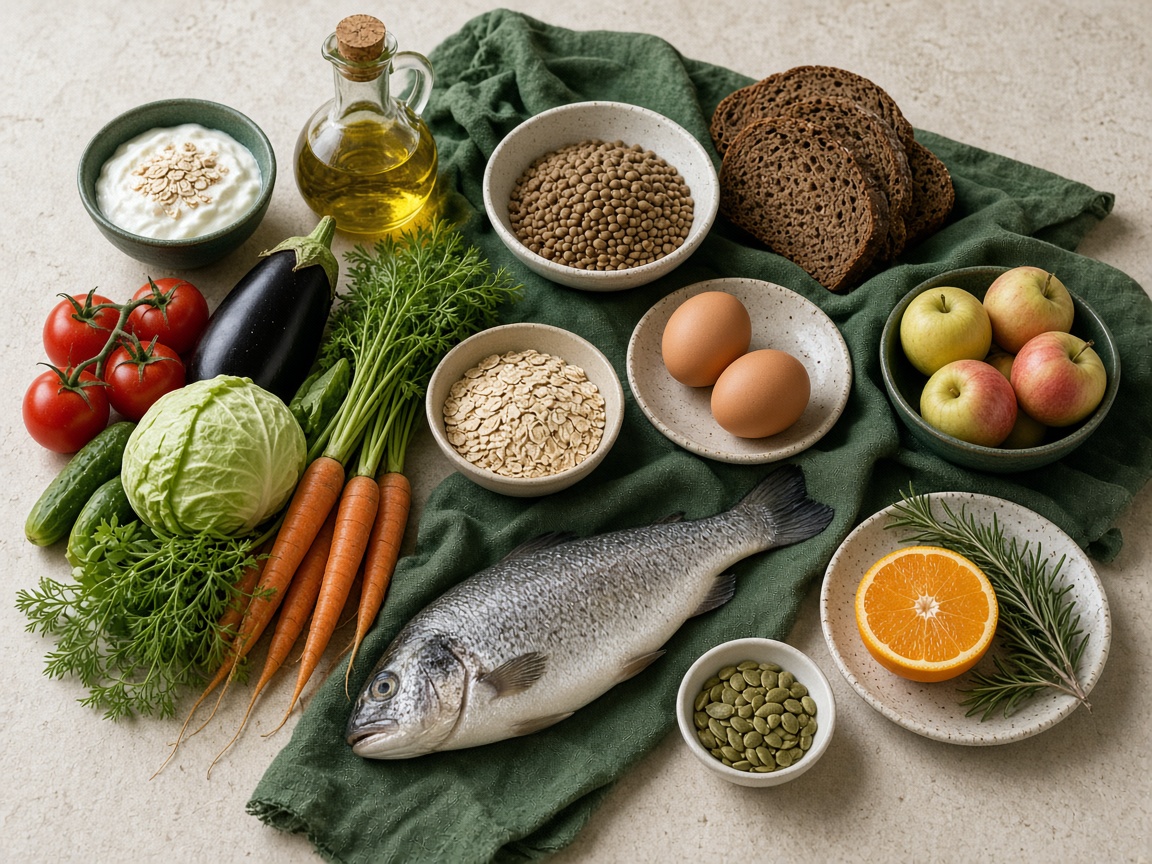
The sheet links unsaturated fats to recognizable foods: fish, avocado, nuts, sunflower oil, and olive oil. Fish at an ordinary meal, a handful of nuts, avocado with bread, a spoon of such oil in the pot — that is the shift, when it repeats. MyPlate names fish and nuts among the protein foods worth varying, not eating as one fixed list every day. Oil is still fat, and it sits inside the total limit under 30%.
The shift shows up across a week, not in one “correct” sauce. If weekdays use sunflower or olive oil in the pan, and fish appears among protein meals, the direction matches the sheet. If an unsaturated food shows up once, on top of the usual butter and fatty meat, total fat and saturated fat have simply grown. Adding avocado to the old set is not yet a shift while the saturated part has not moved.
What the shift leaves behind
The sheet places saturated fats with fatty meat, butter, cream, and cheese. The point is a shift away from these foods, not a sentence that declares cheese illegal. When they cover most of the day’s fat, the saturated share easily sits at the under-10% line or past it. The US guidelines keep the same saturated-fat limit, under 10% of calories, inside the nutrient-dense pattern.
The sheet places industrial trans fats in fried food and in packaged foods. Under 1% of energy is a very narrow band. Pastry, snacks, and food fried in such fat fill it quickly. This page does not assign foods a processing score, and it does not say that a package by itself causes disease by some percent. It repeats the limit: industrial trans fats in fried and packaged foods stay under 1% of energy.
Oil stays inside the limit
Olive oil or sunflower oil is the preferred direction, and it is still fat. It can cook vegetables and grain so the food is edible and repeatable. It cannot flood the plate “because the oil is the right one” and then treat the 30% limit as if it no longer applies to that day. Saturated fat has not vanished either, if a cream sauce, fatty meat, or a lot of cheese is beside it.
In the kitchen the difference is practical. Fish, avocado, nuts, and the oils named here build the unsaturated part. Fatty meat, butter, cream, and cheese build the saturated part. Fried and packaged foods with industrial trans fat fall into the narrow limit under 1%. Low-fat or fat-free dairy in MyPlate is a separate line about the dairy part of the plate, and it does not cancel the talk about cheese and cream as sources of saturated fat.
What this text draws on
- WHO Healthy diet fact sheet: energy in balance with expenditure; fruit and vegetables at least 400 g/day; free sugars under 10% of total energy, below 5% for further benefit; total fat under 30%; saturated fat under 10%; industrial trans fat under 1%; salt under 5 g/day, and WHO recommends iodized salt for the salt that is used. Shift toward unsaturated fats (fish, avocado, nuts, sunflower and olive oils) and away from saturated fats (fatty meat, butter, cream, cheese) and industrial trans fats in fried and packaged foods.
- Dietary Guidelines for Americans, 2020–2025, and USDA MyPlate: a nutrient-dense pattern customized to culture, budget, and preference; added sugars under 10% of calories from age 2; saturated fat under 10%; sodium under 2,300 mg/day; half the plate fruits and vegetables; half the grains whole grains; varied protein foods (seafood, eggs, beans, peas, lentils, soy, lean meat, nuts); low-fat or fat-free dairy or fortified soy.
A short paraphrase of open guides and reviews (WHO, national recommendations, peer‑reviewed summaries). Not a quotation and not a treatment protocol.
Short answers
Can olive oil be poured freely?
It is the direction the sheet prefers, along with sunflower oil, fish, avocado, and nuts. Total fat still stays under 30% of energy, and saturated fat under 10%.
Must cheese and butter be removed entirely?
The sheet describes a shift away from the saturated fats in fatty meat, butter, cream, and cheese, not a ban on one food. The saturated share still stays under 10% of energy.