
What the WHO fact sheet means by a healthy diet
A healthy diet in the WHO fact sheet is energy from food and drinks in balance with expenditure, plus ordinary food in which fruit and vegetables have a place at not less than 400 g a day, while free sugars, fats, and salt stay inside the stated limits. The sheet describes a habitual week for an adult. It does not score one dish, and it does not hand out a personal kilocalorie target.
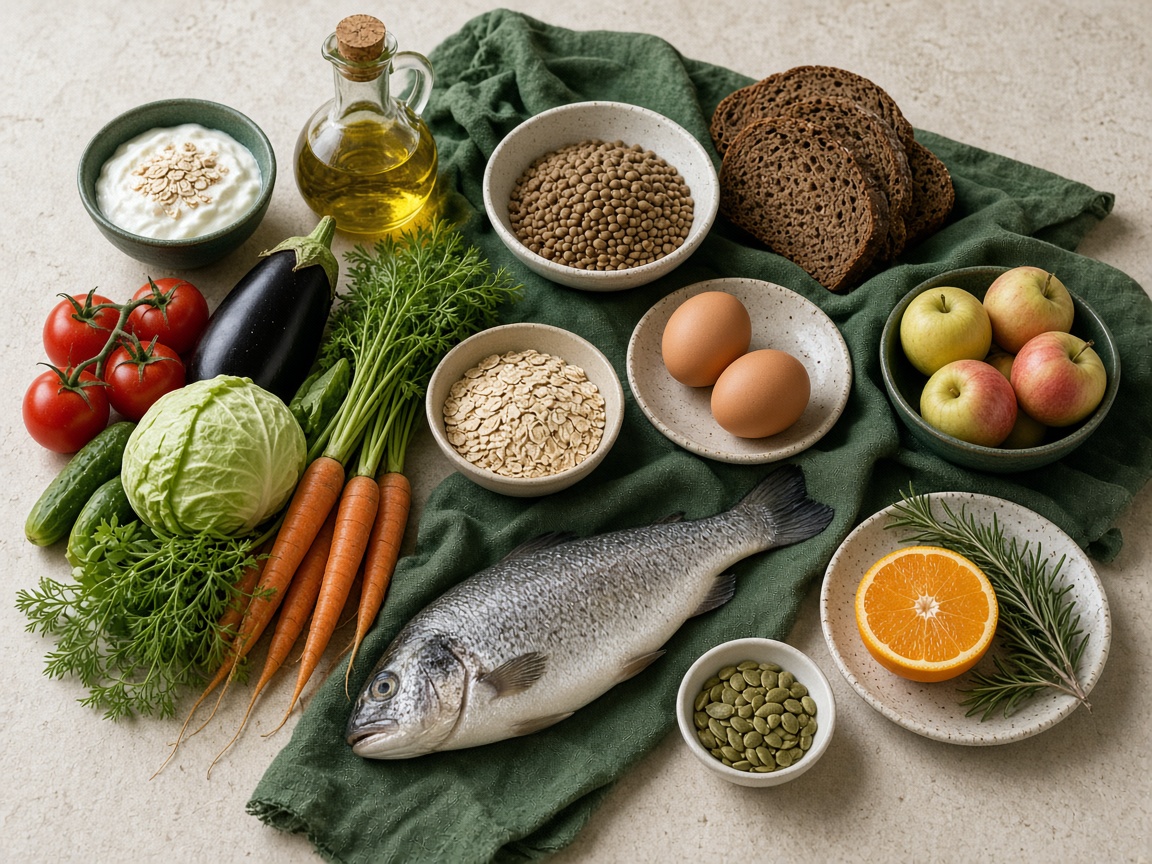
Energy meets expenditure
The sheet’s first link is simple: energy that comes in through food and drinks should be in balance with expenditure. For a stable weight, that is what the sentence means. A calmly fed day and a day with clearly too little food do not have to alternate “for metabolism.” The sheet is talking about intake matching expenditure, not about swings. It publishes no single “this many kilocalories for every adult,” and this page does not invent one.
Balance is read across a run of days. A festive table or one hungry evening does not describe the diet by itself. If weekdays are empty and then excessive, intake and expenditure have not met, even when one lunch looked well built. The sheet does not convert expenditure into minutes of walking or into a workout plan. It leaves expenditure as the pair to the energy of food. This article does not turn movement into calories.
Fruit, vegetables, and the other limits
Next to energy is an amount: at least 400 g of fruit and vegetables a day. That is food in a soup, in a side, in a piece of fruit, not a leaf for show. The grams belong to the whole day, so several ordinary portions add up. One Sunday salad does not cover the line for the week if the other days barely had vegetables.
The same sheet holds the other limits, and a healthy diet is all of them together. Free sugars under 10% of total energy, with a share below 5% named as further benefit. Total fat under 30% of energy. Saturated fat under 10%. Industrial trans fat under 1%. Salt under 5 g a day. Each point is unpacked in later articles. Here they are one frame, not seven separate bans.
Where fat shifts, and which salt is meant
The sheet asks for a shift toward unsaturated fats: fish, avocado, nuts, sunflower oil, and olive oil. The other direction is saturated fat from fatty meat, butter, cream, and cheese, and industrial trans fat from fried and packaged foods. The shift leaves room for oil and fish. The total-fat limit under 30% of energy is that room, not an empty plate with no fat at all.
For the salt used inside the limit under 5 g, WHO recommends iodized salt. That is about the kind of salt, not permission to salt past the limit. Iodine does not cancel the 5 g, and the 5 g limit does not ask anyone to seek salt without iodine. Salt and the sodium line in the US guidelines have their own article: different documents, different measures.
What the sheet describes, and what stays with a clinician
The fact sheet is a population guide to a healthy diet. It gathers energy, fruit and vegetables, sugars, fats, and salt into one picture of a week. Ordinary food at home can be checked against that picture: was there room for vegetables, did sugary drinks take a large share, which fat was used in the pan, was salt obvious.
The sheet does not diagnose, and it does not replace a clinician when weight, medicines, or illness already need their own plan. Adult limits from this page are not a prescription to copy onto a child, a pregnancy, or kidney or heart disease. This page has no processing score, no claim that a class of foods causes disease by some percent, and no steps for turning a plate into kilocalories.
What this text draws on
- WHO Healthy diet fact sheet: energy in balance with expenditure; fruit and vegetables at least 400 g/day; free sugars under 10% of total energy, below 5% for further benefit; total fat under 30%; saturated fat under 10%; industrial trans fat under 1%; salt under 5 g/day, and WHO recommends iodized salt for the salt that is used. Shift toward unsaturated fats (fish, avocado, nuts, sunflower and olive oils) and away from saturated fats (fatty meat, butter, cream, cheese) and industrial trans fats in fried and packaged foods.
A short paraphrase of open guides and reviews (WHO, national recommendations, peer‑reviewed summaries). Not a quotation and not a treatment protocol.
Short answers
How many kilocalories are in a healthy diet according to WHO?
The fact sheet does not publish one figure for everyone. It says energy from food and drinks stays in balance with expenditure, beside limits on fruit and vegetables, sugars, fats, and salt.
Is one well-built lunch enough?
No. The sheet describes the day and habitual energy intake: at least 400 g of fruit and vegetables, with sugars, fats, and salt inside their limits. One successful lunch does not stand in for the week.

