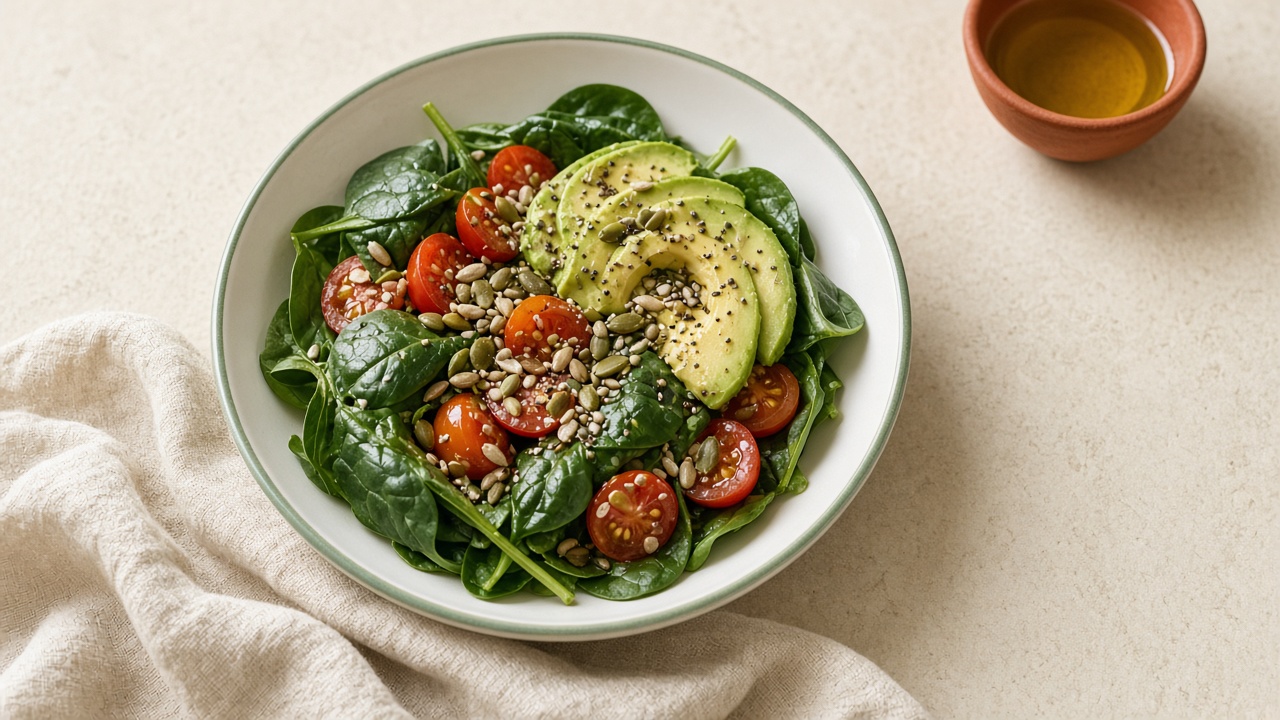
MyPlate in an ordinary meal
MyPlate in the 2020–2025 US guidelines is the shape of an ordinary meal: half the plate fruits and vegetables, many of the grains whole, protein foods varied, and low-fat or fat-free dairy or fortified soy beside them. The pattern is nutrient-dense, and it is customized to culture, budget, and preference. It is a picture of a plate, not one national cuisine, and not a translation of that vegetable half into the grams of the WHO fact sheet.

Half the plate at an ordinary table
In a lunch that is already cooked at home, half the plate is fruits and vegetables. Cabbage and cucumber, stewed vegetables, a salad, an apple or an orange with tea take a visible place, not the rim. The other half stays with grain and protein. That is MyPlate on a weekday: soup with vegetables and a piece of bread, fish with vegetables and a grain, egg with a vegetable stew. One picture, different foods.
Half the plate and the WHO line “at least 400 g of fruit and vegetables a day” describe the same care for fruit and vegetables, and they stay two sentences. This page does not turn half a plate into 400 g, and it does not declare that one full plate covers the day’s amount. WHO grams add up across the day. The MyPlate shape helps a particular meal not forget fruit and vegetables.
Grain and varied protein
Grains in these guidelines are such that half of them are whole. Buckwheat, oats, whole bread, and brown rice can sit beside ordinary bread or white rice, as long as the whole-grain share does not disappear across the day and the week. The sentence is about half of the grains, not about half of the entire plate having to be porridge.
Protein foods are meant to vary: seafood, eggs, beans, peas, lentils, soy, lean meat, nuts. Fish on Monday and lentils on Wednesday is closer to that sentence than the same fatty cut every day. Nuts here are one protein food on the list, not a separate dessert without measure. Lean meat is on the list: the guidelines do not build the plate from plants alone, and they do not require meat at every meal.
Dairy and nutrient density
The plate includes low-fat or fat-free dairy or fortified soy: milk, kefir, yogurt without extra sweetness, a soy drink that is fortified. That is part of the pattern, not a mandatory glass at the same minute you sit down. Cheese and cream are not named as the stand-in for this line: the dairy is low-fat or fat-free, or it is fortified soy.
A nutrient-dense pattern means these foods are on the plate, and the energy is not gathered almost entirely from added sugar, saturated fat, and sodium. From age 2, added sugars stay under 10% of calories, saturated fat under 10%, sodium under 2,300 mg a day. The shape of the plate does not cancel those lines. Sodium here is a line from the US guidelines. It is not read as a translation of the salt limit in the WHO fact sheet: that document speaks about salt on its own.
Cuisine, budget, and what tastes good
The guidelines ask to customize the pattern to culture, budget, and preference. Buckwheat and cabbage, rice and fish, flatbread and beans, lentils and bread fill one scheme with different food. MyPlate does not assign an American lunch from a ready kit, and it does not ban the cooking a person grew up with. What matters is that an ordinary meal still shows fruit and vegetables, grain, protein, and a dairy or soy part.
Budget in that sentence means a costly fresh counter is not a condition. Eggs, legumes, grain, milk, and frozen or canned vegetables build the same plate. Taste is a condition too: food a person will eat again holds the pattern longer than a plate built once “as in the picture.” Sauces and oil stay visible. They are part of the food, and saturated fat, added sugar, and sodium still sit inside their limits.
What this text draws on
- Dietary Guidelines for Americans, 2020–2025, and USDA MyPlate: a nutrient-dense pattern customized to culture, budget, and preference; added sugars under 10% of calories from age 2; saturated fat under 10%; sodium under 2,300 mg/day; half the plate fruits and vegetables; half the grains whole grains; varied protein foods (seafood, eggs, beans, peas, lentils, soy, lean meat, nuts); low-fat or fat-free dairy or fortified soy.
- WHO Healthy diet fact sheet: energy in balance with expenditure; fruit and vegetables at least 400 g/day; free sugars under 10% of total energy, below 5% for further benefit; total fat under 30%; saturated fat under 10%; industrial trans fat under 1%; salt under 5 g/day, and WHO recommends iodized salt for the salt that is used. Shift toward unsaturated fats (fish, avocado, nuts, sunflower and olive oils) and away from saturated fats (fatty meat, butter, cream, cheese) and industrial trans fats in fried and packaged foods.
A short paraphrase of open guides and reviews (WHO, national recommendations, peer‑reviewed summaries). Not a quotation and not a treatment protocol.
Short answers
Is MyPlate one cuisine?
No. The 2020–2025 guidelines ask for a nutrient-dense pattern customized to culture, budget, and preference. Half a plate of fruits and vegetables, whole grains, varied protein, and dairy or fortified soy can be built from different foods.
Does half the plate equal 400 g of fruit and vegetables?
This page does not count it that way. Half the plate is the MyPlate picture for a meal. At least 400 g a day is the WHO fact sheet amount. Fruit and vegetables matter in both sentences, and one figure is not derived from the other here.