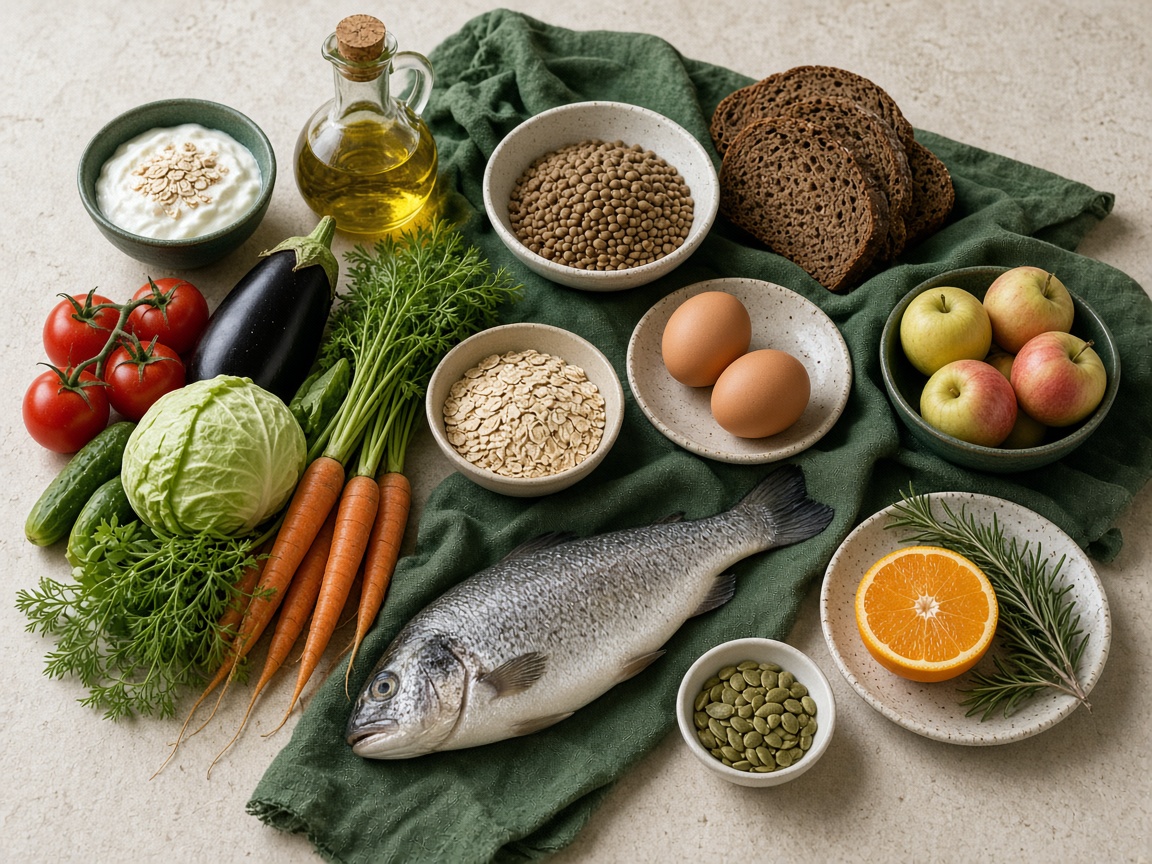
A week of ordinary plates
A healthy diet in the WHO fact sheet is a property of habitual days: energy meets expenditure, fruit and vegetables are at least 400 g, and sugars, fats, and salt stay inside their limits. One perfect lunch does not create that picture. CDC, in its steps on weight, suggests writing down food and drinks for a few days and setting two or three specific goals. In that advice, a plan you can repeat beats a perfect day.

One lunch and the other days
A lunch that matches the MyPlate picture is a pleasant example. Half the plate fruits and vegetables, a whole grain, fish or legumes, a quiet drink — a good frame. The week is made of other frames: breakfast on the way out, supper from what was there, tea with sugar that nobody mentioned. The fact sheet speaks about energy and the limits of the day, not about the best frame. If the other days are empty of vegetables and full of sugary drinks, one well-built lunch does not assemble the balance.
Energy meets expenditure in what a person usually eats and drinks. A festive table and a “correct” Monday both belong to the week. It is worth looking at a run of days: were fruit and vegetables near at least 400 g, which fat was used for cooking, how sweet was the drink, how salty was the food. MyPlate in that run is the shape of an ordinary meal, recognizable on Wednesday the same way as on a day of extra effort.
A few days of notes
CDC suggests logging food and drinks for a few days. The stretch is short on purpose. It is not a year-long diary and not an exam in perfection. A few days show what one successful lunch hides: sweet tea every morning, no vegetable at supper, bread and cheese instead of a plate, juice that was not counted as food. Drinks are written beside food. Without them, the share of free and added sugars is invisible in the note.
The note shows ordinary food, not the best version of the day. If those days included frozen cabbage and a can of beans, they enter the picture as vegetables and as a protein food. If there was a cream sauce and fatty meat, they enter the picture of fat. Salt in the pot and sodium on a package, if they were noticed, stay two lines: salt under 5 g in the WHO sheet and sodium under 2,300 mg in the US guidelines. The note does not have to translate one into the other.
Two or three narrow goals
CDC gives specific small goals. Water instead of a sugary drink. A vegetable at supper. That is already two goals, and they are enough for a week to move toward limits the sources already name: less free and added sugar, more vegetables toward 400 g and toward half the plate. A third goal, if one is wanted, should be just as narrow. For example, a whole grain at one habitual meal, or sunflower or olive oil where a lot of butter was usual.
Three vague intentions to “eat better” do not hold a week. A narrow goal is visible in the evening: water was there, or sweet tea again; a vegetable was at supper, or it was not. Two goals that are repeated sit closer to the CDC advice than a list of ten rules for one perfect day. Fiber of at least 25 g from food, the fat shift, and salt under 5 g follow when a vegetable, a whole grain, and the oil in the pot become a habit, not a one-time menu.
A plan you come back to
The CDC sentence is direct: a plan you can repeat beats a perfect day. What can be repeated is soup with frozen vegetables, egg and grain, lentils, fish on a day it is there, tea without sugar, fruit with the meal. These are ordinary plates. They are recognizable in MyPlate and fit the WHO sheet when the sugary drink, the fat, and the salt do not leave their limits. The next week starts from the same two or three goals, not from a new perfect lunch.
A few days of notes can be done again once the goals live on their own, to see whether they are still there on ordinary days. Energy still meets expenditure: a week of ordinary plates is neither a gain course nor a loss course, and it does not issue a personal kilocalorie target. If weight, medicines, or illness already need their own plan, that is a conversation with a clinician. The article describes what ordinary days look like inside the public limits, and how CDC suggests looking at them: a short log, and two or three goals that do not wear out.
What this text draws on
- CDC, Steps for Losing Weight: log food and drinks for a few days; specific small goals such as water instead of sugary drinks or a vegetable at supper; a plan you can repeat beats a perfect day.
- WHO Healthy diet fact sheet: energy in balance with expenditure; fruit and vegetables at least 400 g/day; free sugars under 10% of total energy, below 5% for further benefit; total fat under 30%; saturated fat under 10%; industrial trans fat under 1%; salt under 5 g/day, and WHO recommends iodized salt for the salt that is used. Shift toward unsaturated fats (fish, avocado, nuts, sunflower and olive oils) and away from saturated fats (fatty meat, butter, cream, cheese) and industrial trans fats in fried and packaged foods.
- Dietary Guidelines for Americans, 2020–2025, and USDA MyPlate: a nutrient-dense pattern customized to culture, budget, and preference; added sugars under 10% of calories from age 2; saturated fat under 10%; sodium under 2,300 mg/day; half the plate fruits and vegetables; half the grains whole grains; varied protein foods (seafood, eggs, beans, peas, lentils, soy, lean meat, nuts); low-fat or fat-free dairy or fortified soy.
- WHO carbohydrate guideline, 2023: adults at least 25 g of dietary fiber a day from food.
A short paraphrase of open guides and reviews (WHO, national recommendations, peer‑reviewed summaries). Not a quotation and not a treatment protocol.
Short answers
Where do you start if a perfect day will not happen?
CDC ranks a plan you can repeat higher. A few days of logging food and drinks, and two narrow goals, such as water instead of a sugary drink and a vegetable at supper, are enough.
Is one well-built lunch already balance?
Balance in the WHO fact sheet is energy that meets expenditure, and the limits on fruit and vegetables, sugars, fats, and salt across habitual days. One successful lunch does not replace those days.