Building the half with vegetables
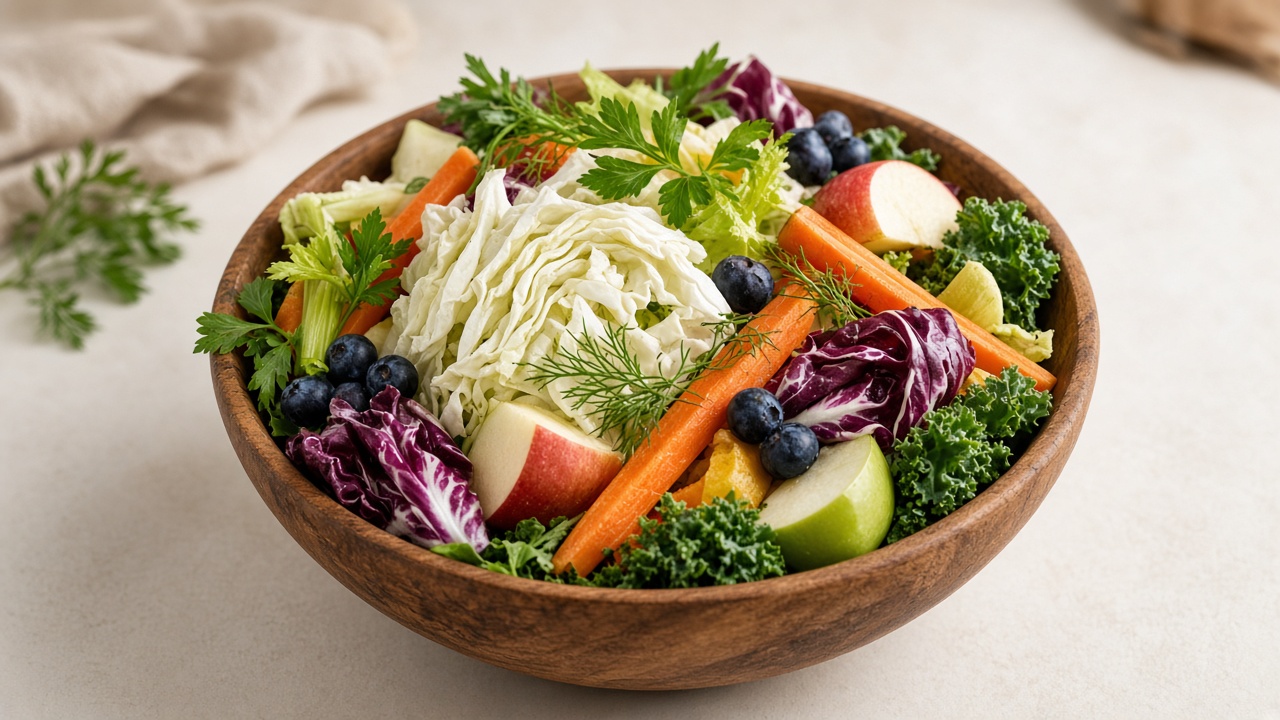
MyPlate gives fruit and vegetables half the plate, and the WHO fact sheet counts the same foods across the day: at least 400 g. One enormous salad is not required, if a vegetable and a fruit show up at several meals and do not stay a garnish under sauce.
The drawing and the food eaten
The half in MyPlate is a way to see the plate, not an order to divide every lunch on a laboratory scale. Fruit and vegetables take one side, grain and a protein food stay on the other, and dairy is its own group rather than a stand-in for salad. If the leaves are a thin strip and the area is cutlet and side dish, the drawing is not assembled yet. The half begins where a vegetable or a fruit is actually eaten, not placed only for color.
The American guidelines say outright that a nutrient-dense pattern takes culture and budget into account. Cabbage, carrots, a frozen mix, a seasonal fruit, and a home salad cover the same side as expensive leaves from someone else's café. The share is the standard, not a stranger's photograph. One's own cooking fits when the fruit and vegetables are visible and get eaten.
The day, not one feat
The WHO line, at least 400 g of fruit and vegetables a day, is the sum of every meal, including a snack. An apple in the afternoon and braised vegetables in the evening join a morning fruit in one total, when they really are fruit and vegetables. One enormous salad can finish the evening and leave the other meals empty. The day looks at the sum, not at the most photogenic lunch.
It is easy to remember Sunday's table and forget the weekdays that had no vegetable. A week built from one handsome day does not hold 400 g on each of the others. CDC asks for specific goals, two or three at a time, and gives an example: a vegetable with supper. That example is closer to half a plate than a general slogan about eating "right; "
A garnish is not the share
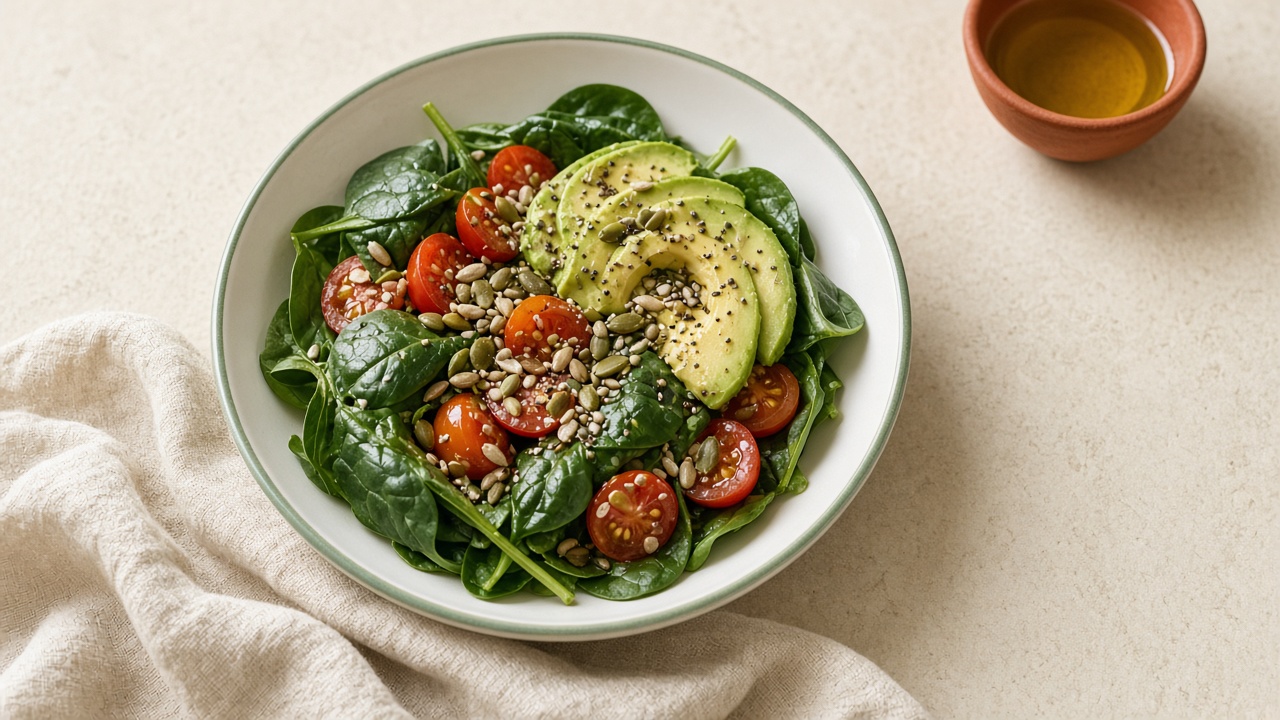
A leaf under sauce, a tomato slice on a sandwich, and a berry printed on a package do not build the half. MyPlate is talking about food on the plate, not about paint. A sweet sauce on the vegetable side spends free sugars, which WHO keeps under 10% of energy, with a level under 5% noted for further benefit. The vegetable does not become candy because of that, but the sauce takes part in the day's sugar share.
A fatty dressing does not cancel the vegetable and does not turn invisible. WHO keeps total fat under 30% of energy, saturated fat under 10%, and industrial trans fat under 1%. An honest half lives together with those shares, not in their place. Salt under 5 g a day belongs to the same plate when the dressing is salty, and that is a separate conversation from sodium on other labels.
The frame does not remember the day
A photograph records the shares in the frame and is silent about breakfast, about what was left, and about a drink outside the frame. In ScanDish a number from a photo stays a draft until the person confirms the meal and the day. The draft is not the grams of that 400 g. Confirming puts the line into the day, but it does not turn the picture into a laboratory scale.
CDC asks for a log of food and drinks and calls setbacks expected. One supper without a vegetable does not erase the line if the next day brings it back. These steps do not pay for a successful plate with food: rewards are not food. Several logged days show whether the half was a habit or one successful frame.
What this text draws on
- WHO Healthy diet fact sheet: energy intake in balance with expenditure; fruit and vegetables ≥400 g/day; free sugars <10% of energy (below 5% for further benefit); fat <30%; saturated fat <10%; trans fat <1%; salt <5 g/day; unsaturated fats (fish, avocado, nuts, vegetable oils) preferred to saturated and industrial trans fats.
- Dietary Guidelines for Americans, 2020–2025, and USDA MyPlate: a nutrient-dense pattern shaped by culture and budget; added sugars <10% of calories from age 2; saturated fat <10%; sodium <2,300 mg/day; half the plate fruits and vegetables; half of grains whole; varied protein foods; low-fat or fat-free dairy or fortified soy. Drinking less is better than drinking more; not drinking is an option.
- CDC, Steps for Losing Weight (January 17, 2025): a gradual pace of about 1 to 2 pounds a week is more likely to be kept than quicker loss; losing 20 pounds in 2 weeks is the example of an unrealistic goal. Modest loss, CDC’s example: 5% of 200 pounds is 10 pounds, can improve blood pressure, cholesterol, and blood sugar and could lower risk of heart disease, prediabetes, and type 2 diabetes — not a personal guarantee. Log food and drinks, activity, sleep, and stress. Goals are specific, two or three at a time; examples include water instead of a sugary drink, a 15-minute walk, a vegetable with supper. Setbacks are expected. Rewards are not food. Medicines, illness, stress, genes, hormones, environment, and age affect weight. Weight and medicine questions go to a clinician. Medicines and bariatric surgery are clinical options, not DIY.
A short paraphrase of open guides and reviews (WHO, national recommendations, peer‑reviewed summaries). Not a quotation and not a treatment protocol.
Short answers
Does every meal need exactly half the plate?
MyPlate describes how a plate looks, and the WHO 400 g is a day. Morning can be a fruit and supper a vegetable, if the day's sum is not empty.
Does a thin layer of leaves under the hot food count as the half?
Only if the vegetable really takes its side and is eaten. Color under a sauce does not build the share.