DASH: the plate and the salt
Dietary Approaches to Stop Hypertension is a pattern built around blood pressure: plenty of vegetables and fruit, legumes, lower-fat dairy, nuts, whole grains, less sodium, and less fatty meat.
Why it was built
DASH began as a research diet for people with high blood pressure, not as a weight-loss club. The idea is plain: potassium, magnesium, calcium, and fiber from ordinary food, and sodium below the usual fast-food and stock-cube level.
Classic trials compared a typical American menu, a fruit-and-vegetable menu, and full DASH, and looked at salt separately. Blood pressure fell on average. That is a group average under a study, not a personal forecast.
What the plate looks like
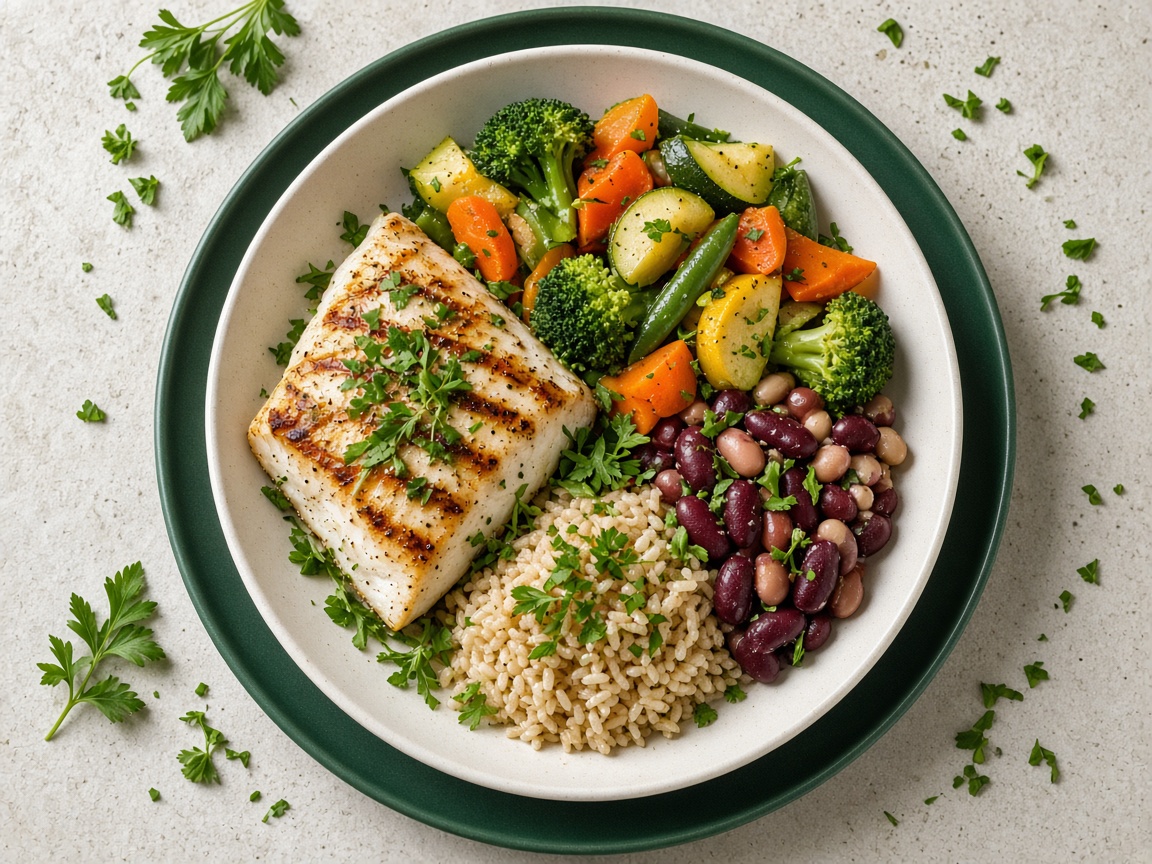
Half is vegetables and fruit. Then a grain or potato, a portion of fish, poultry, or legumes, a glass of kefir or low-fat yogurt, a handful of nuts a few times a week. Sweets and fatty meat are rare. Salt is not zero, and it is not a generous hand over the pot plus a salty tin.
Ready sauces, sausage, cheese, and bread often bring more sodium than the salt shaker. If blood pressure is your subject, the sodium line on the label matters more than buckwheat versus rice.
Weight and pressure are different jobs
DASH can coincide with weight loss because vegetables and leaner foods are less dense. It can also miss, if nuts, dried fruit, and bread arrive without a measure. Pressure also depends on sleep, alcohol, medicines, and movement. Food is one dial, not the whole remote.
Cutting salt sharply is not something to copy from an article if you take certain medicines or have kidney disease. That conversation belongs to a clinician who sees your labs.
What to write in the diary
DASH does not cancel calories. Log portions as honestly as in any other week. It also helps to notice salty repeats: cheese every day, packet soup, soy sauce by the glass.
ScanDish estimates energy and macros, not milligrams of sodium. Sodium stays a note on the dish, or a look at the jar.
What this text draws on
- NHLBI, NIH: DASH Eating Plan — servings and sodium 2300 / 1500 mg.
A short paraphrase of open guides and reviews (WHO, national recommendations, peer‑reviewed summaries). Not a quotation and not a treatment protocol.
Short answers
Are DASH and the Mediterranean plate the same?
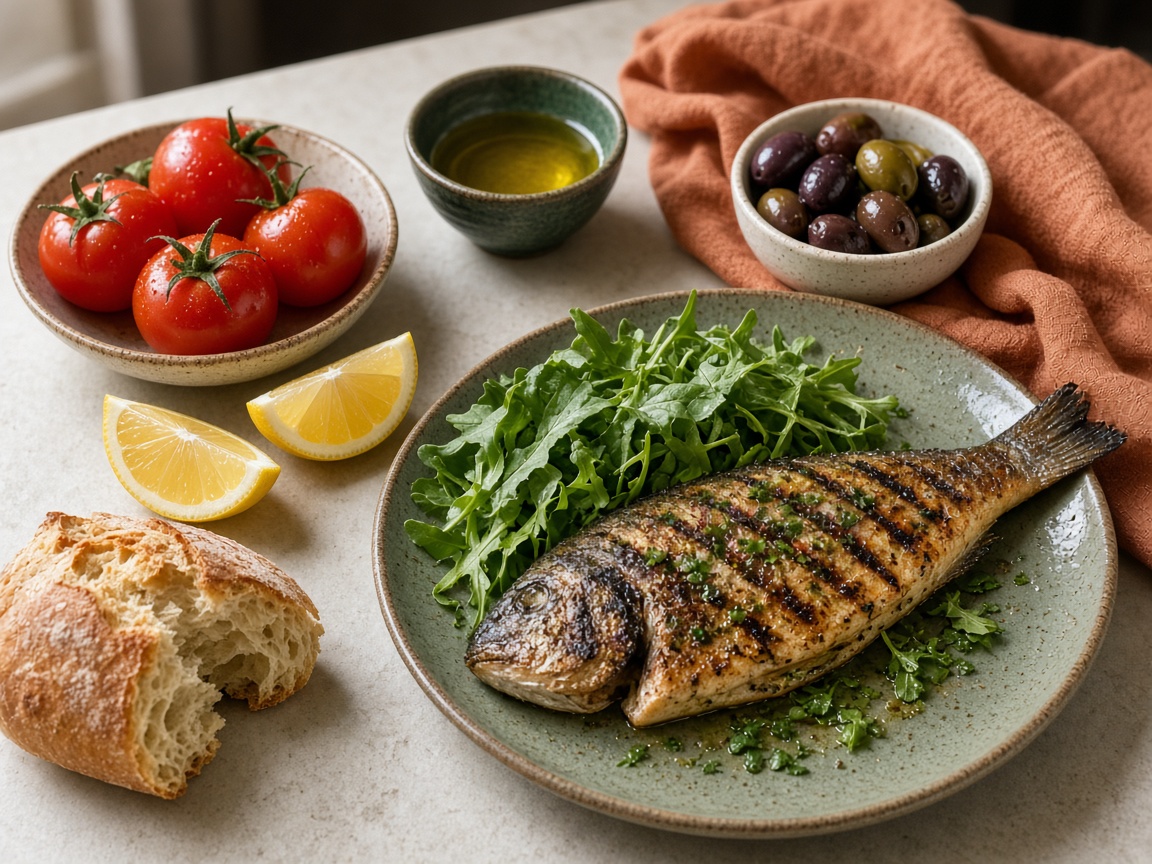
They are close relatives. DASH leans harder on sodium and lower-fat dairy. The Mediterranean plate is more generous with olive oil and fish.
How much salt is allowed?
Trials compared levels, often around 1,500–2,300 mg of sodium a day. Your number comes from a clinician, not from this site.