DASH as a blood-pressure plan
The DASH Eating Plan, as NHLBI describes it, is a food pattern built and studied for blood pressure, not for a fast drop on the scale. Sodium is stated as 2300 mg or as a 1500 mg version, and when treatment is already prescribed that choice stays with a clinician.
What the pattern is built from
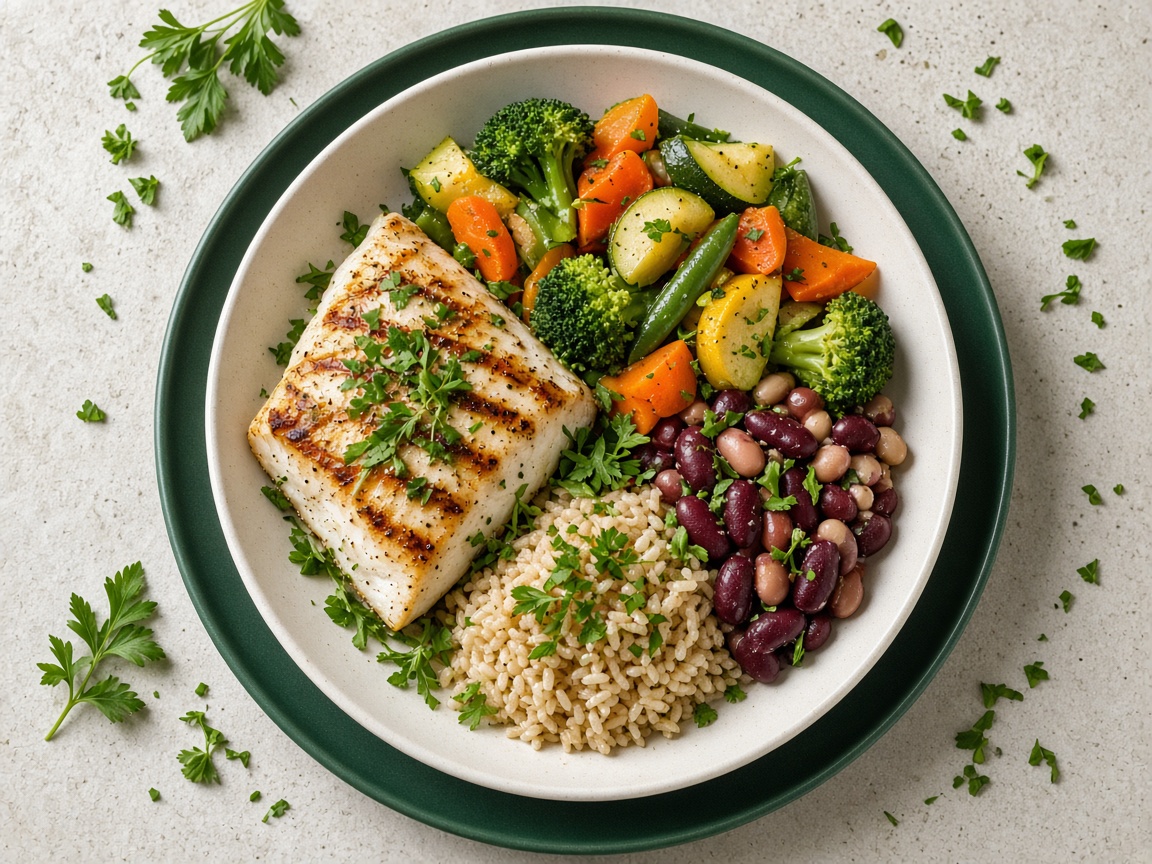
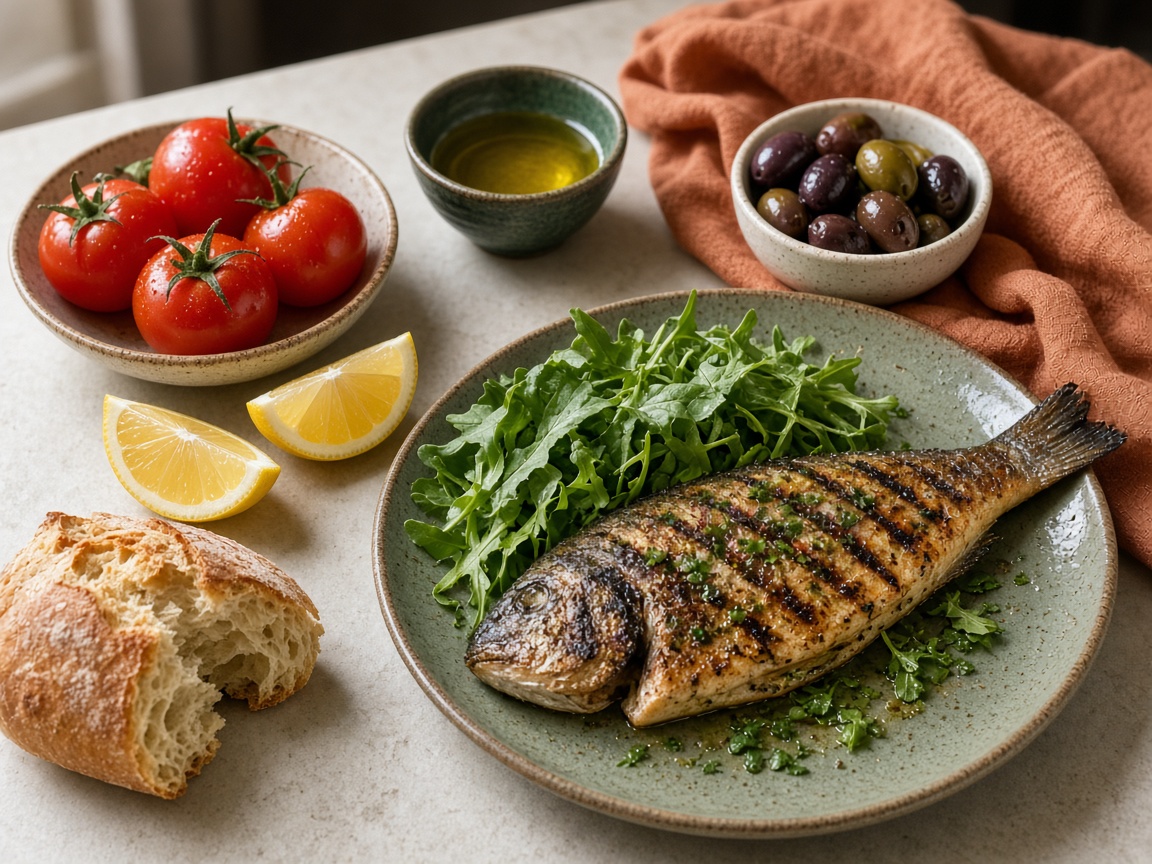
The plan uses vegetables, fruits, whole grains, low-fat dairy, fish, poultry, beans, nuts, and vegetable oils. Less room is given to fatty meat, sweets, and sugary drinks. That is a list of ordinary foods across a week, not a powder, not a fast, and not permission to eat everything under a calm name.
The same frame meets the WHO fact sheet even though the documents differ: fruit and vegetables at or above 400 g a day, salt under 5 g, saturated fat under 10% of energy, and a preference for unsaturated fats. WHO salt in grams and DASH sodium in milligrams are neighboring limits, and this page does not glue them into one homemade formula. Total fat under 30% and trans fat under 1% of energy are not cancelled by the NHLBI table either.
Two sodium lines
The standard version of the plan speaks of 2300 mg of sodium a day, and the lower version speaks of 1500 mg. NHLBI describes both lines, and neither is a slogan that less automatically equals treatment. The lower version does not become homework for every reader only because the figure is smaller.
If blood pressure is already treated with medicines or another prescription, a person does not pick 1500 or 2300 from an article. Changing salt on top of treatment is a conversation with a clinician, not a private edit of the regimen. The eating pattern itself remains a real pattern of food, and it does not have to be discarded out of fear of a figure.
Why this is not a crash diet
NHLBI places the plan with blood pressure, not with a race for kilograms across a few days. Permission to eat everything is also absent: sweets, sugary drinks, and fatty meat are limited. The fast pace CDC gives as an unrealistic example, losing 20 pounds in 2 weeks, is not attached to DASH.
If a wish to lose weight sits beside the plan, CDC holds a different conversation: a gradual pace of about 1 to 2 pounds a week is more likely to be kept than a quicker loss. That pace does not turn DASH into a weight-loss product and does not cancel the blood-pressure pattern. Setbacks on that path are expected, and CDC's advice does not use food as the reward.
What the trial retelling showed
In the DASH trial, Appel and colleagues, NEJM, 1997, a pattern higher in vegetables, fruit, and low-fat dairy and lower in saturated fat lowered blood pressure compared with a typical American control diet. The comparison was with typical American control food, not with starvation. This page does not write how many millimeters the pressure moved.
The practical trace of the plan is shorter than the protocol: vegetables and fruit, whole grain, fish or poultry or beans, low-fat dairy, vegetable oil, and less sugary drink and fatty meat. A day log helps show salt, sauce, and drinks, which memory often drops. CDC sends weight and medicine questions to a clinician, and this article does not prescribe sodium milligrams beyond a plan already chosen with that clinician, or a date on the scale.
What this text draws on
- NHLBI DASH Eating Plan: vegetables, fruits, whole grains, low-fat dairy, fish, poultry, beans, nuts, vegetable oils; less fatty meat, sweets, and sugary drinks; sodium 2,300 mg or a 1,500 mg version. Studied for blood pressure, not as a crash plan and not as permission to eat everything.
- DASH, Appel et al., NEJM 1997: a pattern higher in vegetables, fruit, and low-fat dairy and lower in saturated fat lowered blood pressure compared with a typical American control diet. Do not give millimeters of mercury.
- WHO Healthy diet fact sheet: energy intake in balance with expenditure; fruit and vegetables ≥400 g/day; free sugars <10% of energy (below 5% for further benefit); fat <30%; saturated fat <10%; trans fat <1%; salt <5 g/day; unsaturated fats (fish, avocado, nuts, vegetable oils) preferred to saturated and industrial trans fats.
- CDC, Steps for Losing Weight (January 17, 2025): a gradual pace of about 1 to 2 pounds a week is more likely to be kept than quicker loss; losing 20 pounds in 2 weeks is the example of an unrealistic goal. Modest loss, CDC’s example: 5% of 200 pounds is 10 pounds, can improve blood pressure, cholesterol, and blood sugar and could lower risk of heart disease, prediabetes, and type 2 diabetes — not a personal guarantee. Log food and drinks, activity, sleep, and stress. Goals are specific, two or three at a time; examples include water instead of a sugary drink, a 15-minute walk, a vegetable with supper. Setbacks are expected. Rewards are not food. Medicines, illness, stress, genes, hormones, environment, and age affect weight. Weight and medicine questions go to a clinician. Medicines and bariatric surgery are clinical options, not DIY.
A short paraphrase of open guides and reviews (WHO, national recommendations, peer‑reviewed summaries). Not a quotation and not a treatment protocol.
Short answers
Can DASH be used as a quick weight diet?
No. The plan was studied for blood pressure. It is not a crash pattern and not permission to eat everything. If weight is a goal at all, CDC keeps the pace gradual, about 1 to 2 pounds a week.
If blood pressure is already treated, can 1500 mg of sodium be started from this article?
No. NHLBI describes both 2300 mg and a 1500 mg version. The choice on top of treatment belongs with a clinician.