The Mediterranean plate: a food pattern, and the edge of PREDIMED
The Mediterranean table here is food that repeats, not a one-week detox and not a weight plan. Vegetables, fruit, legumes, nuts, whole grains, and unsaturated fat line up with the WHO fact sheet and with the MyPlate groups. PREDIMED looked at major cardiovascular events in adults whose risk was already high. It was not a weight-loss trial and not a cleanse for healthy young people.
What sits on the plate
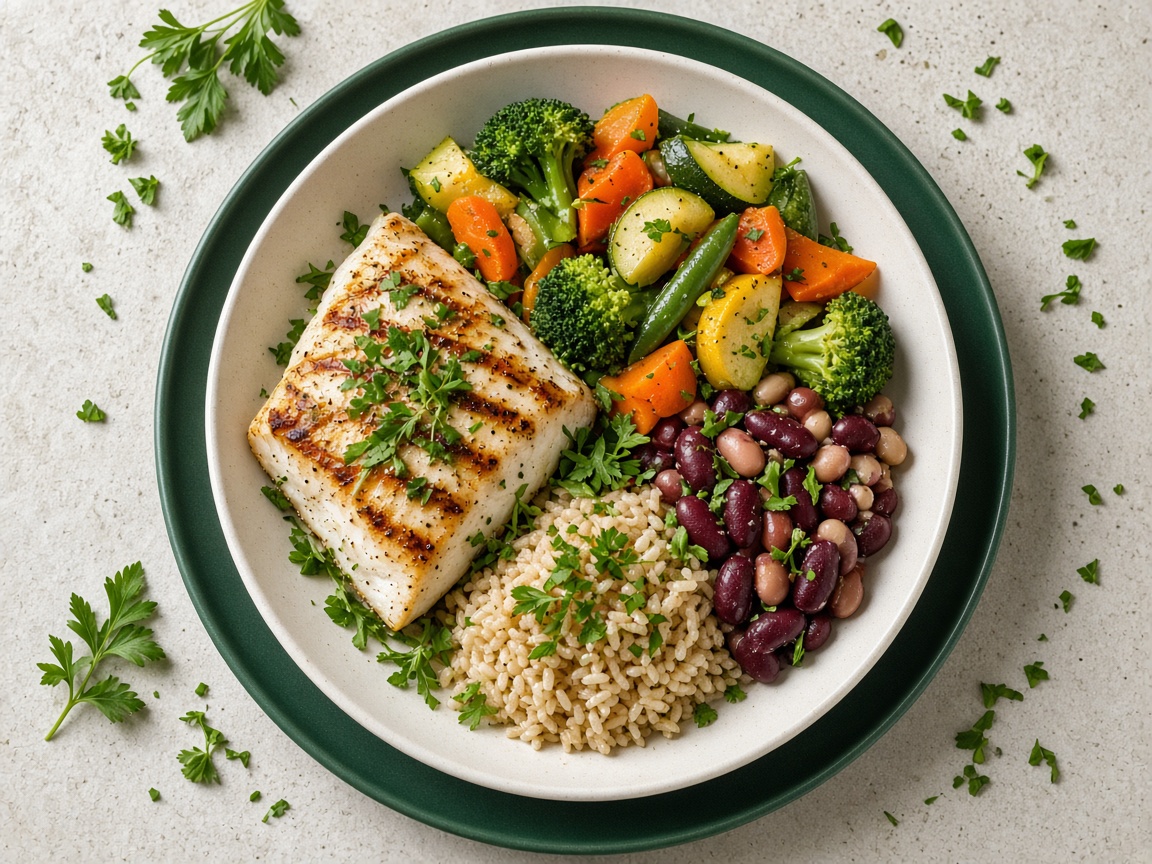
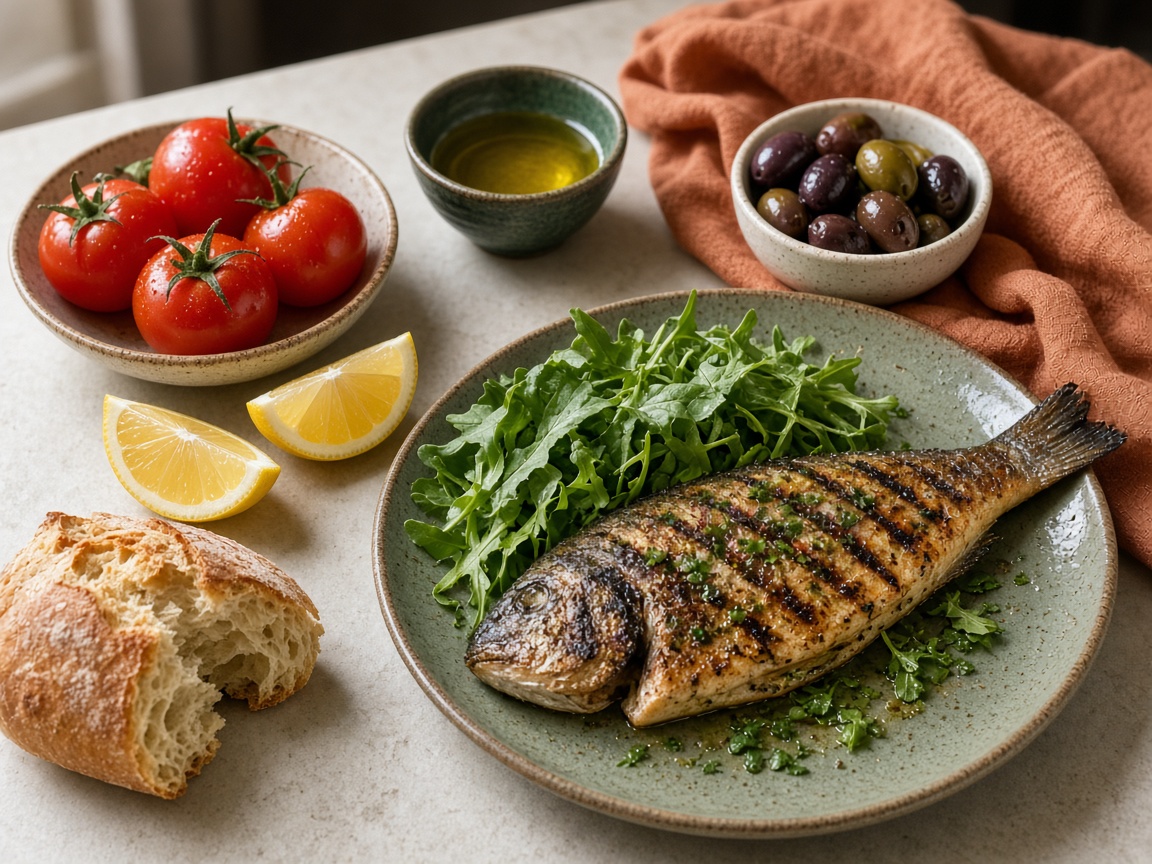
The Dietary Guidelines for Americans 2020–2025 and MyPlate describe a nutrient-dense pattern and ask you to customize it to culture and budget. Half the plate is fruits and vegetables, and half of grains are whole. Protein is varied: beans, lentils, soy, nuts, seafood, eggs, lean meat. Dairy is low-fat, or fortified soy stands in its place. A Mediterranean table is built from those groups: plenty of vegetables, legumes, fish more often than fatty meat, olive oil, whole grain, a little dairy, and sweets not at the center of every day.
The WHO fact sheet keeps vegetables and fruit at or above 400 g a day and names legumes, nuts, and whole grains beside them. Free sugars stay under 10% of energy, with a level below 5% described as further benefit. Total fat stays under 30%, saturated fat under 10%, trans fat under 1%, salt under 5 g. Unsaturated fats are preferred. Olive oil and nuts fit that logic as a swap for saturated fat, not as permission to ignore the portion. From age 2, the U.S. guidelines keep added sugars under 10% of calories and sodium under 2,300 mg a day.
What PREDIMED compared
In plain words, the trial was among adults who already had high cardiovascular risk. A Mediterranean pattern supplemented with extra-virgin olive oil, or supplemented with mixed nuts, was associated with fewer major cardiovascular events than a control group advised to reduce fat. The outcome was events, not kilograms. The people studied already had high risk. They were not every reader of a headline.
The 2013 paper in the New England Journal of Medicine was retracted and republished in 2018. Republication does not turn the trial into a weight-loss diet and does not make it a plan for a healthy young adult to copy as a detox. Further figures are not part of an honest plain-language account, and they should not be invented.
What the trial did not show
PREDIMED did not answer how much weight would leave in a week, and it did not compare a juice, a powder, or a cleanse with ordinary food. The control was advice to reduce fat, not a random person’s Monday. The oil or the nuts were part of a pattern studied in people at high risk. A bottle of oil is not, by itself, a treatment dose.
The word Mediterranean does not cancel the limits. A large pour of oil, a large handful of nuts, and a large piece of cheese add energy quickly and can press on saturated fat and on salt. Sweet pastries and sugary drinks still spend the WHO free-sugar share and the added-sugar share in the U.S. guidelines. Wine, which popular retellings often mention, is not in the food list on this page. The trial is retold here without it.
How to read it across an ordinary week
The practical trace for a plate is short. Vegetables and fruit take a visible share of the meal, grain or bread is often whole, protein comes from fish, legumes, eggs, or lean meat, fat is more often from plants, and sweets and salt do not fill the day. That matches MyPlate and the WHO fact sheet. It is not a home copy of the PREDIMED protocol and not a promise of the same events.
If heart disease, treated blood pressure, or a lipid disorder is already present, a food pattern does not replace a visit. CDC sends questions about weight and medical conditions to a clinician. This article does not prescribe oil by the spoon, nuts by the gram, or a date by which the scale must move.
What this text draws on
- WHO Healthy diet fact sheet: vegetables and fruit ≥400 g/day, legumes, nuts, whole grains; free sugars <10% of energy (below 5% for further benefit); fat <30%; saturated fat <10%; trans fat <1%; salt <5 g/day; unsaturated fats preferred.
- Dietary Guidelines for Americans, 2020–2025, and MyPlate: a nutrient-dense pattern, customized to culture and budget; added sugars <10% of calories from age 2; saturated fat <10%; sodium <2,300 mg/day; half the plate fruits and vegetables, half of grains whole; varied protein including beans, lentils, soy, nuts, seafood, eggs, and lean meat; low-fat dairy or fortified soy.
- PREDIMED in plain words: among adults who already had high cardiovascular risk, a Mediterranean pattern supplemented with extra-virgin olive oil or with mixed nuts was associated with fewer major cardiovascular events than a control group advised to reduce fat. The 2013 NEJM paper was retracted and republished in 2018. It was not a weight-loss trial and not a detox plan for healthy young people. This page adds no further figures to that account.
A short paraphrase of open guides and reviews (WHO, national recommendations, peer‑reviewed summaries). Not a quotation and not a treatment protocol.
Short answers
Did PREDIMED prove that the plate lowers weight?
No. It followed major cardiovascular events in adults who already had high risk. It was not a weight-loss trial and not a detox.
Is a week of olive oil and salad a detox?
No. The pattern is ordinary food inside the sugar, fat, and salt limits. PREDIMED did not hand healthy young people a cleanse.