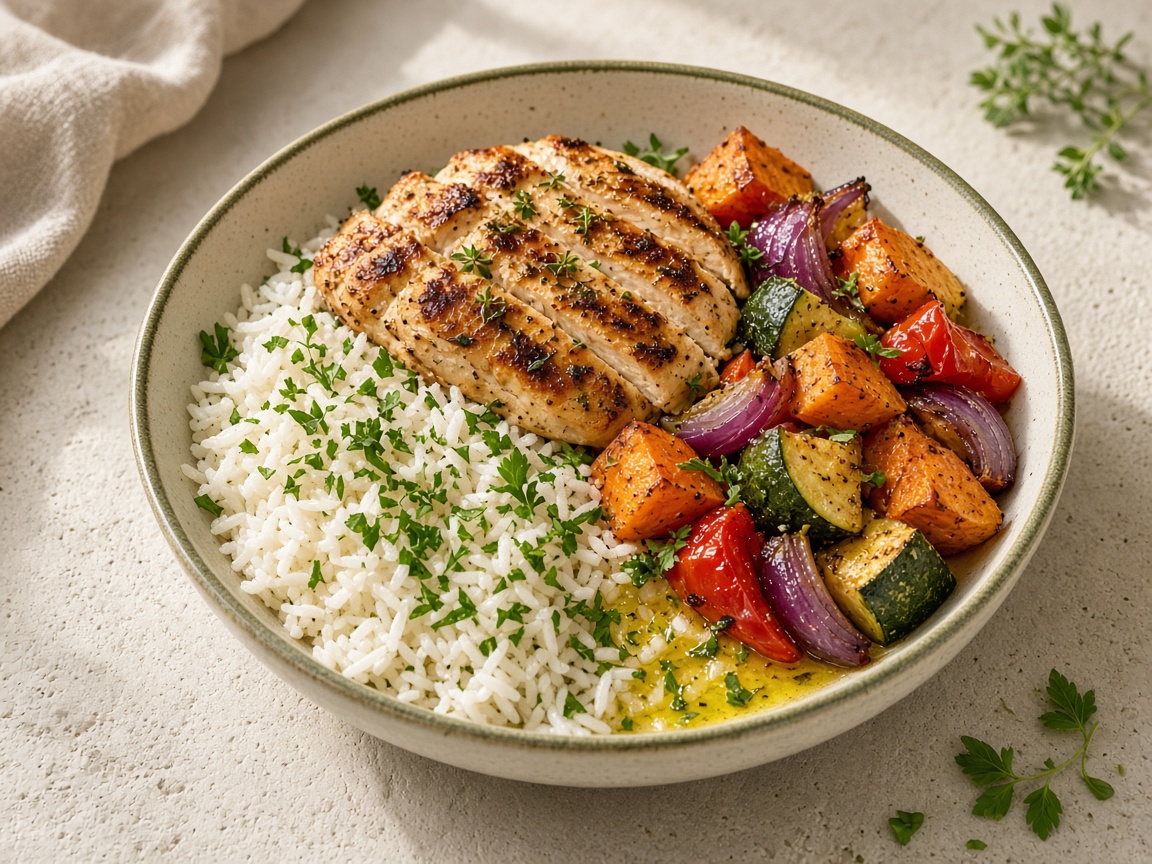
When appetite is small: a denser plate without a sugar drink
A gain fails for more reasons than “the formula looks low.” A large volume of vegetables and water fills you before energy has matched expenditure. WHO does ask for that volume — at least 400 g of fruit and vegetables. With a small appetite you keep the volume and you do not make it the only food of the day.

What to add without dropping the WHO plate
Onto that vegetable volume, add energy the fact sheet does not forbid: vegetable oils rather than extra saturated fat, nuts, avocado, fish, grain, dairy. Free sugars stay under 10% of energy, salt under 5 g.
MyPlate still builds the meal: whole bread or grain, a protein food, a vegetable, a fruit, dairy. That is a spoon of oil and a handful of nuts, not a liter of juice.
Liquid calories
CDC asks you to write down drinks as well as food. Juice, sweet coffee, and soda deliver energy that is easy to miss and spend the WHO free-sugar share quickly. For a gain they are a poor tool: little fullness, and the sugar limit is gone.
Milk and food, not a sweet drink, fit MyPlate and the sugar limit better. If illness, nausea, or a lost interest in food is cutting appetite, a “calorie drink” does not replace a clinician.
Rhythm when the day comes out light
The guidelines do not demand five meals or two. They demand the picture of the day. If a large dinner will not go down, spread energy across ordinary meals and one dense snack: yogurt, bread and cheese, nuts, grain with oil.
Skipping food until evening because you are not hungry leaves expenditure without intake when the goal is a gain. That shows up in the log, not in how you feel at noon.
When it is no longer appetite
CDC lists illness, medicines, stress, and hormones among the things that change weight. A sudden aversion to food, pain, blood in the stool, or weight falling while you are trying to gain is not a job for a denser smoothie.
An article cannot tell a busy schedule from a symptom. A clinician does that.
What this text draws on
- WHO Healthy diet fact sheet: energy intake in balance with expenditure; fruit and vegetables ≥400 g/day; free sugars <10% of energy (below 5% for further benefit); fat <30%; saturated fat <10%; trans fat <1%; salt <5 g/day.
- Dietary Guidelines for Americans, 2020–2025, and USDA MyPlate: nutrient-dense foods; added sugars <10% of calories from age 2; saturated fat <10%; sodium <2,300 mg/day; half the plate fruits and vegetables, half of grains whole, varied protein foods, low-fat or fat-free dairy or fortified soy.
- CDC, Steps for Losing Weight (January 17, 2025): a gradual pace of about 1 to 2 pounds a week is more likely to be kept than quicker loss; medicines, conditions, stress, genes, hormones, environment, and age also affect weight; ask a clinician when unsure.
A short paraphrase of open guides and reviews (WHO, national recommendations, peer‑reviewed summaries). Not a quotation and not a treatment protocol.
Short answers
Should you drink shakes if food will not go down?
Start with oil, nuts, grain, and dairy inside the sugar limits. A sweet drink spends the WHO free-sugar allowance.
Do vegetables block a gain?
WHO does not cancel them. What blocks a gain is a plate with vegetables and no energy beside them: grain, oil, a protein food.