
The spoon of oil in the log
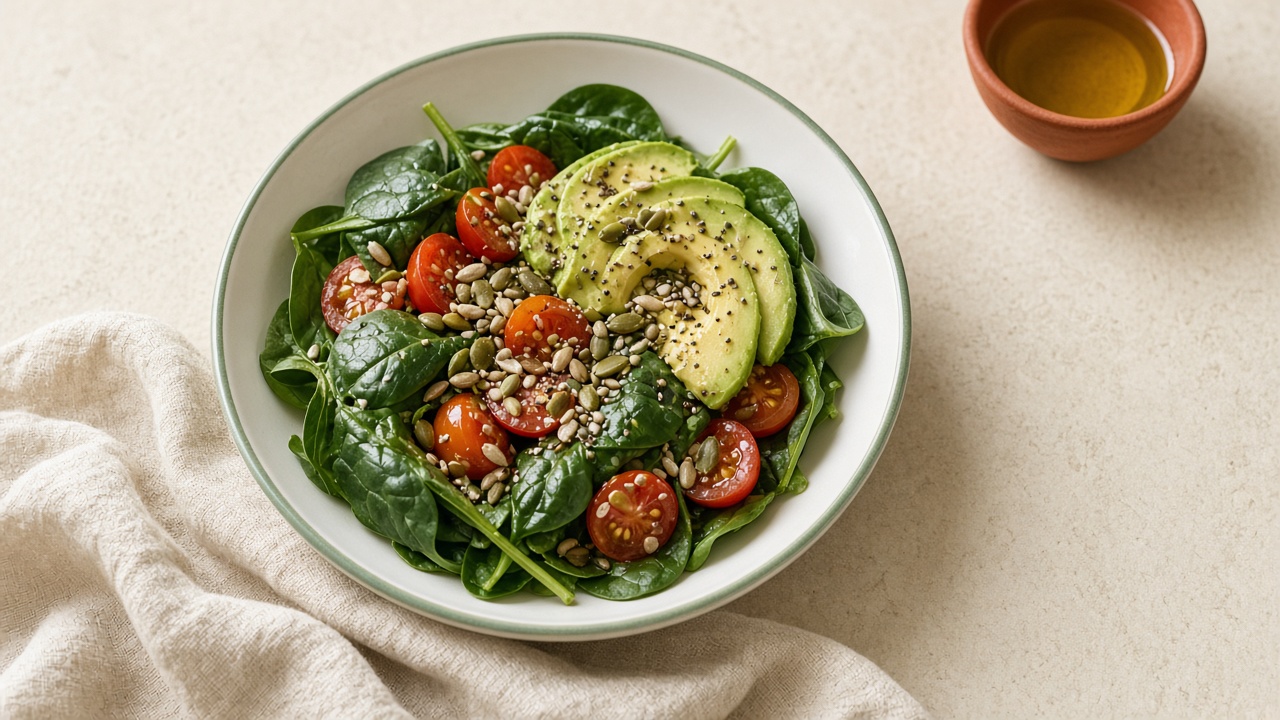
A spoon of oil is energy and part of the fat share the fact sheet keeps under 30% of energy, even when the oil is vegetable and preferred. A salad logged or photographed without that spoon describes a lunch other than the one that was eaten.
A preference does not cancel the share
The fact sheet prefers unsaturated fats — fish, avocado, nuts, vegetable oils — to saturated fats and industrial trans fats. A vegetable oil therefore sits closer to the preference than a hard saturated fat. Under 30% of energy for total fat and under 10% for saturated fat, that spoon still stands inside the day, not outside it.
Industrial trans fat stays under 1% of energy. Ordinary vegetable oil is not that line by itself, and that is not a reason to forget it in the log. Salt under 5 g and free sugars under 10% describe other parts of the plate, while the oil remains the fat line even on a “light” salad.
A picture without the oil is incomplete
CDC asks for a log of what was eaten and drunk. Oil on leaves is often invisible in a picture, especially once it has been tossed. In ScanDish a photo draft does not become grams until the person has confirmed the meal and the day, and that confirmation is the place where the spoon is added in words rather than left outside the frame.
A salad can honestly build toward the guide of at least 400 g of fruit and vegetables, and the oil does not turn into a vegetable while that happens. Half of a MyPlate plate is fruit and vegetables, but the dressing does not hide inside that half. Logging the leaves and forgetting the spoon overstates how “light” the lunch was against the fat share.
A per-100 g guide does not guess the spoon
FoodData Central gives guides per 100 g, and brands of oil differ. The spoon poured over a salad is not 100 g if it was an ordinary kitchen spoon, and it is not zero if it was “almost invisible.” The person confirms the amount from what was poured, not from how pretty the leaves look in the picture.
A dry-food row is not needed to understand oil: water does not turn the spoon into a different food here. The mix-up comes from somewhere else, from the habit of counting a salad as vegetables only. Sodium under 2,300 mg and the fat on a label, if the dressing is bought, are read per labeled serving, not for the whole bottle if the bottle holds several servings.
A week in which the spoons repeat
Several days of a log show whether the spoon was rare or whether it is in every lunch. A gradual pace of about 1 to 2 pounds a week is discussed from such a week, not from one salad declared fat-free. Setbacks are expected: a spoon forgotten on Monday is a reason to write it in on Tuesday, not a reason to punish yourself with an empty plate.
Two or three goals can include both the salad and an honest dressing, with no separate ban on oil. The preferred unsaturated fat is exactly what stays in the food. Rewards are not food, and an “earned” extra sauce for having eaten a salad at all is not in the page’s text.
What this text draws on
- WHO Healthy diet fact sheet: energy intake in balance with expenditure; fruit and vegetables ≥400 g/day; free sugars <10% of energy (below 5% for further benefit); fat <30%; saturated fat <10%; trans fat <1%; salt <5 g/day; unsaturated fats (fish, avocado, nuts, vegetable oils) preferred to saturated and industrial trans fats.
- USDA FoodData Central: guides per 100 g; brands differ. A dry-food row is not a cooked portion, because water changes the weight. Do not use a “rice triples” factor.
- FDA Nutrition Facts: energy is stated per labeled serving; a package can contain several servings. A labeled serving is not always 100 g.
A short paraphrase of open guides and reviews (WHO, national recommendations, peer‑reviewed summaries). Not a quotation and not a treatment protocol.
Short answers
Can vegetable oil go unlogged because it is preferred?
No. It is preferred to saturated fats and industrial trans fats, but total fat stays under 30% of energy. The spoon remains a line in the day.
Does a salad with the oil left off still count as vegetables only?
The vegetables go toward the guide of at least 400 g, and the oil goes toward fat. A picture without the spoon describes an incomplete lunch, and in the product a photo draft does not become grams until the meal and the day are confirmed.
