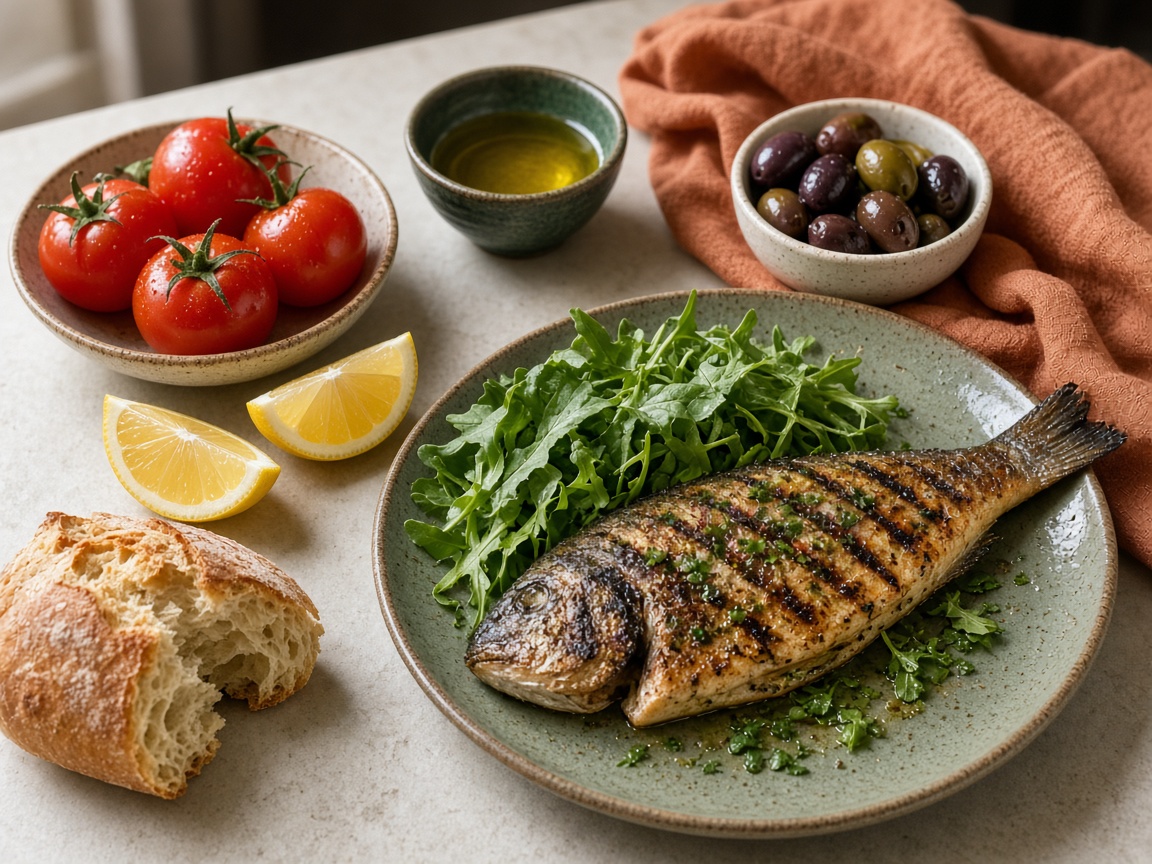
A salad without hidden oil
In a photograph a salad reads as vegetables, while the energy often sits in a spoon of oil the frame never names. WHO does prefer unsaturated oil to saturated fat, and that spoon still belongs to the fat share and to the energy balance.
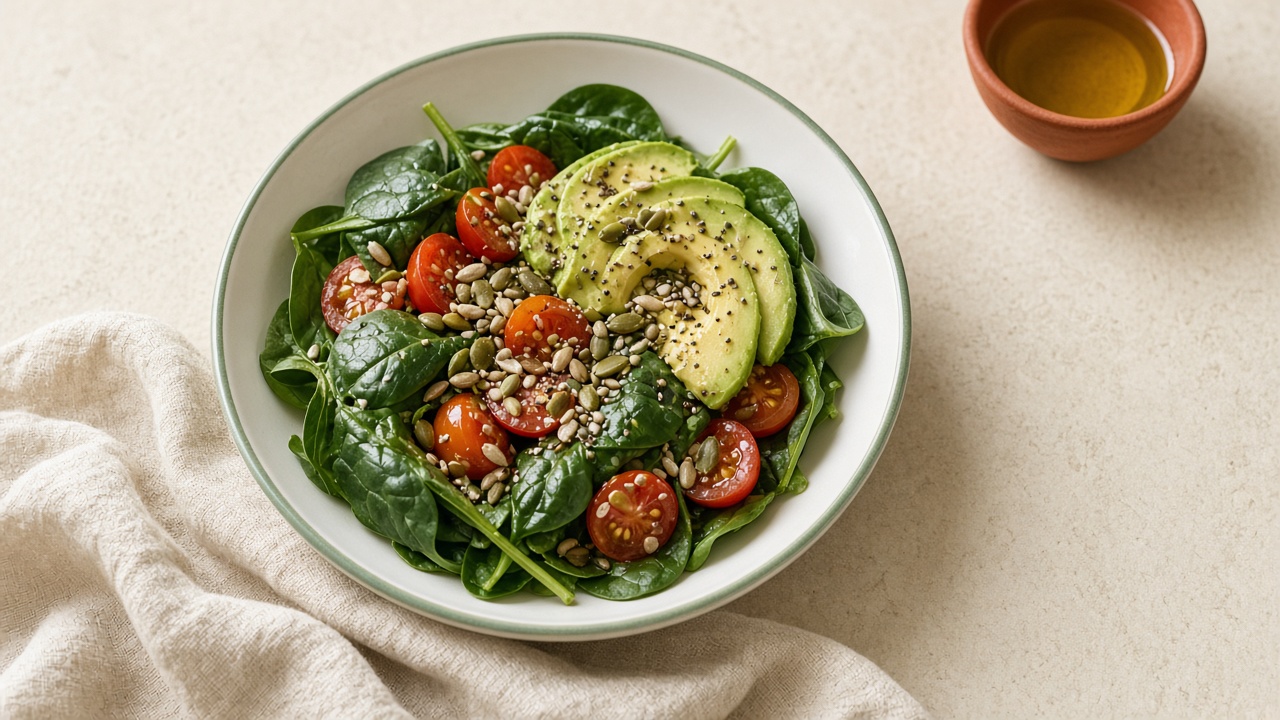
The frame reads the leaves
Leaves fill the picture, and the eye decides that the plate is already half vegetables. The decision is early if a dressing the caption never names is running over the leaves. A vegetable under oil remains a vegetable and helps the line of at least 400 g, only if it was eaten. The oil does not enter that line; there are two foods in one bowl, and the frame shows one.
Thin greens barely covered by a thick sauce may not build the MyPlate half at all. Then the error is double: the vegetable share is not there yet, and the fat already is. An honest log names both the leaves and the spoon. Otherwise the diary keeps a picture of a salad, while what was eaten was sauce with a small amount of greens.
The preference does not erase the spoon
Vegetable oil, nuts, and avocado in the dressing are exactly the unsaturated fats WHO prefers to saturated and industrial trans fats. The preference is about the kind of fat, not about its disappearance. Total fat is kept under 30% of energy, saturated fat under 10%, industrial trans fat under 1%. A spoon of soured-cream mayonnaise and a spoon of olive oil do not become one row merely because both sit on a salad.
The energy of the spoon enters the balance with expenditure. A second spoon is a different portion, even though the bowl looks just as green. The article does not assign calories for the spoon: that figure is not in the fact sheet. What exists is a duty not to call fat leaves; replacing saturated fat with unsaturated fat is closer to the text than the belief that fat on vegetables does not count.
The bottle can hold sugar and salt
A ready dressing often carries more than oil. A sweet sauce spends free sugars under 10% of energy and can spend added sugar under 10% of calories. A salty sauce belongs to the limit of less than 5 g of salt a day. Sodium under 2,300 mg on the label is a different quantity, and the article does not translate it into grams of salt or back again; the bottle is read by the words written on it.
The vegetable half does not cancel the bottle. Fiber of at least 25 g from food sits in the vegetables themselves, not in the sweet dressing. Juice in a jug beside the salad also takes the fruit's name without doing fiber's job. A log of the salad without the sauce and without the drink describes a plate that was not there; CDC asks for food and drinks to be logged in exactly that full form.
The dressing belongs in the log
In ScanDish a number from a photo stays a draft until the person confirms the meal and the day. Confirming is the moment to name the spoon, if it was there, not the moment to trust the leaves in the picture. The draft is not grams of vegetables and is not grams of oil. Several such drafts in a row do not become a week of salads without fat.
If the scale is flat and the frames are all green, CDC suggests looking at the log, including drinks, activity, sleep, and stress, before changing the whole theory. Setbacks are expected. Medicines, illness, stress, genes, hormones, environment, and age affect weight, and questions about weight and medicines go to a clinician. A hidden spoon is the first thing worth seeing in one's own diary, not the last.
What this text draws on
- WHO Healthy diet fact sheet: energy intake in balance with expenditure; fruit and vegetables ≥400 g/day; free sugars <10% of energy (below 5% for further benefit); fat <30%; saturated fat <10%; trans fat <1%; salt <5 g/day; unsaturated fats (fish, avocado, nuts, vegetable oils) preferred to saturated and industrial trans fats.
- Dietary Guidelines for Americans, 2020–2025, and USDA MyPlate: a nutrient-dense pattern shaped by culture and budget; added sugars <10% of calories from age 2; saturated fat <10%; sodium <2,300 mg/day; half the plate fruits and vegetables; half of grains whole; varied protein foods; low-fat or fat-free dairy or fortified soy. Drinking less is better than drinking more; not drinking is an option.
- CDC, Steps for Losing Weight (January 17, 2025): a gradual pace of about 1 to 2 pounds a week is more likely to be kept than quicker loss; losing 20 pounds in 2 weeks is the example of an unrealistic goal. Modest loss, CDC’s example: 5% of 200 pounds is 10 pounds, can improve blood pressure, cholesterol, and blood sugar and could lower risk of heart disease, prediabetes, and type 2 diabetes — not a personal guarantee. Log food and drinks, activity, sleep, and stress. Goals are specific, two or three at a time; examples include water instead of a sugary drink, a 15-minute walk, a vegetable with supper. Setbacks are expected. Rewards are not food. Medicines, illness, stress, genes, hormones, environment, and age affect weight. Weight and medicine questions go to a clinician. Medicines and bariatric surgery are clinical options, not DIY.
- WHO carbohydrate guideline, 2023: at least 25 g of fiber a day for adults, from food.
A short paraphrase of open guides and reviews (WHO, national recommendations, peer‑reviewed summaries). Not a quotation and not a treatment protocol.
Short answers
Can vegetable oil on a salad go unlogged?
No. It is preferred to saturated fat, and the spoon still belongs to the fat share under 30% of energy. A frame of leaves does not replace that spoon.
Does a photo of a green plate already equal grams of vegetables?
No. In ScanDish it is a draft until the person confirms the meal and the day. The dressing enters that confirmation separately.