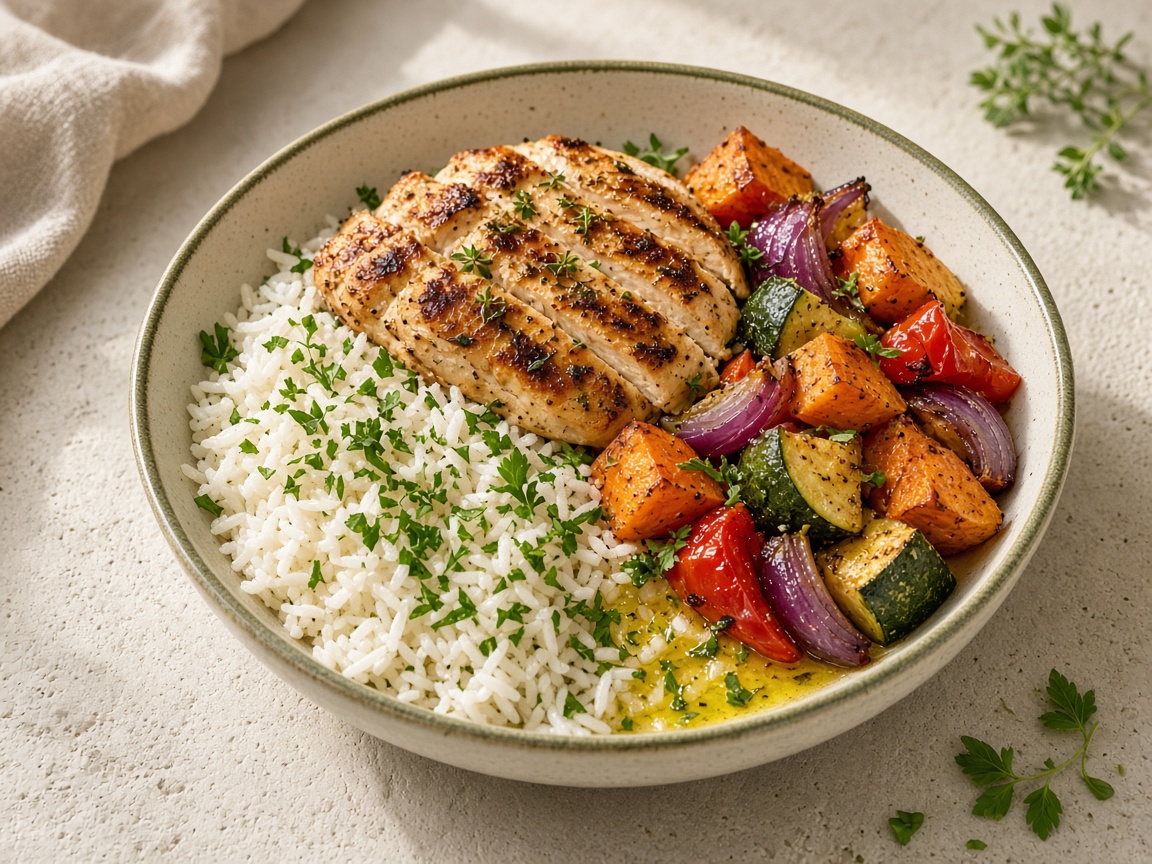
Raw or dry weight is not the cooked spoon
Calories and macronutrients in FoodData Central are a guide per 100 g of the row you opened. Water changes the weight. One hundred grams of dry grain and one hundred grams of cooked porridge are different amounts of grain. A cooked spoon must not be looked up in the dry-grain row. This page does not invent a coefficient for how much heavier grain becomes in the pot.
Why water breaks the row
The database is tied to weight. When grain soaks up water, the grams on the plate rise, and the grain inside those grams does not rise in the same proportion. If you take the dry row’s figures and apply them to the weight of porridge that has already swelled, the guide describes a different amount of grain than the spoon holds. The name “rice” or “buckwheat” does not by itself state the state.
The reverse mistake is the same. Weighing dry grain and opening the cooked-porridge row takes a guide for a food you did not weigh: the water is not in the weight yet. The row and the scale have to talk about one state. Dry with dry, cooked with cooked. Otherwise one hundred grams in the log and one hundred grams in the database are different things.
What this page does not promise
There is no multiplier here of the form “cooked grain is this many times heavier than dry,” and no separate multiplier for rice, buckwheat, oats, or pasta. Water sits differently with different cuts and different pots. One coefficient for every porridge would look like precision and would be an invention. FoodData Central does not supply it as a universal translation of the dry row into a cooked row, and this article does not add one.
There is also no universal shrinkage for meat, fish, or vegetables. Cooking changes weight: some water leaves, and fat can stay in the pan or leave into it if you added fat. A raw piece and a finished piece are different weights. Looking up a raw weight in a finished-dish row, or a finished weight in a raw row, opens the wrong row again.
How to log without a conversion
It is simpler to weigh the state you are looking up. Weigh dry grain before the water and take the dry row. Weigh finished porridge on the plate and take the cooked-food row if it exists. Then you do not need a “how many times” translation. The guide stays what it is: a figure per 100 g of the chosen row.
If there is no cooked row, do not paste the dry figure onto the cooked weight. It is more honest to write down what was weighed and not pretend the translation is known. A brand on a package, when the label talks about the dry food, refers to dry weight, not to a spoon from the pot. Energy on the label is per labeled serving, and that serving is about the dry food too, unless the label says otherwise.
Oil and what you added while cooking
Water is not the only thing that changes the plate. Oil you fried in, and sauce you poured on, do not appear by themselves in a row called “grain cooked in water.” Write them separately. Otherwise the database describes porridge and you ate porridge with fat. CDC asks you to write down everything you ate so those additions do not stay outside both the formula and the row.
FoodData Central remains a guide per 100 g of the chosen row, and brands still differ. Sharing the word “rice” does not make dry rice, cooked rice, and rice with oil one row. The state of the food is part of the log: raw, dry, or already cooked. Without that, per-100 g weights compare different foods.
What this text draws on
- USDA FoodData Central: calorie and macro figures are per 100 g guides; brands differ. A cooked-grain row is not the dry-grain row, because water changes the weight. A cooked spoon must not be looked up as dry grain.
- FDA Nutrition Facts: energy is stated per labeled serving, and the label shows servings per container. Per serving is not always per 100 g.
- CDC, Steps for Losing Weight: write down everything you eat and drink for a few days, because the log shows what happened; a formula does not. Revise the plan from that record.
A short paraphrase of open guides and reviews (WHO, national recommendations, peer‑reviewed summaries). Not a quotation and not a treatment protocol.
Short answers
How many times heavier is cooked rice?
This page does not give that multiplier. Water changes the weight differently from pot to pot. Look up a cooked spoon as cooked, and dry grain as dry.
Can you weigh raw meat and open the roast row?
No. Those are different weights and different rows. Look up the state that is on the scale.