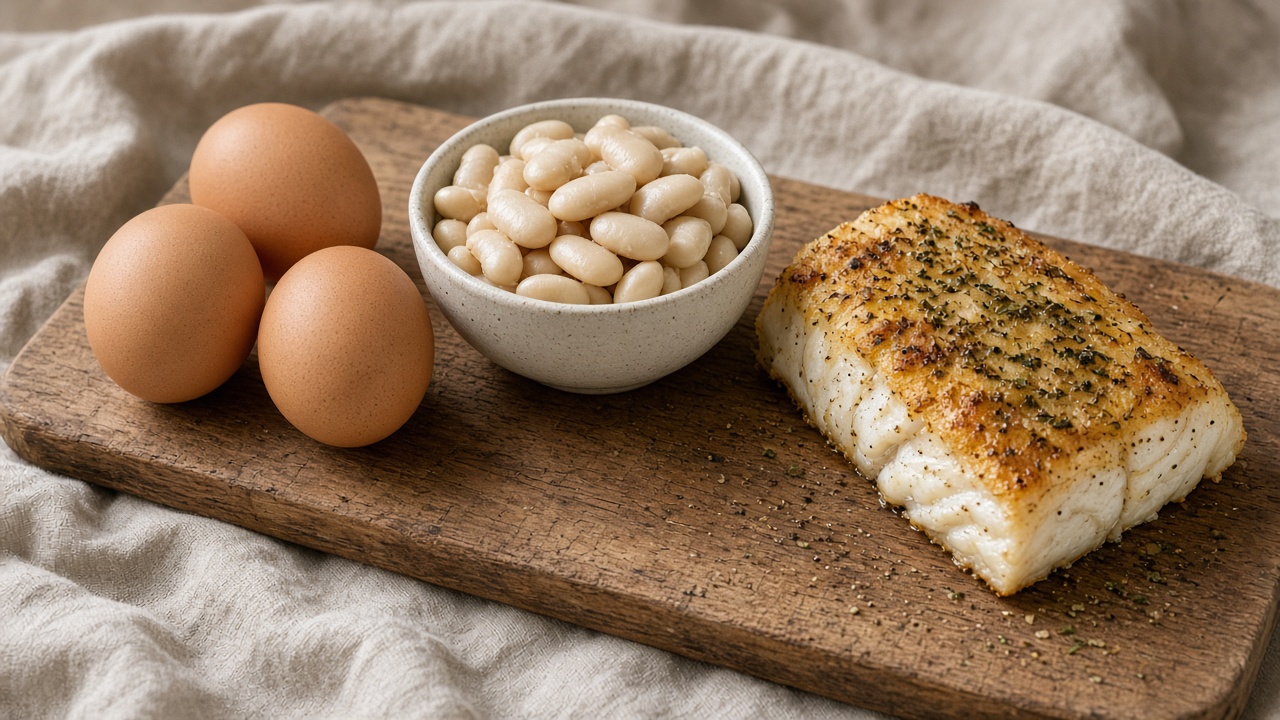
Protein on the plate: a safe level, not a gym target
FAO, WHO, and UNU in the 2007 report name a safe protein level for adults: 0.83 g per kilogram of body weight per day. That is enough for most healthy adults. It is not a muscle-gain assignment and it is not a ceiling.

What the figure is
0.83 g/kg is counted from body weight. For a person of 70 kg that is about 58 g of protein a day. The figure describes a population, not today’s workout. The report does not split it into “before and after the gym” and does not raise it because a scale goal says gain.
Kidney disease changes the figure, sometimes sharply downward. A website does not pick the replacement. A clinician who has the tests does. Eating more protein “because of muscle” in kidney disease is not this report.
Which foods MyPlate uses to build it
The U.S. guidelines ask for varied protein foods: seafood, meat and poultry, eggs, beans, peas, lentils, nuts, seeds, soy. One steak at dinner does not have to close the whole day, and a powder is not named as mandatory in the FAO/WHO report.
Low-fat dairy or fortified soy on MyPlate also carries protein and sits in its own group, not “instead of vegetables.” Half the plate is still fruits and vegetables.
How not to let protein become the whole plate
WHO at the same time keeps fruit and vegetables from 400 g, fat under 30% of energy, and saturated fat under 10%. A plate of fatty meat and cheese can reach the protein grams and still miss the saturated-fat limit.
Fish, beans, poultry, and lower-fat dairy fit both texts more easily: the protein list and the saturated-fat limit.
What this article does not prescribe
There is no 1.6 or 2 g per kilogram here. Those numbers are not in the 2007 report and not in the WHO healthy-diet fact sheet. Someone who trains hard decides any extra with a clinician or a dietitian, not from a gym caption.
A meal draft shows whether a protein food was at lunch. It does not prove the day reached 0.83 g/kg. That needs grams, not only the name of the dish.
What this text draws on
- FAO/WHO/UNU 2007 protein requirements: the safe level for adults is 0.83 g per kg body weight per day. A population figure, not a muscle-gain plan. Kidney disease changes it, and a clinician makes that change.
- Dietary Guidelines for Americans, 2020–2025, and MyPlate: half the plate fruits and vegetables; half of grains whole; varied protein foods (seafood, meat, poultry, eggs, beans, nuts, soy); low-fat or fat-free dairy or fortified soy; added sugars <10% of calories from age 2; saturated fat <10%; sodium <2,300 mg/day.
- WHO Healthy diet fact sheet: fruit and vegetables ≥400 g/day; free sugars <10% of energy (below 5% for further benefit); fat <30%; saturated fat <10%; trans fat <1%; salt <5 g/day; unsaturated fats preferred.
A short paraphrase of open guides and reviews (WHO, national recommendations, peer‑reviewed summaries). Not a quotation and not a treatment protocol.
Short answers
Do you need more than 0.83 g/kg for muscle?
This level is a safe guide for adults, not a gain protocol. The FAO/WHO/UNU report does not require anyone to go above it.
Can cottage cheese alone cover protein?
MyPlate asks for varied protein foods. One food is not banned, but fish, beans, and eggs make the day more complete.