Vegetables and fruit: at least 400 g a day in the WHO text
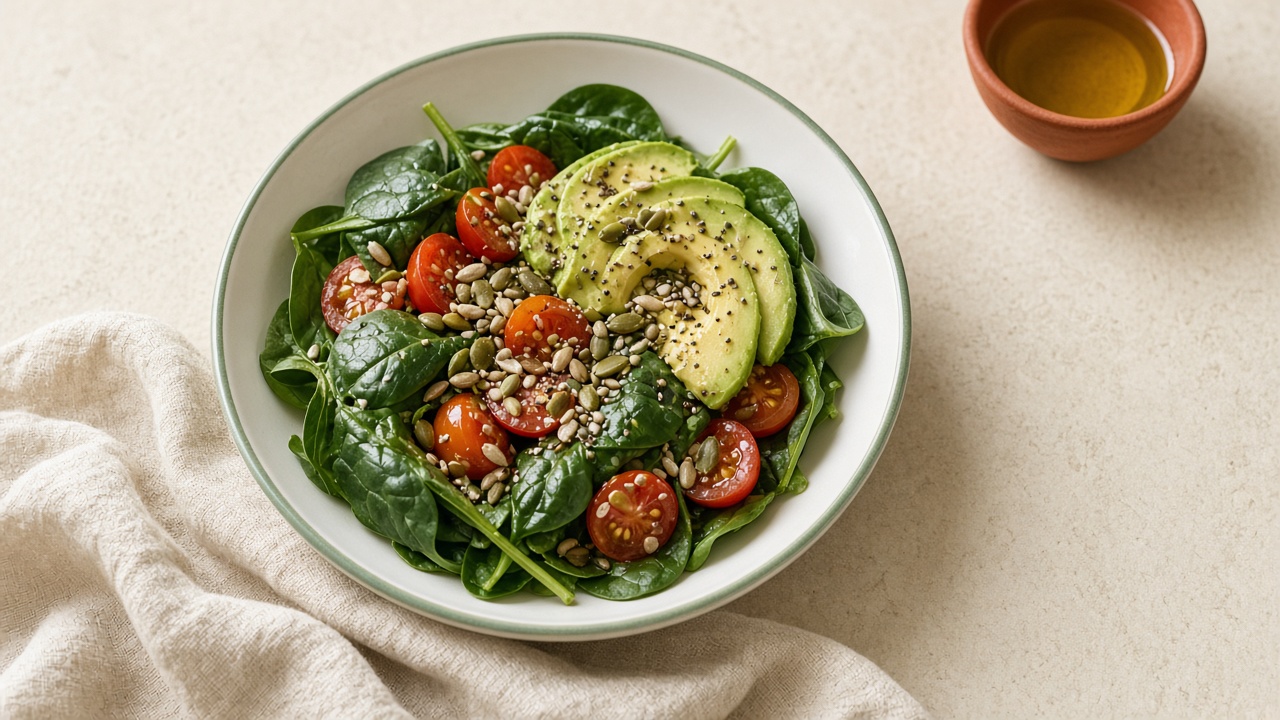
The WHO healthy-diet fact sheet names vegetables and fruit at not less than 400 g a day. Beside it, MyPlate asks that half the plate be vegetables and fruit. These are two ways of talking about plants, not one order to eat without measure.
What sits inside 400 g, and what this page does not add
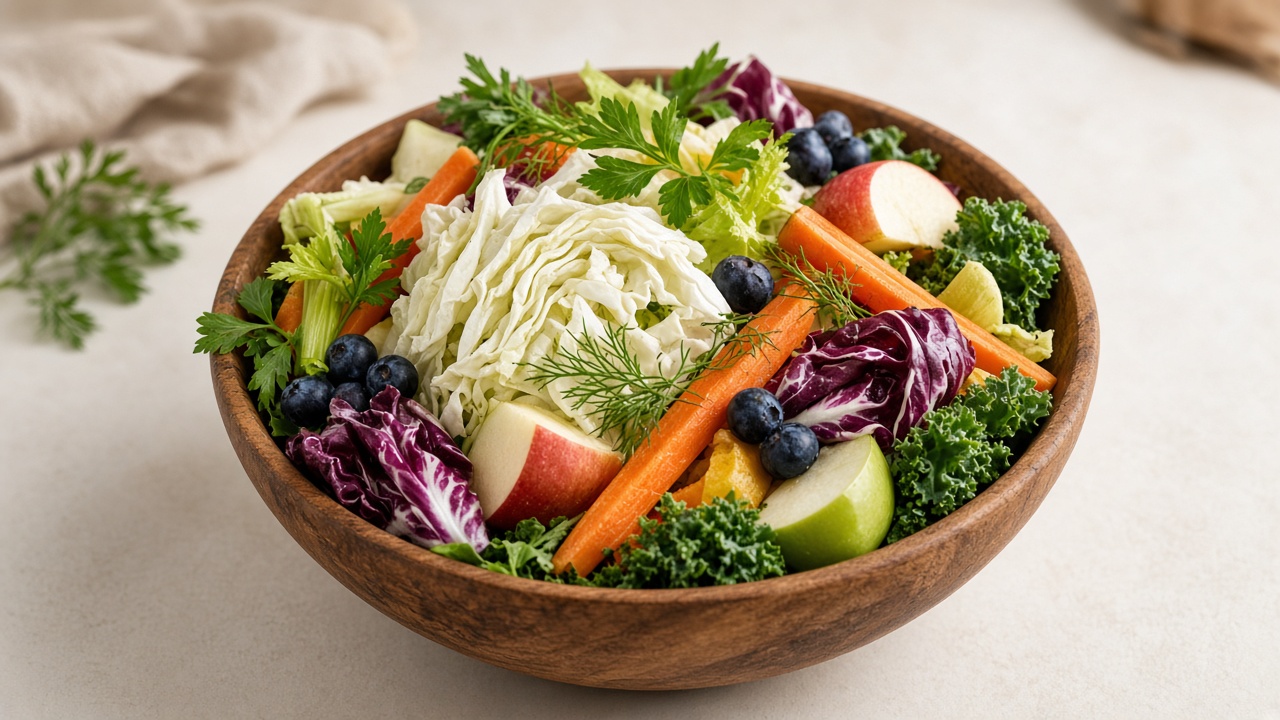
The source says “vegetables and fruit” and gives a lower edge in grams a day. It does not split 400 into a “mandatory juice” and does not allow the whole target to be replaced by a glass. Juice is not named in this line as the equivalent of the whole fruit. This page does not assign how much of the 400 must be fruit and how much vegetable.
Half the plate in MyPlate is about how a meal looks, not about every meal having to weigh 400 g. The day’s 400 g can come from several plates. One plate half covered with greens does not yet prove the day is closed, and an empty day is not disproved by one successful plate.
Other edges of the same fact sheet sit beside it
Free sugars are under 10 percent of energy, and below 5 percent there is additional benefit. Fat is under 30 percent, saturated fat under 10, trans fat under 1. Salt is under 5 g a day. The 400 g of plants do not cancel these shares and are not permission to eat sweets “because there was a salad.”
Fiber in the WHO 2023 recommendation is at least 25 g a day for adults, from food. Vegetables and fruit help reach it, but 400 g are not themselves declared equal to 25 g of fiber. This article will not count one as the other.
How this lives in a record, not in a slogan
The CDC names a vegetable with supper among specific goals. That is an example of one doable line, not a substitute for 400 g. Goals come two or three at a time: for example water instead of a sugary drink, 15 minutes of walking, and that vegetable. “Eat more greens,” with no grams and no fact on the plate, did not make the examples.
A photo of a plate in ScanDish stays a draft until the person confirms the meal and the day. A picture can show that a vegetable was there. It does not weigh the day up to 400 g by itself and does not turn greens into a discount on the rest of the food.
For whom 400 g do not become self-treatment
Kidney disease, diabetes, and a clinician’s instructions can change the makeup of a plate. The fact sheet is a population frame for a healthy diet, not an individual menu. The question “may I have this vegetable” in illness goes to a clinician.
Children’s activity and children’s sleep are not pasted into this gram amount. The 400 g are written in the diet fact sheet as the source gives a general target. This page does not derive a child’s calories from it.
What this text draws on
- WHO Healthy diet fact sheet: energy intake in balance with expenditure; fruit and vegetables ≥400 g/day; free sugars <10% of energy (below 5% for further benefit); fat <30%; saturated fat <10%; trans fat <1%; salt <5 g/day; unsaturated fats (fish, avocado, nuts, vegetable oils) preferred to saturated and industrial trans fats.
- Dietary Guidelines for Americans, 2020–2025, and USDA MyPlate: a nutrient-dense pattern shaped by culture and budget; added sugars <10% of calories from age 2; saturated fat <10%; sodium <2,300 mg/day; half the plate fruits and vegetables; half of grains whole; varied protein foods; low-fat or fat-free dairy or fortified soy. Drinking less is better than drinking more; not drinking is an option.
A short paraphrase of open guides and reviews (WHO, national recommendations, peer‑reviewed summaries). Not a quotation and not a treatment protocol.
Short answers
Is 400 g one plate?
No. It is the lower edge of vegetables and fruit for the day. Half of one plate in MyPlate is about the look of a meal. The day can be built from several meals.
Does juice replace these 400 g?
The WHO line names vegetables and fruit, not juice as a replacement. This page does not declare a glass the equivalent of the target.