A plate at older ages
The WHO fact sheet does not replace vegetables and the limits on fat, sugar, and salt with a separate menu at older ages. From age 65, balance and coordination on three or more days a week are added to the same activity minutes, and protein foods are not removed from the plate even when appetite has become smaller.

The food lines are not rewritten by age
Fruit and vegetables are still at least 400 g a day, free sugars under 10% of energy and under 5% for further benefit, total fat under 30%, saturated fat under 10%, trans fat under 1%, salt under 5 g. The preference remains with unsaturated fats: fish, avocado, nuts, vegetable oils. The fact sheet does not publish a separate plate for older age.
MyPlate does not split the picture by decade inside these guidelines either. Half the plate is fruits and vegetables, half of grains are whole, protein foods are varied, and dairy is low-fat or fat-free or fortified soy. A smaller plate can carry the same shares in a smaller volume. Age does not cancel sodium under 2,300 mg or added sugars under 10% of calories.
From 65, balance is added to movement
For adults 18 to 64, WHO names at least 150 to 300 minutes of moderate aerobic activity a week or 75 to 150 minutes of vigorous activity, plus muscle-strengthening on two or more days. Some activity is better than none, and sedentary time should be limited. From age 65 the same remains, with balance and coordination added on three or more days a week.
For adults, CDC names at least 150 minutes of moderate aerobic activity a week and muscle-strengthening on two or more days. Those minutes do not replace food and do not zero out the plate. They sit beside it. This article does not invent a separate pulse, distance, or set of exercises beyond those lines, and it does not promise that balance by itself changes weight.
A smaller appetite does not remove the protein food
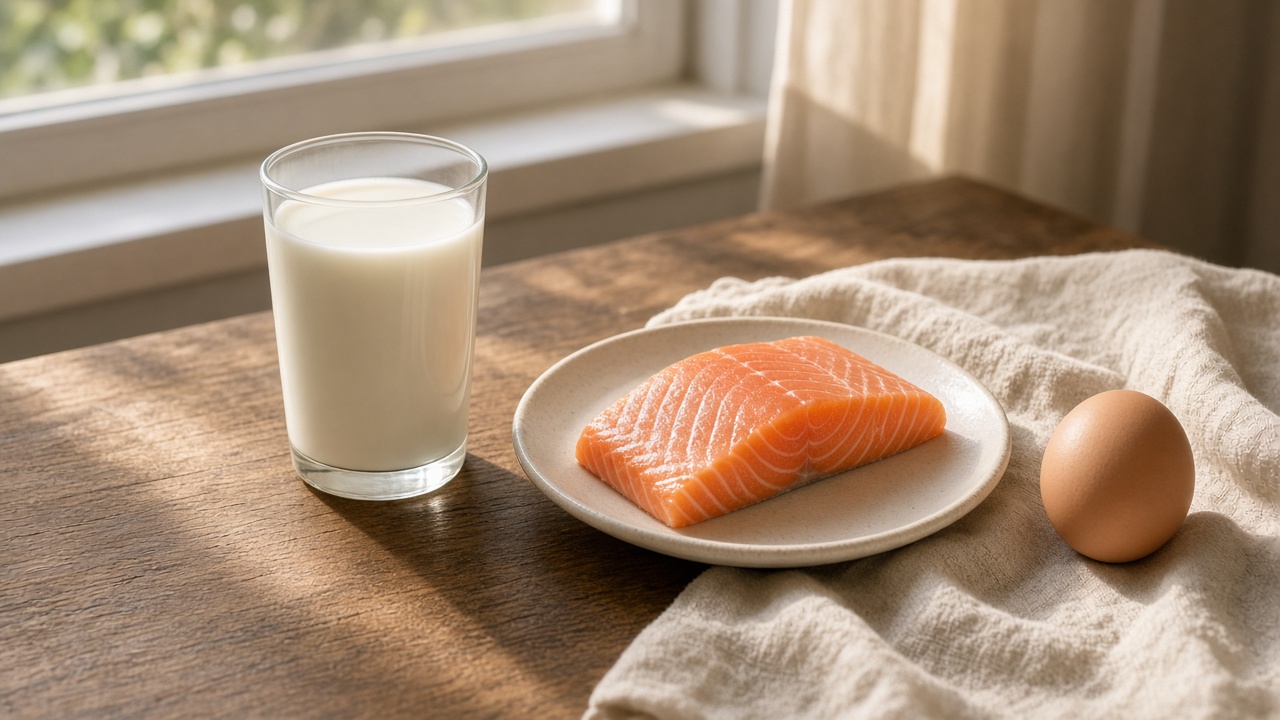
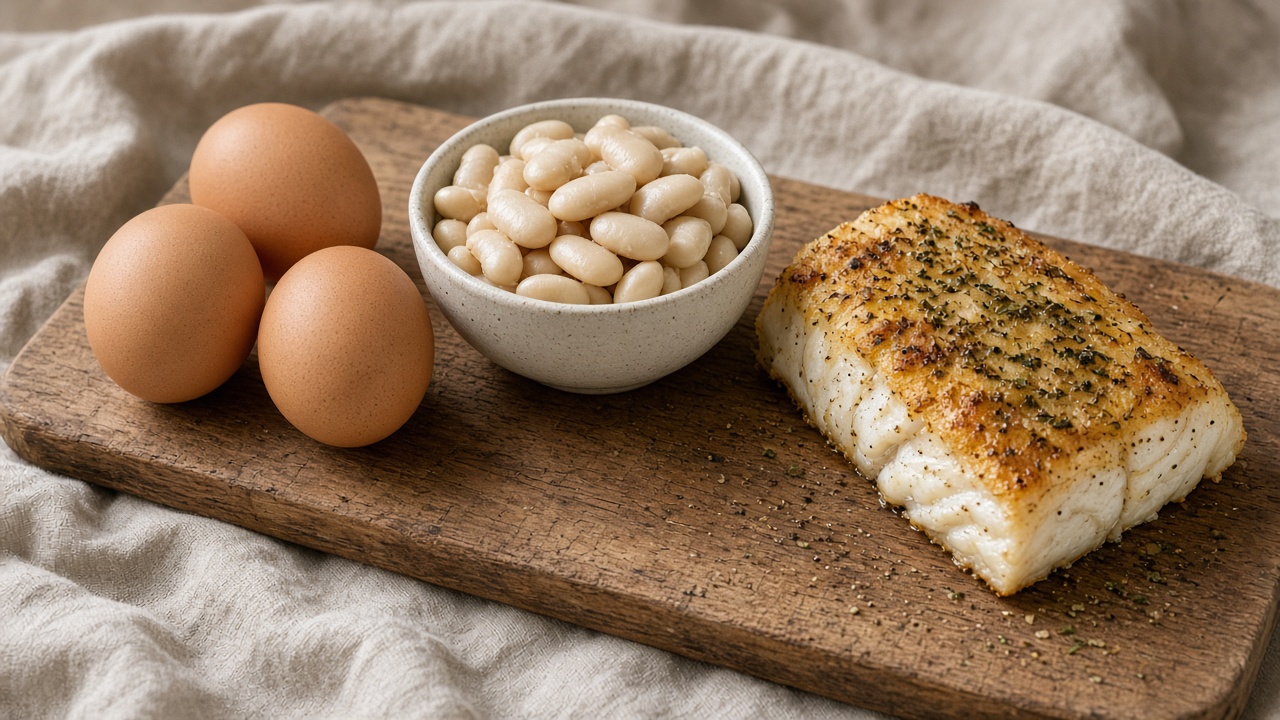
The safe protein level for adults is 0.83 g per kg of body weight per day. That is a population guide, including for an older adult, not a muscle-gain plan and not a reason to live on tea and biscuits. Fish, eggs, dairy, poultry, and beans stay on the plate even when the portion has become smaller.
Kidney disease changes that figure through a clinician. This article does not lower it because of years and does not raise it for muscle. If appetite has fallen because of illness, medicines, or how a person feels, CDC sends weight and medicine questions to a clinician. Removing the protein food so the plate looks lighter is not advice from these texts.
Vegetables stay, even when the piece is smaller
Four hundred grams are harder to gather when the volume of food is small, but the line is not replaced with biscuits. Several small vegetables and a fruit across the day are closer to it than a refusal that says greens are already too much. Fiber of at least 25 g a day for adults still comes from food, and vegetables with whole grain and beans belong to that food.
Salt under 5 g is especially visible if appetite rests on broth, cheese, and bread. Sodium under 2,300 mg in the Dietary Guidelines is the same theme as another number, and this article does not add those numbers together. The DASH plan, with vegetables, fruit, whole grains, low-fat dairy, fish, poultry, and beans, was studied for blood pressure, not as a crash plan. This article does not give millimeters.
What this text draws on
- WHO Healthy diet fact sheet: energy intake in balance with expenditure; fruit and vegetables ≥400 g/day; free sugars <10% of energy (below 5% for further benefit); fat <30%; saturated fat <10%; trans fat <1%; salt <5 g/day; unsaturated fats (fish, avocado, nuts, vegetable oils) preferred to saturated and industrial trans fats.
- WHO Physical activity fact sheet: adults 18–64 at least 150–300 minutes of moderate aerobic activity a week, or 75–150 minutes vigorous, plus muscle-strengthening on 2 or more days; some activity is better than none; sedentary time should be limited. From age 65, the same plus balance and coordination on 3 or more days.
- CDC, Adult Activity: at least 150 minutes of moderate aerobic activity a week and muscle-strengthening on 2 or more days.
- FAO/WHO/UNU, 2007: the safe protein level for adults is 0.83 g per kg body weight per day. A population figure, not a muscle-gain plan. Kidney disease changes it through a clinician.
- Dietary Guidelines for Americans, 2020–2025, and USDA MyPlate: a nutrient-dense pattern shaped by culture and budget; added sugars <10% of calories from age 2; saturated fat <10%; sodium <2,300 mg/day; half the plate fruits and vegetables; half of grains whole; varied protein foods; low-fat or fat-free dairy or fortified soy. Drinking less is better than drinking more; not drinking is an option.
- WHO carbohydrate guideline, 2023: at least 25 g of fiber a day for adults, from food.
- NHLBI DASH Eating Plan: vegetables, fruits, whole grains, low-fat dairy, fish, poultry, beans, nuts, vegetable oils; less fatty meat, sweets, and sugary drinks; sodium 2,300 mg or a 1,500 mg version. Studied for blood pressure, not as a crash plan and not as permission to eat everything.
A short paraphrase of open guides and reviews (WHO, national recommendations, peer‑reviewed summaries). Not a quotation and not a treatment protocol.
Short answers
Do the vegetable, fat, and salt lines change at 65?
In the WHO fact sheet those food lines are not replaced by others. What is added is different: balance and coordination on three or more days a week beside the same activity minutes.
Should fish and eggs be removed when appetite is small?
No. Protein foods stay on the plate even if the portion is smaller. The figure of 0.83 g per kg is changed by a clinician in kidney disease, not by the person because of age.