Protein not only at dinner
The safe protein level for adults is counted for the day, not for a separate supper and not as grams for each meal. MyPlate still wants a protein food in the meals a person actually eats, so the day does not rest on one piece at night.

There is one figure, and it is for the day
FAO, WHO, and UNU name a safe level of 0.83 g of protein per kg of body weight per day. That is a population guide, not a muscle-gain plan and not a schedule of before the gym and after. This article does not divide 0.83 into breakfast, lunch, and supper and does not publish a gram quota per meal: the report contains no such split.
Kidney disease changes the level through a clinician. A person does not raise it because supper happened to be late, and does not lower it because the morning only wanted tea. The day either contains protein foods in the meals that were eaten, or it does not. A photo of one supper does not prove the day.
A protein food where a meal actually happened
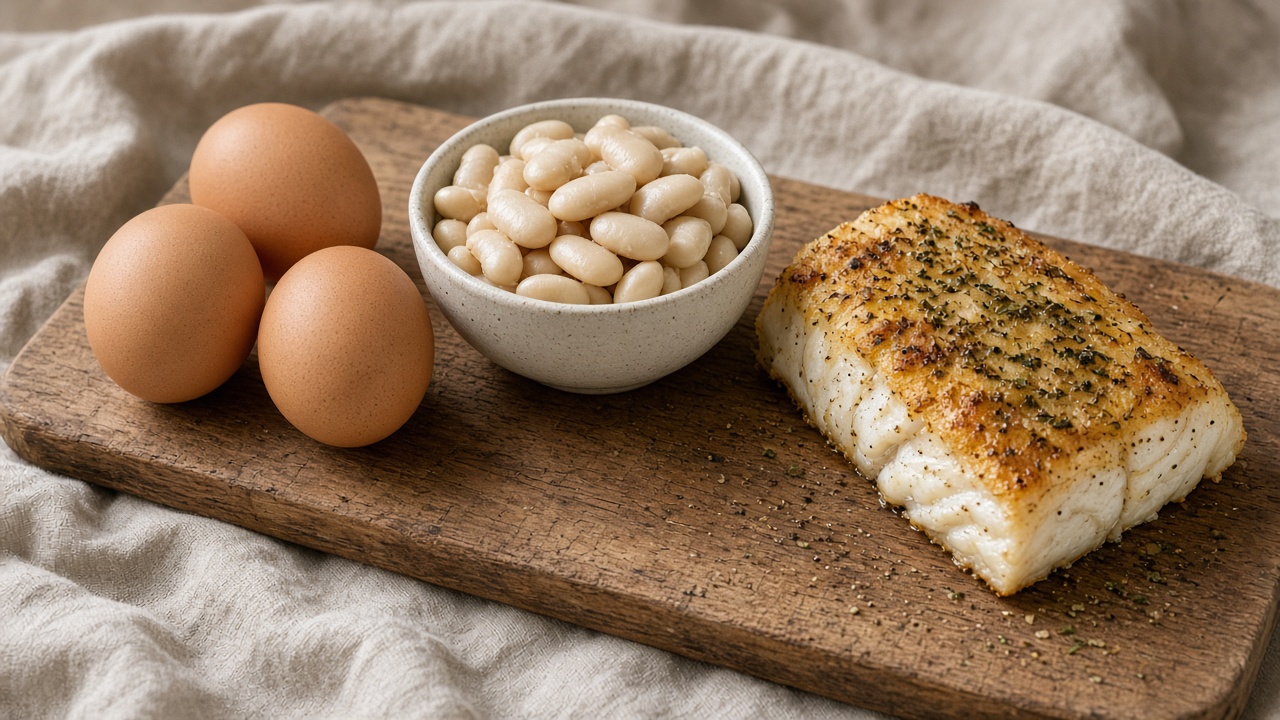
The Dietary Guidelines ask for varied protein foods: seafood, meat, poultry, eggs, beans, nuts, soy. If a person eats breakfast, an egg, dairy, or beans fit there. If they eat lunch, fish, poultry, or beans fit there. Supper does not have to be the only place where the word protein appears.
Dairy on MyPlate is its own group, low-fat or fat-free or as fortified soy, and it also carries protein without replacing vegetables. Skipping breakfast does not create a gram debt the texts never wrote. It simply means that meal had no protein food, and the day is gathered from the meals that actually happened.
Supper does not get to eat the whole plate
A large piece of meat in the evening can gather protein and at the same time spend saturated fat, which both WHO and the Dietary Guidelines keep under 10%. Total fat stays under 30% of energy. The preference for unsaturated fats — fish, nuts, vegetable oils — is easier to meet when the day's protein foods are varied, not one fatty piece after dark.
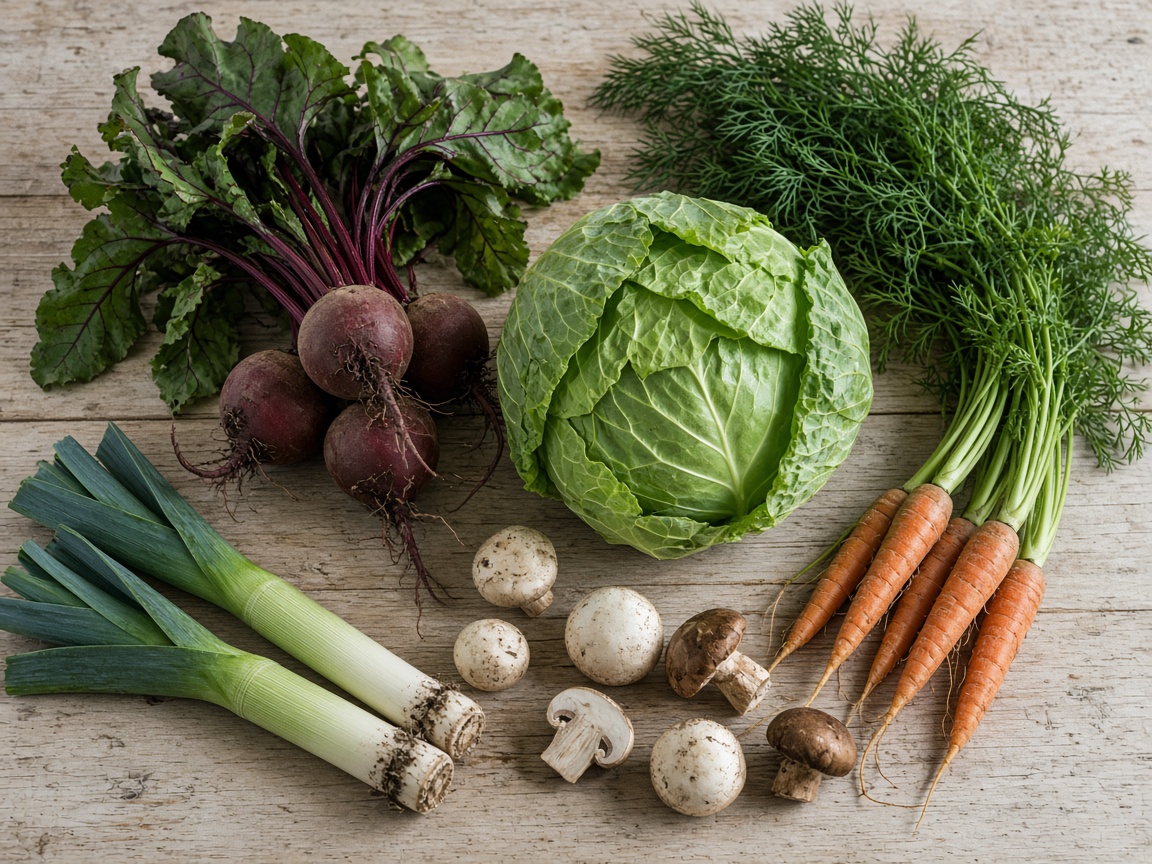
Half the plate as fruits and vegetables remains both at supper and in the daytime. The protein part does not push out the line of at least 400 g. Fiber of at least 25 g for adults also does not appear from a late steak. Spreading protein foods across meals is exactly what leaves room for a vegetable, rather than building a protein diet out of one word.
What should not appear in the log
A useful line names the food and the meal: an egg in the morning, beans at lunch, fish in the evening. It does not set an invented gram quota on each of those meals. The daily figure of 0.83 g per kg stays a guide for a person who knows their weight, not a caption under a photograph of supper.
A photo draft does not become grams of protein until the person confirms the meal and the day. CDC asks for a food log so the shape is visible. The shape protein only at night is visible from exactly that log, and it changes when a protein food appears in a meal that is already eaten, not by a new compulsory snack.
What this text draws on
- FAO/WHO/UNU, 2007: the safe protein level for adults is 0.83 g per kg body weight per day. A population figure, not a muscle-gain plan. Kidney disease changes it through a clinician.
- Dietary Guidelines for Americans, 2020–2025, and USDA MyPlate: a nutrient-dense pattern shaped by culture and budget; added sugars <10% of calories from age 2; saturated fat <10%; sodium <2,300 mg/day; half the plate fruits and vegetables; half of grains whole; varied protein foods; low-fat or fat-free dairy or fortified soy. Drinking less is better than drinking more; not drinking is an option.
- WHO Healthy diet fact sheet: energy intake in balance with expenditure; fruit and vegetables ≥400 g/day; free sugars <10% of energy (below 5% for further benefit); fat <30%; saturated fat <10%; trans fat <1%; salt <5 g/day; unsaturated fats (fish, avocado, nuts, vegetable oils) preferred to saturated and industrial trans fats.
- WHO carbohydrate guideline, 2023: at least 25 g of fiber a day for adults, from food.
- CDC, Steps for Losing Weight (January 17, 2025): a gradual pace of about 1 to 2 pounds a week is more likely to be kept than quicker loss; losing 20 pounds in 2 weeks is the example of an unrealistic goal. Modest loss, CDC’s example: 5% of 200 pounds is 10 pounds, can improve blood pressure, cholesterol, and blood sugar and could lower risk of heart disease, prediabetes, and type 2 diabetes — not a personal guarantee. Log food and drinks, activity, sleep, and stress. Goals are specific, two or three at a time; examples include water instead of a sugary drink, a 15-minute walk, a vegetable with supper. Setbacks are expected. Rewards are not food. Medicines, illness, stress, genes, hormones, environment, and age affect weight. Weight and medicine questions go to a clinician. Medicines and bariatric surgery are clinical options, not DIY.
A short paraphrase of open guides and reviews (WHO, national recommendations, peer‑reviewed summaries). Not a quotation and not a treatment protocol.
Short answers
Is there a gram target for protein at each meal?
No. The safe level of 0.83 g per kg is set for the day. The report does not divide it into breakfast, lunch, and supper.
Is a protein food only at supper enough?
The day is counted as a whole. MyPlate wants a protein food in the meals a person actually eats, so the day does not rest on one piece at night.