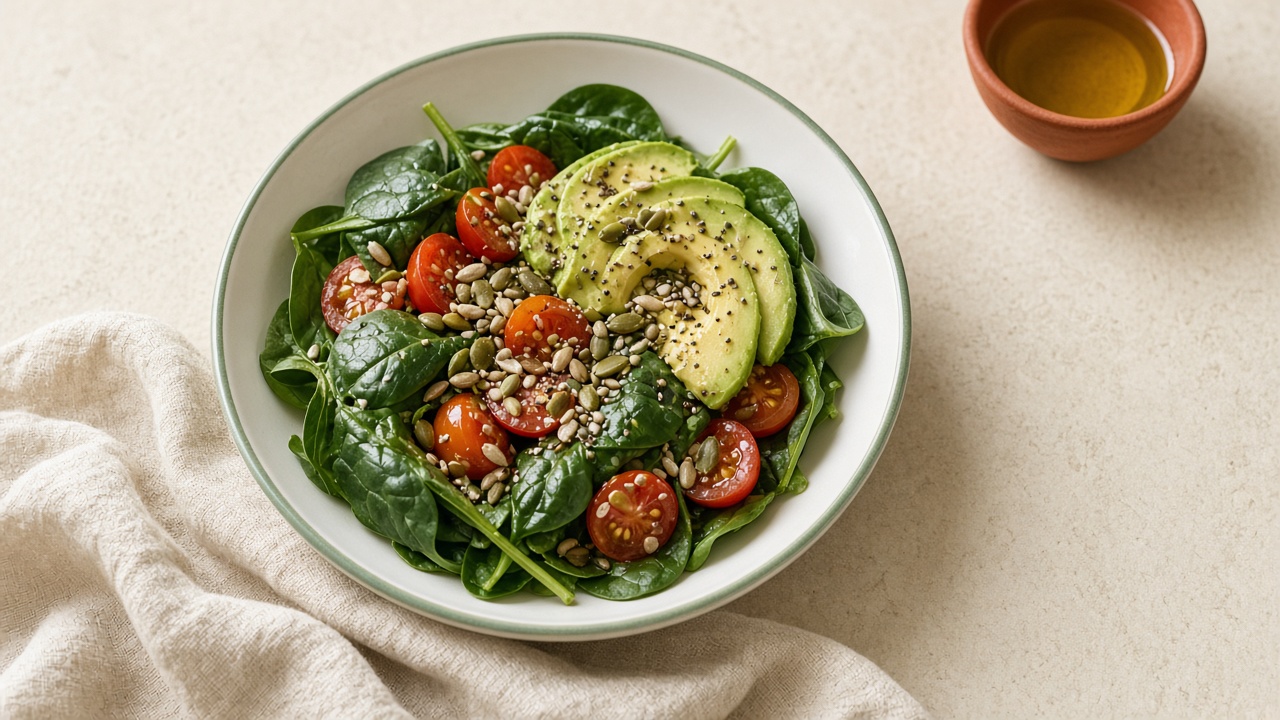
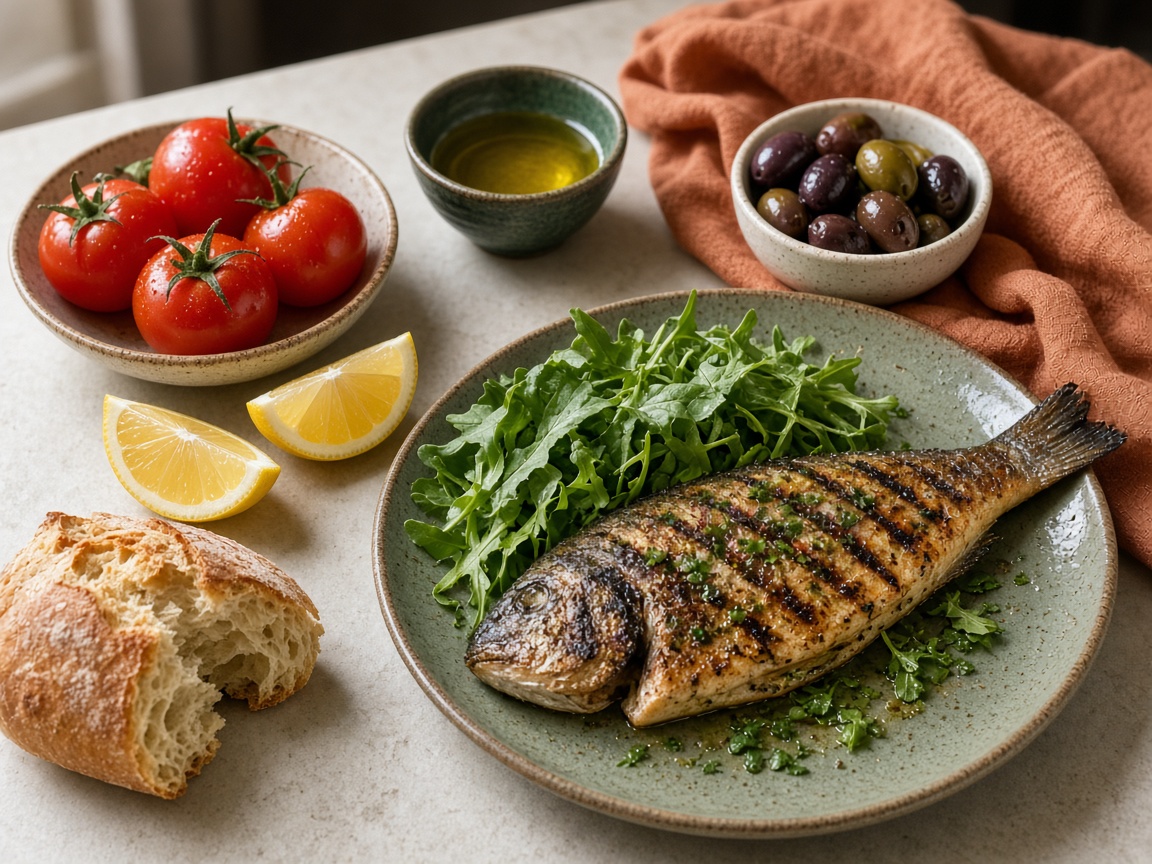
Sweets beside a normal plate
A handsome plate does not cancel a sugary drink beside it. WHO keeps free sugars under 10% of energy, calls a level under 5% a further benefit, and from age 2 the American guidelines keep added sugars under 10% of calories.

The glass beside a careful plate
The vegetable half, a whole grain, and fish can be assembled exactly, and the day can still spend sugar in a glass that never entered the frame. A drink is part of energy intake, not scenery behind a "correct" lunch. WHO keeps energy in balance with expenditure, and a sweet liquid belongs in that balance. The plate does not subtract it.
MyPlate asks that half the plate be fruit and vegetables, and it does not say that a completed drawing extinguishes the drink next to it. Logging the food and forgetting the drinks means doing the CDC advice by half: both are logged. A setback, when the glass happens anyway, is called expected in those same steps, not the end of the week.
Two lines, two texts
Free sugars and added sugars are wordings from different documents. WHO speaks of free sugars: under 10% of energy, with further benefit under 5%. From age 2 the American guidelines speak of added sugars: under 10% of calories. This article does not translate one line into grams of the other and does not declare them one number; a sugary drink can touch both, and that is enough reason not to hide the glass behind the vegetables.
A biscuit at the edge of the same plate spends sugar even when the salad is faultless. The fat in the pastry stays in the share under 30% of energy, saturated fat under 10%. A sweet does not become a vegetable by sitting next to a vegetable. The CDC steps do not use food as a reward for a "good plate": rewards are not food, so a dessert is not a prize that can go unlogged.
An example of a short goal
CDC gives narrow examples, not a personality. Water instead of a sugary drink is one of them, beside a fifteen-minute walk and a vegetable with supper. Two or three such goals are taken, not all of them at once. Water in this example does not treat the plate and is not declared a medicine; it simply does not spend the sugar share that a sweet glass spends.
Physical activity in those same steps is logged separately: food, drinks, activity, sleep, and stress. A walk does not erase the sugar in the glass, and the glass does not cancel the walking log. For adults CDC names at least 150 minutes of moderate aerobic activity a week and muscle-strengthening on two or more days. That is another line of the day, not a refund for dessert.
The sweet at the edge is also food
A sweet, a sweetened yogurt, and a lemonade stay food, even if the main plate was assembled to MyPlate. Culture and a celebration can leave them a place. A place is not the same as invisibility. A nutrient-dense pattern is about fewer sweets and sugary drinks in an ordinary day, not about banning the word dessert from the language.
If weight is not moving as hoped, CDC suggests changing the plan from the log, not from the feeling of one handsome lunch. Medicines, illness, stress, genes, hormones, environment, and age affect weight. Questions about weight and medicines go to a clinician. A sweet glass in this picture is one visible line, not the whole cause and not the whole blame.
What this text draws on
- WHO Healthy diet fact sheet: energy intake in balance with expenditure; fruit and vegetables ≥400 g/day; free sugars <10% of energy (below 5% for further benefit); fat <30%; saturated fat <10%; trans fat <1%; salt <5 g/day; unsaturated fats (fish, avocado, nuts, vegetable oils) preferred to saturated and industrial trans fats.
- Dietary Guidelines for Americans, 2020–2025, and USDA MyPlate: a nutrient-dense pattern shaped by culture and budget; added sugars <10% of calories from age 2; saturated fat <10%; sodium <2,300 mg/day; half the plate fruits and vegetables; half of grains whole; varied protein foods; low-fat or fat-free dairy or fortified soy. Drinking less is better than drinking more; not drinking is an option.
- CDC, Steps for Losing Weight (January 17, 2025): a gradual pace of about 1 to 2 pounds a week is more likely to be kept than quicker loss; losing 20 pounds in 2 weeks is the example of an unrealistic goal. Modest loss, CDC’s example: 5% of 200 pounds is 10 pounds, can improve blood pressure, cholesterol, and blood sugar and could lower risk of heart disease, prediabetes, and type 2 diabetes — not a personal guarantee. Log food and drinks, activity, sleep, and stress. Goals are specific, two or three at a time; examples include water instead of a sugary drink, a 15-minute walk, a vegetable with supper. Setbacks are expected. Rewards are not food. Medicines, illness, stress, genes, hormones, environment, and age affect weight. Weight and medicine questions go to a clinician. Medicines and bariatric surgery are clinical options, not DIY.
- CDC, Adult Activity: at least 150 minutes of moderate aerobic activity a week and muscle-strengthening on 2 or more days.
A short paraphrase of open guides and reviews (WHO, national recommendations, peer‑reviewed summaries). Not a quotation and not a treatment protocol.
Short answers
If the plate follows MyPlate, does the sugary drink stop counting?
It counts. The drink spends free sugars and added sugars and belongs in the energy balance. The vegetable half does not subtract it.
Is water instead of a sugary drink the whole program?
No. It is one example of a short CDC goal. One or two other concrete goals can sit beside it, such as a vegetable with supper.