
PREDIMED was not about losing kilograms
PREDIMED reported major cardiovascular events in adults whose cardiovascular risk was already high, and the work was not a weight-loss trial. The pace that can be discussed from the public CDC page lives in a different document and is not carried backward onto the Mediterranean groups.
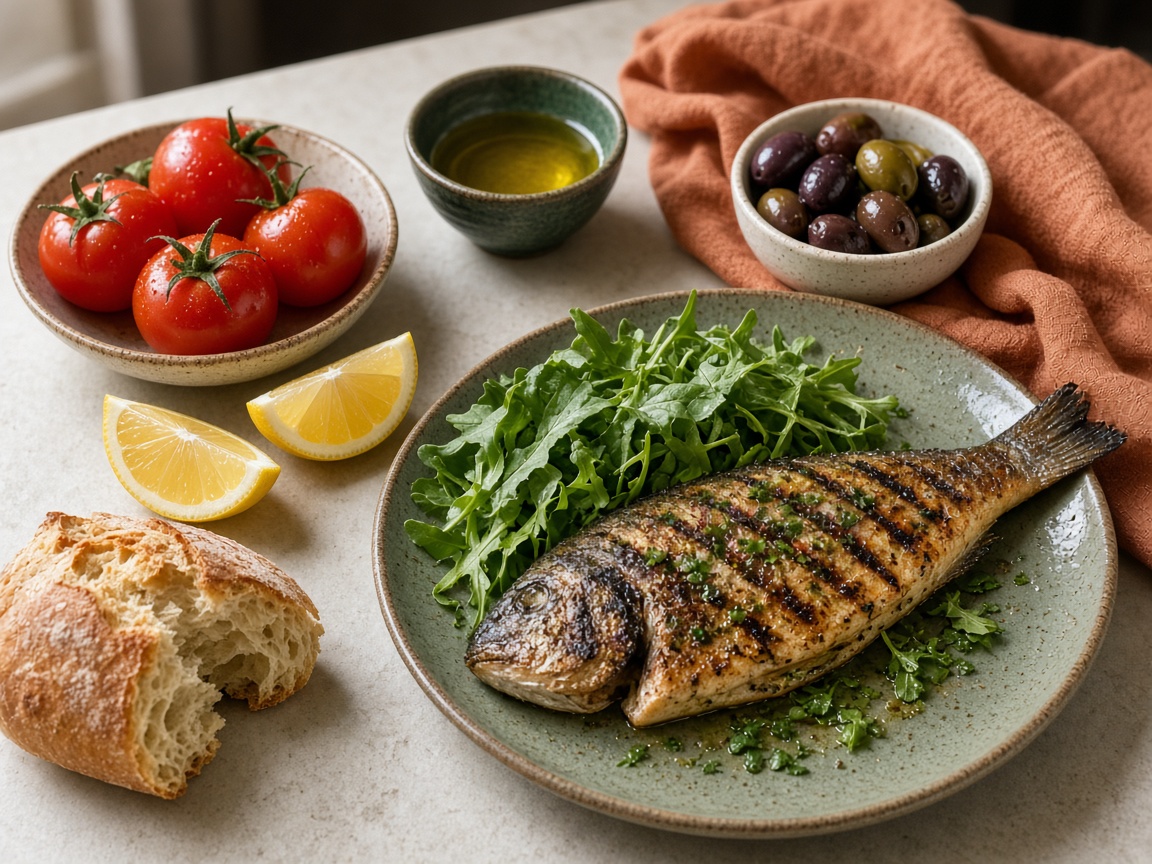
Which outcome was recorded
The outcome this page can name plainly is major cardiovascular events. In the Mediterranean groups, with extra-virgin olive oil or with nuts, there were fewer of those events than among people advised to eat less fat. The word fewer applies to events. A mark on the scale is not inside that word.
The comparison was built as a whole Mediterranean pattern set against advice to eat less fat. The participants already had high cardiovascular risk. That structure does not yield a claim that oil by itself reduces body mass. No such line sits in the allowed result, and the page does not compose one.
Why weight is not filled in
The work was not set up as a weight-loss trial, so the path of kilograms is not filled in from it. It cannot honestly be said whether the groups’ weight changed, in which direction, or in whom: those details are not in the retelling. An empty cell for kilograms is not an invitation to fill it with a guess. It stays empty on purpose.
The 2013 paper was retracted and republished in 2018 because of randomization problems. The republication kept the finding of fewer events and did not open a hidden table of weight. Assignment problems do not turn the work into a scheme of losing kilograms. A reader who wants a weight story needs a different document.
Where CDC speaks about pace
CDC’s Steps for Losing Weight, dated January 17, 2025, speaks to a different question. A gradual pace of about 1 to 2 pounds a week is more likely to be kept than faster loss. The example of an unrealistic goal on the same page is losing 20 pounds in 2 weeks. That is the language of public guidance on pace, and the pounds in it cannot be assigned to the PREDIMED groups.
The same page unpacks modest loss with someone else’s example: 5 percent of 200 pounds is 10 pounds. Loss of that kind can improve blood pressure, cholesterol, and blood sugar and could lower the risk of heart disease, prediabetes, and type 2 diabetes. CDC leaves the example without a personal guarantee. The example does not promise that the Mediterranean pattern in PREDIMED will produce the same 10 pounds.
Oil does not become a weight scheme
Extra-virgin olive oil and nuts in PREDIMED were part of a Mediterranean pattern inside a comparison. They are not named as a means of weight loss and they are not lifted out of the pattern of food. A person can eat them as ordinary food and write the portion into the day. The paper does not hand over a date by which kilograms are supposed to leave.
CDC sends questions about one’s own weight and about medicines to a clinician. Medicines and bariatric surgery are named as clinical options, not as do-it-yourself projects inspired by a trial. A paper about events does not replace that conversation. A record of the day’s food stays a record of food, without a forecast of events and without a forecast of weight.
What this text draws on
- PREDIMED, Estruch et al., NEJM: adults who already had high cardiovascular risk. A Mediterranean pattern with extra-virgin olive oil or with nuts was compared with advice to eat less fat. The Mediterranean groups had fewer major cardiovascular events. The 2013 paper was retracted and republished in 2018 because of randomization problems; the republication kept the finding of fewer events. Not a weight-loss trial. Do not give a percent or a hazard ratio.
- CDC, Steps for Losing Weight (January 17, 2025): a gradual pace of about 1 to 2 pounds a week is more likely to be kept than quicker loss; losing 20 pounds in 2 weeks is the example of an unrealistic goal. Modest loss, CDC’s example: 5% of 200 pounds is 10 pounds, can improve blood pressure, cholesterol, and blood sugar and could lower risk of heart disease, prediabetes, and type 2 diabetes — not a personal guarantee. Log food and drinks, activity, sleep, and stress. Goals are specific, two or three at a time; examples include water instead of a sugary drink, a 15-minute walk, a vegetable with supper. Setbacks are expected. Rewards are not food. Medicines, illness, stress, genes, hormones, environment, and age affect weight. Weight and medicine questions go to a clinician. Medicines and bariatric surgery are clinical options, not DIY.
A short paraphrase of open guides and reviews (WHO, national recommendations, peer‑reviewed summaries). Not a quotation and not a treatment protocol.
Short answers
Can PREDIMED be taken as a weight-loss plan?
No. The outcome of the work is major cardiovascular events in high-risk adults. A weight-loss trial is not built from this retelling.
Where do 1 to 2 pounds a week come from, then?
From the CDC page on losing weight, as a public guide to a pace that is more likely to be kept. Those pounds are not a result of the PREDIMED Mediterranean groups.

