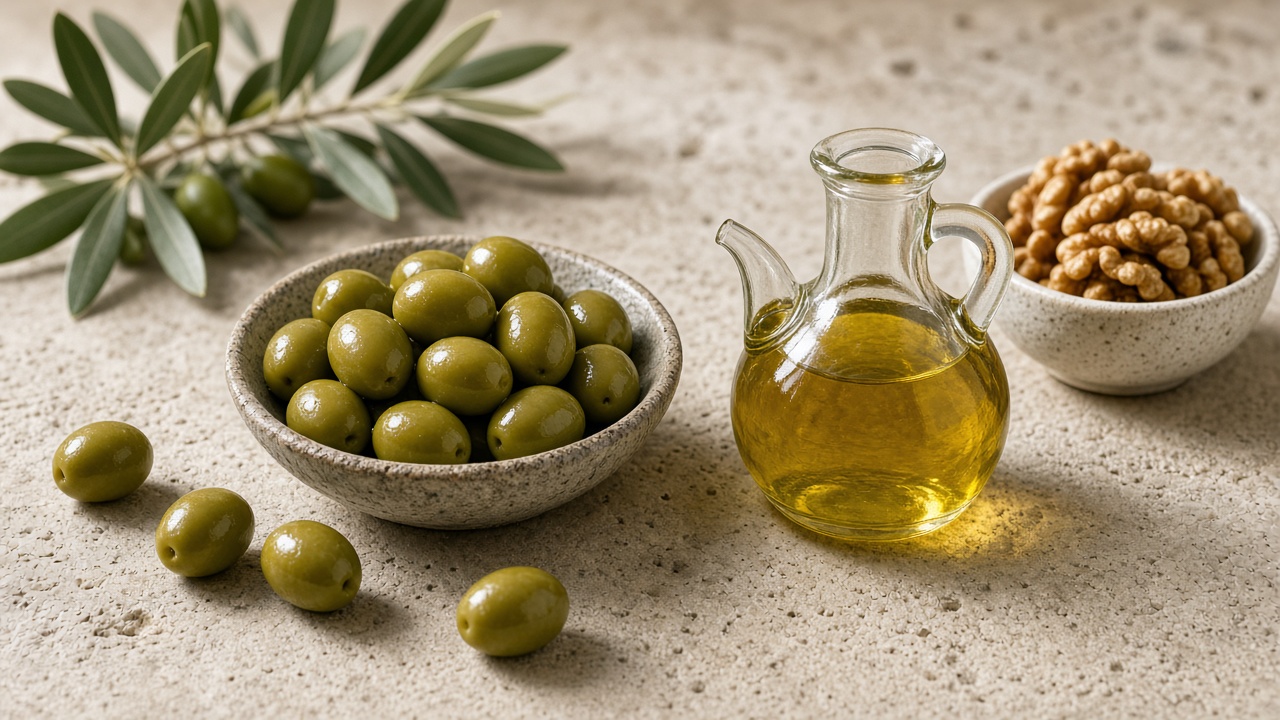
A food versus a pattern
In PREDIMED, extra-virgin olive oil stood inside a Mediterranean pattern and inside a comparison with advice to eat less fat, not in a capsule apart from the rest of the food. The WHO fact sheet and the MyPlate plate also describe a pattern in which fat and foods take a place inside the whole day.
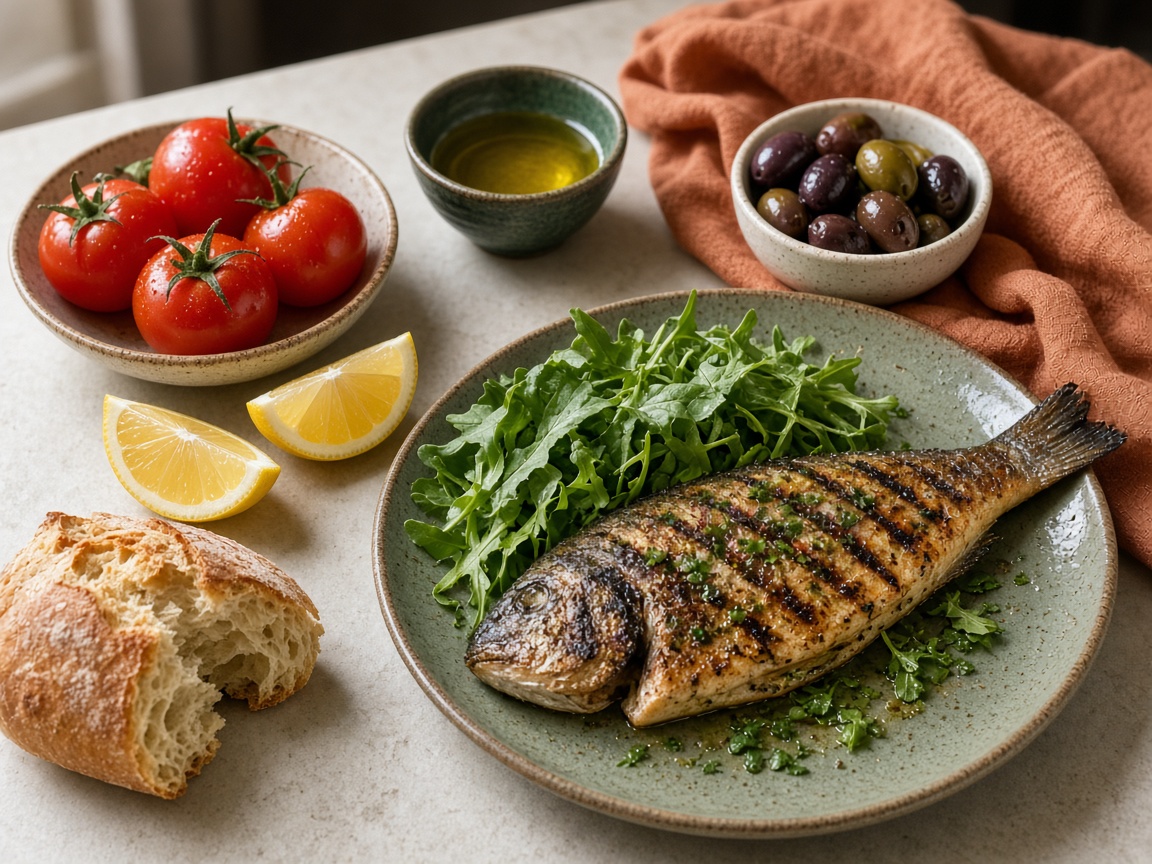
Where the oil stood in the work
Extra-virgin oil was an addition to a Mediterranean pattern, not a free-standing trial of a spoon. A second group on the same pattern received nuts. Both groups were compared with advice to eat less fat, in adults whose cardiovascular risk was already high. The outcome that can be named is fewer major cardiovascular events, with no percent.
The 2013 paper was retracted and republished in 2018 because of randomization problems, and the republication kept the finding about events. That history does not lift the oil out of the pattern or make it a separate means. The work was not a weight-loss trial. Kilograms are not deduced from an event.
Why a capsule is a different story
A capsule of oil on top of the old menu does not repeat the PREDIMED condition. In the trial the oil sat inside a Mediterranean pattern and inside a comparison with advice to eat less fat. A capsule without that pattern and without that advice is a different question, and the allowed retelling has no report of it. The page assigns the capsule neither events nor weight.
Nuts in the same work were not a handful on a random supper either. They sat inside the second Mediterranean version. Take the handful out and leave the previous pattern, and you have left the comparison. A food separated from the pattern stops being what was compared.
Unsaturated fat on the fact sheet
The WHO healthy-diet fact sheet prefers unsaturated fats from fish, avocado, nuts, and vegetable oils to saturated fats and industrial trans fats. The preference is stated inside the whole diet: energy in balance with expenditure, fat under 30 percent of energy, saturated fat under 10 percent, trans fat under 1 percent. That is a swap inside the pattern, not a capsule instead of the pattern.
Fruit and vegetables on the same sheet are at least 400 g a day, free sugars under 10 percent of energy, salt under 5 g a day. Oil, even when its type of fat is preferred, does not cancel those lines. It takes a place among them. The sheet does not describe a food that can be swallowed past the rest of the plate while the diet is counted as done.
A plate, not a tablet
The Dietary Guidelines for Americans, 2020–2025, and MyPlate assemble the day as a plate. Half is fruit and vegetables, half of grains are whole, protein foods are varied, and dairy is low-fat or fat-free or fortified soy. Added sugars are under 10 percent of calories from age 2, saturated fat under 10 percent, sodium under 2,300 mg a day. That assembly has no slot for a capsule in place of half the plate.
Nutrient-dense food in the guidance takes culture and budget into account, not one ingredient in a shell. Olive oil can be a vegetable oil in such a day. It does not replace vegetables, whole grains, and varied protein foods with one dose. The pattern of eating stays a pattern, even when it includes a familiar oil from a well-known trial.
What this text draws on
- PREDIMED, Estruch et al., NEJM: adults who already had high cardiovascular risk. A Mediterranean pattern with extra-virgin olive oil or with nuts was compared with advice to eat less fat. The Mediterranean groups had fewer major cardiovascular events. The 2013 paper was retracted and republished in 2018 because of randomization problems; the republication kept the finding of fewer events. Not a weight-loss trial. Do not give a percent or a hazard ratio.
- WHO Healthy diet fact sheet: energy intake in balance with expenditure; fruit and vegetables ≥400 g/day; free sugars <10% of energy (below 5% for further benefit); fat <30%; saturated fat <10%; trans fat <1%; salt <5 g/day; unsaturated fats (fish, avocado, nuts, vegetable oils) preferred to saturated and industrial trans fats.
- Dietary Guidelines for Americans, 2020–2025, and USDA MyPlate: a nutrient-dense pattern shaped by culture and budget; added sugars <10% of calories from age 2; saturated fat <10%; sodium <2,300 mg/day; half the plate fruits and vegetables; half of grains whole; varied protein foods; low-fat or fat-free dairy or fortified soy. Drinking less is better than drinking more; not drinking is an option.
A short paraphrase of open guides and reviews (WHO, national recommendations, peer‑reviewed summaries). Not a quotation and not a treatment protocol.
Short answers
Did PREDIMED test a capsule of olive oil?
No. Extra-virgin oil sat inside a Mediterranean pattern and inside a comparison with advice to eat less fat. A capsule on top of the old menu is a different story, and it is not in the retelling.
Does the preference for unsaturated fats cancel the rest of the diet?
No. WHO speaks of a swap inside the pattern of food, beside energy balance, fruit and vegetables, and the shares of sugar, fat, and salt. Oil does not become a tablet in place of the plate.