
Fish in an ordinary week
Fish in an ordinary week holds two places at once: it is one of the varied protein foods, and it is named among the unsaturated fats used in place of saturated fats and industrial trans fats. It does not cover vegetables, fiber, and salt, and it does not become a diet of its own.
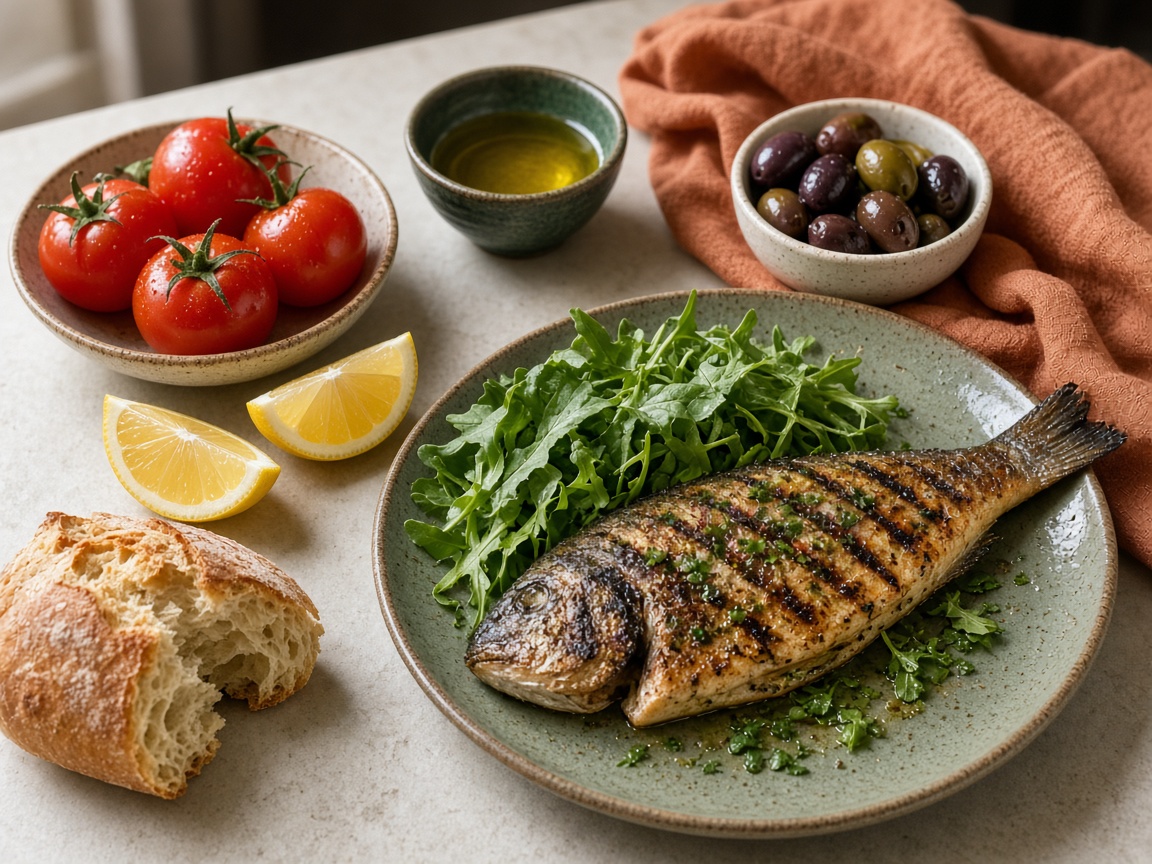
A protein food, not the only one
MyPlate asks for varied protein foods, and fish joins that row together with eggs, beans, lean meat, and nuts, not in place of all of them. A week can include fish and still be a week with beans, eggs, or poultry. These pages do not publish a required number of fish days, and none should be invented.
The safe protein level for adults, 0.83 g per kg of body weight per day, remains the FAO/WHO/UNU population figure, not a muscle-building plan and not a reason to eat fish without the rest of the plate. Kidney disease changes that figure through a clinician. An ordinary week with fish is not a protein prescription.
A shift toward unsaturated fat
The fact sheet places fish beside avocado, nuts, and vegetable oils as a preferred unsaturated fat, in place of saturated fats and industrial trans fats. The point of the swap is that a fish meal takes the place of another, more saturated choice, rather than being stacked on top of everything already eaten.
The shares stay in force. Total fat under 30% of energy, saturated fat under 10%, trans fat under 1%. Fish fried in a large amount of fat can move the day back away from the swap itself. The cooking method remains part of the fat, and the oil, if it was used, is written down with the fish.
What fish does not cover
At least 400 g of fruit and vegetables a day are not collected from fish. At least 25 g of fiber for adults comes from food, not from a portion of fish. Beside the fish there is still a place for a vegetable and for grain or bread, and that is an ordinary plate, not a garnish for show.
Salt in the fish, the brine, and the sauce counts toward the same 5 g a day. Sodium on a label, if the fish came from a package, is read per serving, and that serving is not always 100 g. A fish day with a salty sauce does not move closer to the salt limit merely because the word “fish” was used.
A place in the week, not a course of treatment
Fish remains food for an ordinary week. It is not prescribed here as heart treatment, and it is not paired with a percent of risk reduced: this page does not give such figures. The heart-related point the texts actually give is fish’s place among unsaturated fats and among varied protein foods, beside vegetables and beside the saturated-fat limit.
If a given week had no fish, the frame does not collapse: the protein food can be something else, and the preference for unsaturated fats can be carried by oil, nuts, or avocado. If fish is eaten often, it still does not replace half a plate of fruit and vegetables. Questions about fish when treatment is already prescribed go to a clinician, not to a larger portion.
What this text draws on
- WHO Healthy diet fact sheet: energy intake in balance with expenditure; fruit and vegetables ≥400 g/day; free sugars <10% of energy (below 5% for further benefit); fat <30%; saturated fat <10%; trans fat <1%; salt <5 g/day; unsaturated fats (fish, avocado, nuts, vegetable oils) preferred to saturated and industrial trans fats.
- Dietary Guidelines for Americans, 2020–2025, and USDA MyPlate: a nutrient-dense pattern shaped by culture and budget; added sugars <10% of calories from age 2; saturated fat <10%; sodium <2,300 mg/day; half the plate fruits and vegetables; half of grains whole; varied protein foods; low-fat or fat-free dairy or fortified soy. Drinking less is better than drinking more; not drinking is an option.
- FAO/WHO/UNU, 2007: the safe protein level for adults is 0.83 g per kg body weight per day. A population figure, not a muscle-gain plan. Kidney disease changes it through a clinician.
- WHO carbohydrate guideline, 2023: at least 25 g of fiber a day for adults, from food.
- FDA Nutrition Facts: energy is stated per labeled serving; a package can contain several servings. A labeled serving is not always 100 g.
A short paraphrase of open guides and reviews (WHO, national recommendations, peer‑reviewed summaries). Not a quotation and not a treatment protocol.
Short answers
How many times a week is fish required?
These pages do not name a required number of days. Fish is one of the varied protein foods and one of the unsaturated fats, not a separate course.
Does fish replace vegetables?
No. At least 400 g of fruit and vegetables, and at least 25 g of fiber from food, are not covered by fish. An ordinary plate still sits beside it.