Fish instead of fatty meat
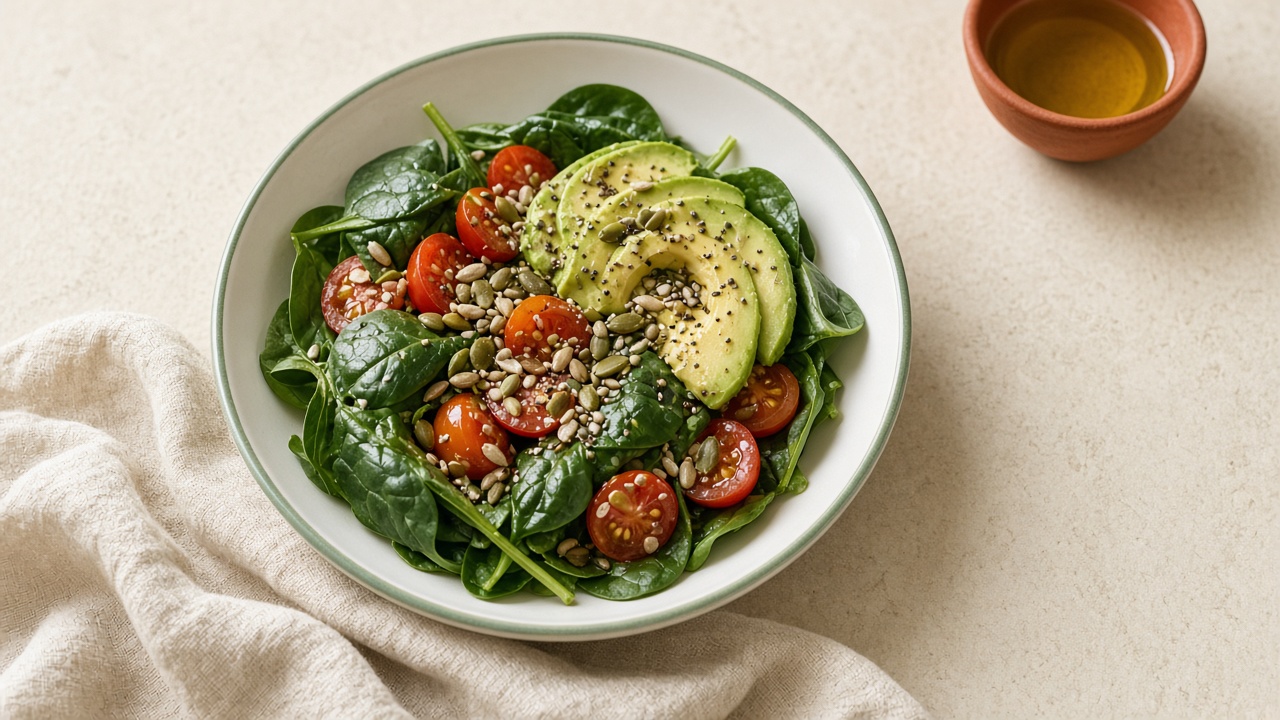
Fish covers a protein food and at the same time shifts fat toward unsaturated: WHO prefers fish, avocado, nuts, and vegetable oils to the saturated fat of fatty meat. The swap does not cancel fat under 30% of energy or saturated fat under 10%.
A swap, not a second portion
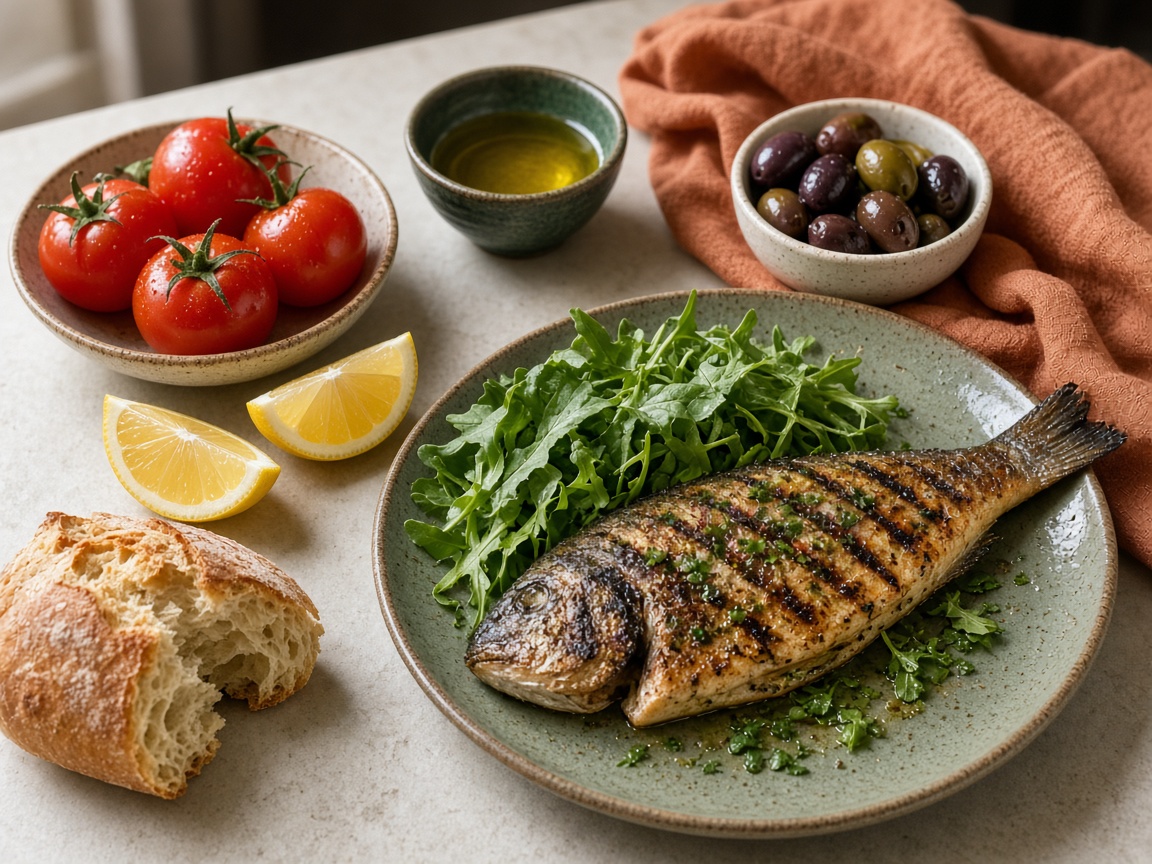
The point of the swap is that fish takes the place of fatty meat, rather than landing on top of the same cutlet. Otherwise the saturated fat has not gone anywhere, and the day's energy has grown by another food. WHO speaks of preferring unsaturated fats to saturated and industrial trans fats, not of endlessly adding a "beneficial" layer. After the swap there is still one plate.
The DASH plan says the same thing in kitchen language: fish and poultry stay, fatty meat is less, and beside them are vegetables, fruit, whole grains, low-fat dairy, beans, nuts, and vegetable oils. The plan was studied for blood pressure, not as a crash pattern and not as permission to eat everything. The trial found lower blood pressure against a typical American control, with no millimeters of mercury in this article.
One food from a long list
MyPlate asks for varied protein foods: seafood, meat, poultry, eggs, beans, nuts, soy. Fish is one item on the list, not the only lawful lunch. A week of only fish is not required, and a week with no protein food at all breaks the drawing. An egg, beans, and poultry without the fatty cut continue the same part of the plate on other days.
The safe protein level for adults in the FAO/WHO/UNU report is 0.83 g per kg of body weight per day. It is a population guide, not a rule for how much fish belongs at lunch and not a muscle plan. This article adds no other protein figure to it. Kidney disease changes the level through a clinician; a piece of fish in a photo does not prove that the day already equals 0.83 g/kg.
The pan can bring the fat back
Fish fried in a large amount of animal fat or in a deep fryer partly gives back the swap it was chosen for. Industrial trans fat is kept under 1% of energy. Vegetable oil and baking sit closer to the preference for unsaturated fat than a crust from boiling fat. The kind of fish on the plate does not yet say which fat surrounds it.
Salt on the fish, in the sauce, and in the brine belongs to the limit of less than 5 g of salt a day. Sodium under 2,300 mg is another line, and grams of salt are not equated here with milligrams of sodium. The vegetable half and 400 g of fruit and vegetables stay beside the fish, not inside it. A side of potato alone does not build that half.
Not a scheme for quick weight change
Swapping fatty meat for fish is about the kind of fat and about a protein food, not about a promise of kilograms by Friday. Energy stays in balance with expenditure. CDC calls a gradual pace of about 1 to 2 pounds a week more likely to be kept, and gives losing 20 pounds in 2 weeks as the example of an unrealistic goal. A fish lunch does not by itself enter that arithmetic.
Modest loss in the CDC example — 5% of 200 pounds, which is 10 pounds — can improve blood pressure, cholesterol, and blood sugar and could lower the risk of heart disease, prediabetes, and type 2 diabetes. That is not a personal guarantee and not a property of one portion of fish. Weight and medicine questions go to a clinician. A log of several lunches shows whether the swap was a habit or one successful frame.
What this text draws on
- WHO Healthy diet fact sheet: energy intake in balance with expenditure; fruit and vegetables ≥400 g/day; free sugars <10% of energy (below 5% for further benefit); fat <30%; saturated fat <10%; trans fat <1%; salt <5 g/day; unsaturated fats (fish, avocado, nuts, vegetable oils) preferred to saturated and industrial trans fats.
- Dietary Guidelines for Americans, 2020–2025, and USDA MyPlate: a nutrient-dense pattern shaped by culture and budget; added sugars <10% of calories from age 2; saturated fat <10%; sodium <2,300 mg/day; half the plate fruits and vegetables; half of grains whole; varied protein foods; low-fat or fat-free dairy or fortified soy. Drinking less is better than drinking more; not drinking is an option.
- NHLBI DASH Eating Plan: vegetables, fruits, whole grains, low-fat dairy, fish, poultry, beans, nuts, vegetable oils; less fatty meat, sweets, and sugary drinks; sodium 2,300 mg or a 1,500 mg version. Studied for blood pressure, not as a crash plan and not as permission to eat everything.
- DASH, Appel et al., NEJM 1997: a pattern higher in vegetables, fruit, and low-fat dairy and lower in saturated fat lowered blood pressure compared with a typical American control diet. Do not give millimeters of mercury.
- FAO/WHO/UNU, 2007: the safe protein level for adults is 0.83 g per kg body weight per day. A population figure, not a muscle-gain plan. Kidney disease changes it through a clinician.
- CDC, Steps for Losing Weight (January 17, 2025): a gradual pace of about 1 to 2 pounds a week is more likely to be kept than quicker loss; losing 20 pounds in 2 weeks is the example of an unrealistic goal. Modest loss, CDC’s example: 5% of 200 pounds is 10 pounds, can improve blood pressure, cholesterol, and blood sugar and could lower risk of heart disease, prediabetes, and type 2 diabetes — not a personal guarantee. Log food and drinks, activity, sleep, and stress. Goals are specific, two or three at a time; examples include water instead of a sugary drink, a 15-minute walk, a vegetable with supper. Setbacks are expected. Rewards are not food. Medicines, illness, stress, genes, hormones, environment, and age affect weight. Weight and medicine questions go to a clinician. Medicines and bariatric surgery are clinical options, not DIY.
A short paraphrase of open guides and reviews (WHO, national recommendations, peer‑reviewed summaries). Not a quotation and not a treatment protocol.
Short answers
Is it enough to eat fish every day and change nothing else?
Fish replaces fatty meat. It does not cancel vegetables, whole grain, or the saturated-fat limit. On the protein-food list it is one item among others.
Is deep-fried fish already the unsaturated choice?
The fish itself is closer to unsaturated fat than fatty meat, but a deep fryer can bring back industrial trans fat and extra fat. The swap looks at the food and at the pan.