Fat on the plate: the type matters more than “fat-free”
The WHO fact sheet does not demand zero fat. It limits the share: total fat under 30% of energy, saturated fat under 10%, industrial trans fat under 1%. Unsaturated fats are preferred.
Which fats WHO puts first
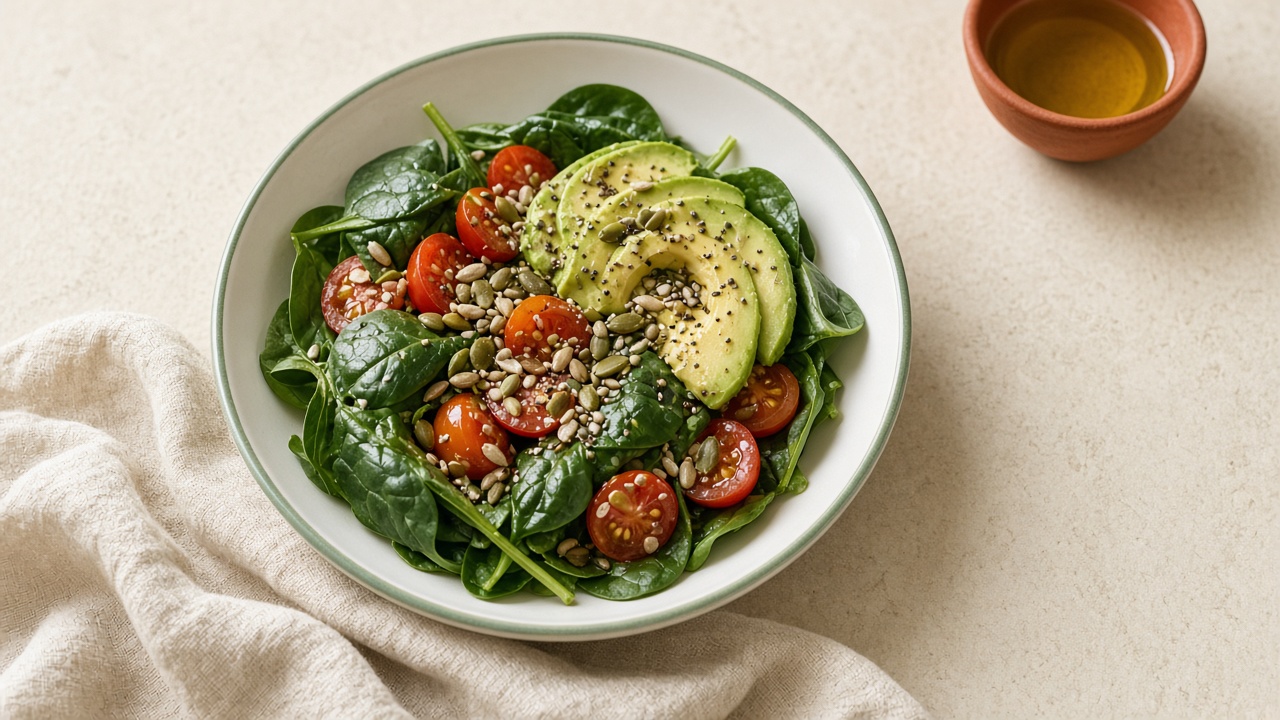
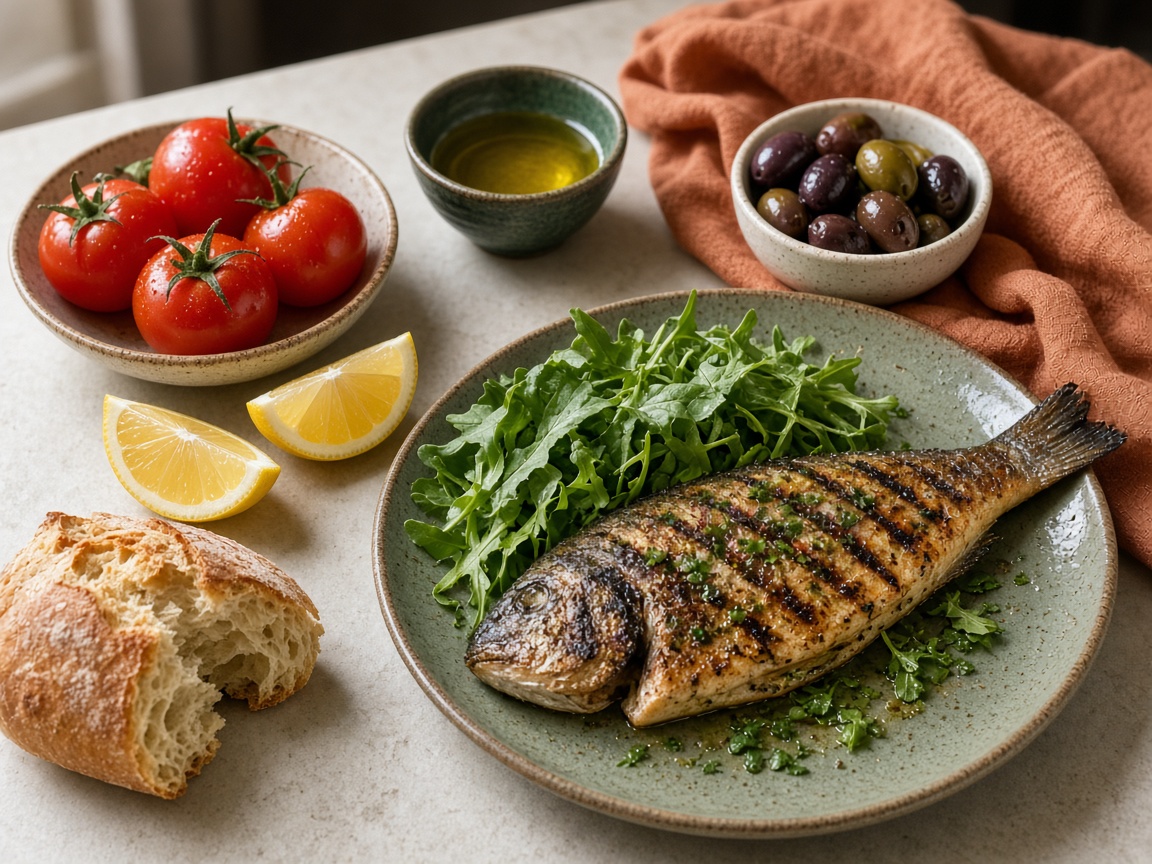
Fish, avocado, nuts, sunflower oil, and olive oil are the unsaturated examples in that account of a healthy diet. They replace, rather than sit on top of without a limit, saturated sources: fatty meat, butter, cream, a lot of cheese.
WHO links industrial trans fats with fried and packaged foods. Baking instead of deep-frying is closer to that text than a chart that says healthy fat need not be limited.
How this sits on MyPlate
The U.S. guidelines separately keep saturated fat under 10% of calories. Oil on a salad does not leave that share just because it is vegetable oil. The share is of the whole day’s energy.
Fish in the protein part of the plate covers both protein and the shift toward unsaturated fat. Sausage covers protein at the cost of saturated fat and often salt.
How much that is in food, without invented grams
This article does not turn 30% into spoons for a named person. That needs their energy intake, and the fact sheet does not prescribe it. The practical point is that fat on the plate is visible — oil, nuts, cheese, poultry skin, sauce — and it is not hidden under the word “healthy.”
CDC asks you to write down what you ate. A spoon of oil missing from the log breaks both the calories and the fat share, even when the vegetables in the photo look right.
Heart and blood pressure beside it
The same fact sheet keeps salt under 5 g. A fatty salty snack misses both limits. The NHLBI DASH plan builds a plate from fish, poultry, beans, nuts, and vegetable oils so the day is not fatty meat and sweets.
If lipids or blood pressure are already treated, swapping oil and cheese is a conversation with a clinician, not a homemade plan of “nuts only.”
What this text draws on
- WHO Healthy diet fact sheet: fruit and vegetables ≥400 g/day; free sugars <10% of energy (below 5% for further benefit); fat <30%; saturated fat <10%; trans fat <1%; salt <5 g/day; unsaturated fats preferred.
- Dietary Guidelines for Americans, 2020–2025, and MyPlate: half the plate fruits and vegetables; half of grains whole; varied protein foods (seafood, meat, poultry, eggs, beans, nuts, soy); low-fat or fat-free dairy or fortified soy; added sugars <10% of calories from age 2; saturated fat <10%; sodium <2,300 mg/day.
- CDC, Steps for Losing Weight: log food and drinks; one example of a short goal is water instead of a sugary drink; if weight is not changing as hoped, revise the plan from the log.
A short paraphrase of open guides and reviews (WHO, national recommendations, peer‑reviewed summaries). Not a quotation and not a treatment protocol.
Short answers
Can olive oil go uncounted?
No. WHO limits total fat as a share of energy. Oil is inside that share even when it is unsaturated.
Is a fat-free plate closer to WHO?
The fact sheet does not require zero. It asks to replace saturated and trans fats with unsaturated ones and to keep the total share.