
Food and the word inflammation
Marketing promises to “put out inflammation” with a superfood list. The honest version is smaller: a pattern close to the Mediterranean plate, and less ultra-processed food. It is not a weekend fire drill for your labs.
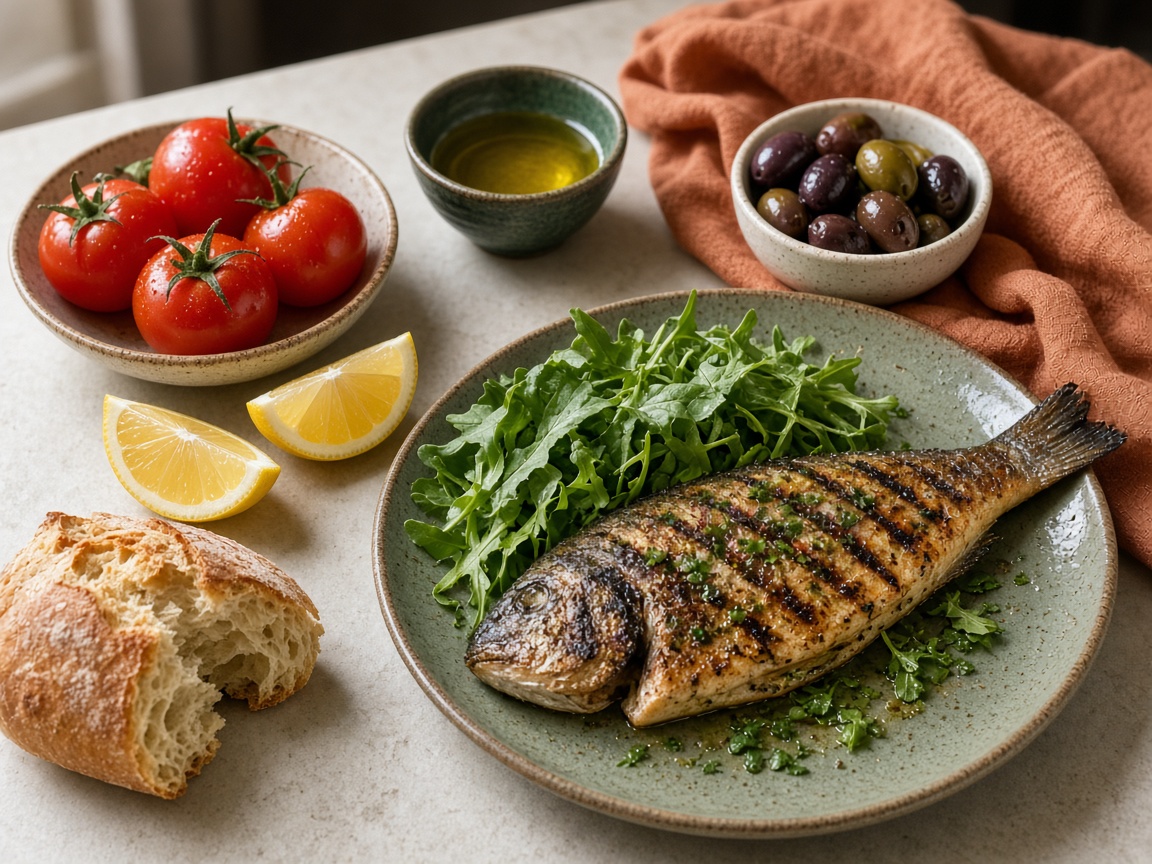
What the word actually means
Inflammation is a normal body response and, at the same time, a word used to sell juice. Chronic illness is tied to food through a complicated path: weight, blood pressure, glucose, sleep, smoking, movement. A turmeric root does not close that path.
Researchers describe dietary inflammatory indexes. They usually score plants, fish, olive oil, and whole grains higher, and sweet drinks, processed meat, and frequent deep-frying lower. That is group statistics, not a diagnosis of a plate.
What is worth repeating
Vegetables and berries, fish a couple of times a week, legumes, a portion of nuts, liquid oil instead of constant deep-frying, less sausage and sweet soda. The list is already familiar from the Mediterranean plate and DASH. A new brand is not required.
Turmeric, ginger, and green tea can be flavor. They are not arthritis treatment and not a substitute for a drug. High-dose supplements belong in a conversation with a clinician: “natural” still has a dose and interactions.
What this approach does not promise
It does not take pain away by morning, it does not treat autoimmune disease, and it does not replace an examination. A protocol of nothing but smoothies “to remove inflammation” is no longer a pattern. It is hunger with good lighting.
Alcohol, short sleep, and a very low-energy day are themselves tied to feeling unwell. A salad does not cover them.
A diary without mystique
Log ordinary meals. After a month you can see whether the plate became more plant-based and whether the calories slipped into nut butter. That is more useful than an inflammation score from an app with a closed formula.
What this text draws on
- WHO: Healthy diet fact sheet — sugars <10% energy, fat ≤30%, salt <5 g/day, vegetables and fruit.
- WHO carbohydrate guideline, 2023 (NCBI Bookshelf NBK594788) — fiber ≥25 g/day for adults.
- USDA and HHS: Dietary Guidelines for Americans (periodic editions).
- Harvard T.H. Chan: inflammation and diet — overview, not a protocol.
A short paraphrase of open guides and reviews (WHO, national recommendations, peer‑reviewed summaries). Not a quotation and not a treatment protocol.
Short answers
Which foods are banned?
There is no banned list here. It makes sense to repeat sweet drinks, processed meat, and constant deep-frying less often.
Will an omega-3 capsule help?
That question belongs to a clinician, with your labs and medicines. Fish on the plate is food. A capsule is already a prescription.

