A northern plate without a myth
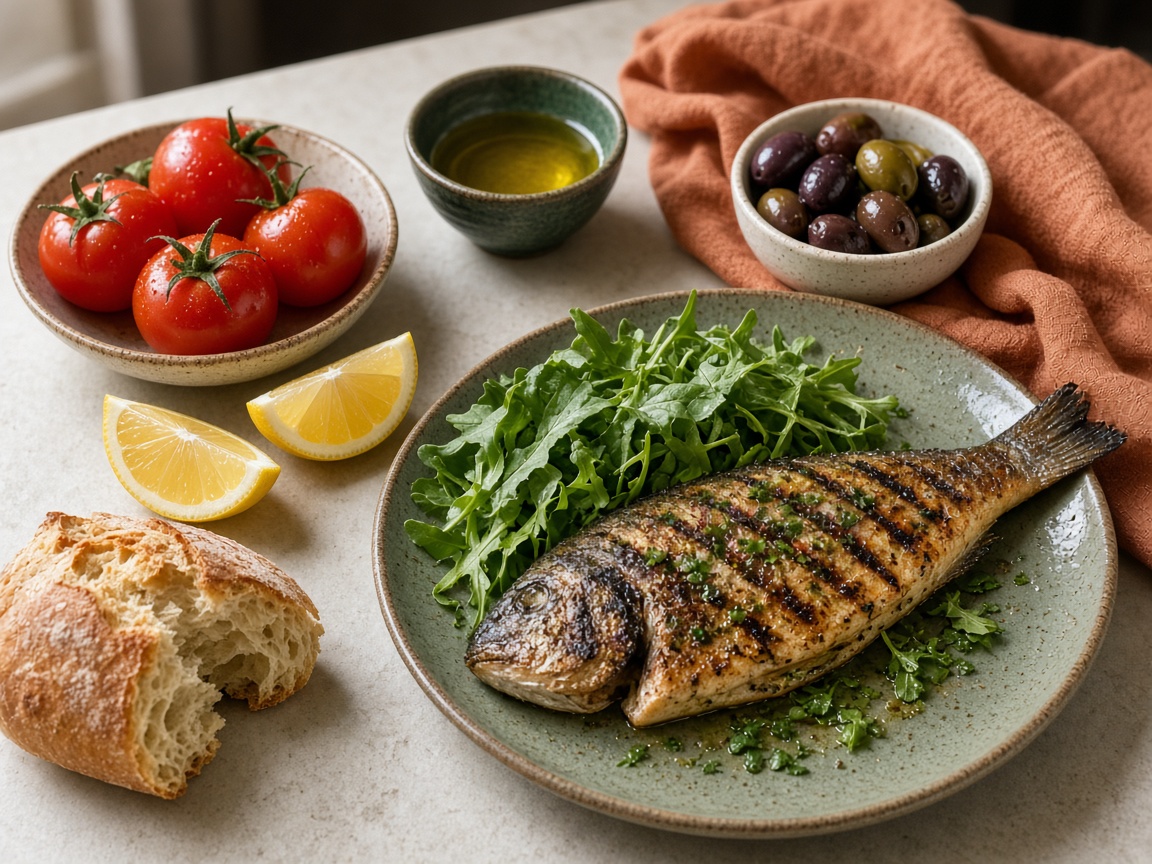
A northern plate in this text is fish, vegetables, whole grain, and vegetable oil, not a school with an outcome of its own. Those foods can sit inside the WHO fact sheet and the MyPlate groups, but this sheet has no northern trial, and a figure for one must not be invented.

Foods the documents already name
Fish sits among the unsaturated fats WHO prefers to saturated fats and industrial trans fats, beside avocado, nuts, and vegetable oils. Vegetables and fruit keep a line of their own: at least 400 g a day. Oil on this plate is a vegetable oil, so it belongs to that preferred group rather than to a northern exemption beyond the fact sheet.
Whole grain answers MyPlate instead: half the day's grains are meant to be whole, and a grain can be that half. WHO sets fiber for adults separately, at least 25 g a day, and from food. The sheet publishes no northern quota for fiber, fish, or oil.
Limits a cuisine name does not lift
The first line of the fact sheet is energy intake in balance with expenditure, and a northern name does not cancel it. Total fat stays under 30% of energy, saturated fat under 10%, and trans fat under 1%. Salt stays under 5 g a day, even when familiar fish or bread carries a lot of it.
The US guidelines add lines of their own, and geography does not replace them. From age 2, added sugars stay under 10% of calories, and sodium stays under 2,300 mg a day. A nutrient-dense pattern is shaped by culture and budget, so a northern table is allowed as a culture. It does not become permission to eat past those shares.
Why another plot cannot be pasted in
This sheet has no comparison in which a northern table was measured against another table for events, blood pressure, or kilograms. A claim that a northern diet has been shown to lower risk therefore stands on nothing. A percent that is not in the source cannot be added for the sake of a headline.
The plot of a diet with another name cannot be borrowed and assigned to the north. Matching foods to the MyPlate groups still does not create a protocol with an outcome. Fish, vegetables, grain, and oil remain food inside limits that are already written. An honest paragraph ends there.
A repeatable week without a brand
The week is built from ordinary shopping: fish as one of the protein foods, vegetables at meals so that fruit and vegetables together reach the day's 400 g, and grain or bread more often whole. Oil is visible on the plate and sits inside the fat share, not inside a separate legend. The culture can stay northern and the budget a household one, which is what the US guideline text asks.
If a wish to lose weight sits beside that, the pace comes from CDC, not from a northern myth. About 1 to 2 pounds a week is more likely to be kept than a faster drop, and losing 20 pounds in 2 weeks is given as an unrealistic goal. Food, drinks, activity, sleep, and stress get written down. Questions about weight during illness, and about medicines, go to a clinician rather than to a culinary name.
What this text draws on
- WHO Healthy diet fact sheet: energy intake in balance with expenditure; fruit and vegetables ≥400 g/day; free sugars <10% of energy (below 5% for further benefit); fat <30%; saturated fat <10%; trans fat <1%; salt <5 g/day; unsaturated fats (fish, avocado, nuts, vegetable oils) preferred to saturated and industrial trans fats.
- Dietary Guidelines for Americans, 2020–2025, and USDA MyPlate: a nutrient-dense pattern shaped by culture and budget; added sugars <10% of calories from age 2; saturated fat <10%; sodium <2,300 mg/day; half the plate fruits and vegetables; half of grains whole; varied protein foods; low-fat or fat-free dairy or fortified soy. Drinking less is better than drinking more; not drinking is an option.
- WHO carbohydrate guideline, 2023: at least 25 g of fiber a day for adults, from food.
- CDC, Steps for Losing Weight (January 17, 2025): a gradual pace of about 1 to 2 pounds a week is more likely to be kept than quicker loss; losing 20 pounds in 2 weeks is the example of an unrealistic goal. Modest loss, CDC’s example: 5% of 200 pounds is 10 pounds, can improve blood pressure, cholesterol, and blood sugar and could lower risk of heart disease, prediabetes, and type 2 diabetes — not a personal guarantee. Log food and drinks, activity, sleep, and stress. Goals are specific, two or three at a time; examples include water instead of a sugary drink, a 15-minute walk, a vegetable with supper. Setbacks are expected. Rewards are not food. Medicines, illness, stress, genes, hormones, environment, and age affect weight. Weight and medicine questions go to a clinician. Medicines and bariatric surgery are clinical options, not DIY.
A short paraphrase of open guides and reviews (WHO, national recommendations, peer‑reviewed summaries). Not a quotation and not a treatment protocol.
Short answers
Does this sheet contain a northern trial result?
No: fish, vegetables, whole grain, and vegetable oil are checked against WHO and MyPlate. This page does not add a figure from a separate northern protocol.
Does the word northern lift the salt limit?
It does not: salt stays under 5 g a day on the WHO line. Sodium in the US guidelines stays under 2,300 mg, and a cuisine name does not rewrite those lines.