A low-cost pattern
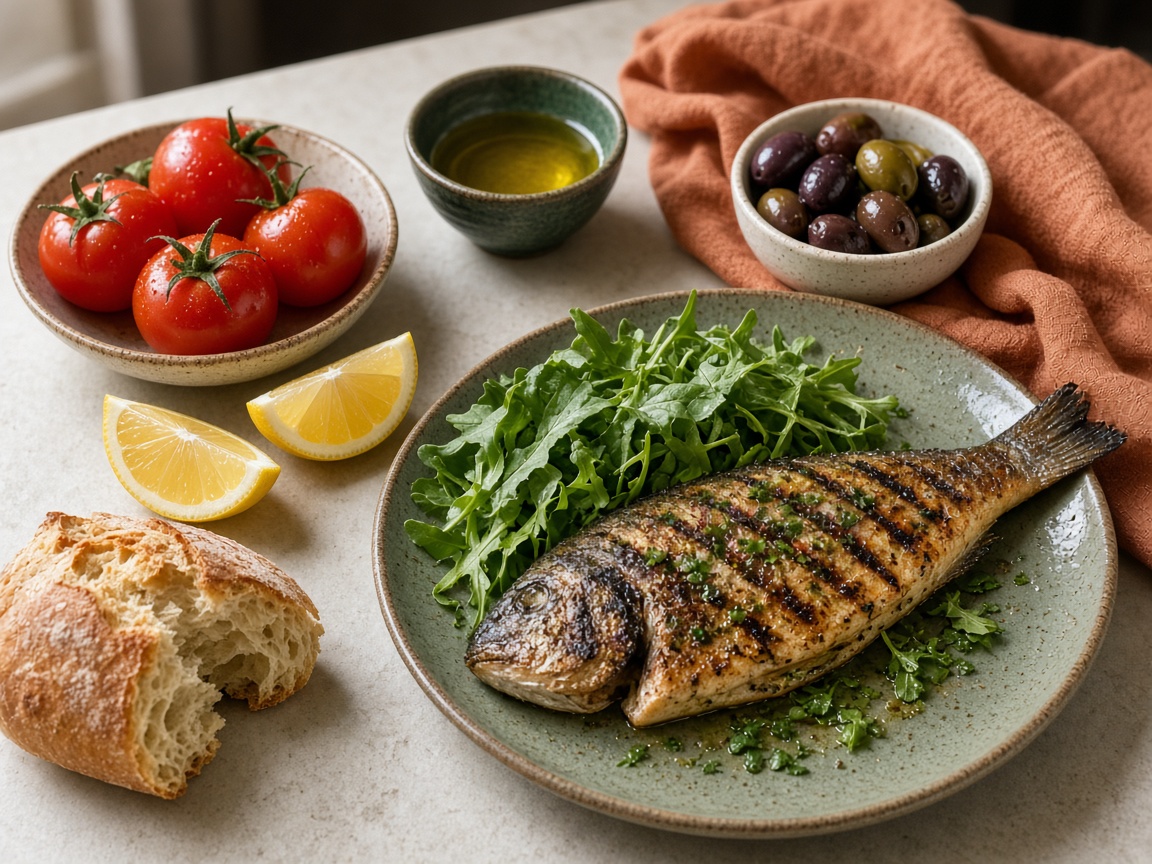
A low-cost pattern in the US guidelines is nutrient-dense food shaped to culture and budget, not a separate brand. Beans, oats, frozen vegetables, and vegetable oil assemble the same pattern as a more expensive plate.

Budget is already allowed, not merely tolerated
The Dietary Guidelines explicitly ask that culture and budget be taken into account when a nutrient-dense pattern is built. A cheap shelf is therefore not a retreat from the text. The retreat would be a pattern that survives only on an expensive set and falls apart in an ordinary week.
Half a plate of fruit and vegetables, a whole-grain half, and varied protein foods are not tied to a price tag. Low-fat or fat-free dairy, or fortified soy, does not require a display case either. A brand that sells a budget diet as a special protocol adds a cover, not a new line of the guidelines.
What on a cheap shelf still belongs to the groups
Frozen vegetables remain vegetables: they count toward half the plate and toward at least 400 g of fruit and vegetables in the day. Oats can be the grain on the plate, and when they are a whole grain they cover the whole-grain half. Beans, in the language of DASH, are among the protein foods beside fish and poultry, not a poor substitute for real food.
Vegetable oil is an unsaturated fat of the kind WHO prefers to saturated fat and industrial trans fats. It still sits inside the fat share under 30% of energy. An expensive bottle of the same oil does not change the limits.
How a low-cost week holds the shares
Adults gather fiber from food, at least 25 g, and beans, vegetables, fruit, and whole grain are exactly that food. This page does not promise that one bowl covers 25 g, and it does not sell a bar in place of the bowl. Free sugars under 10% of energy are easier to keep when a sugary drink has not become the small joy of a cheap basket.
Salt under 5 g and sodium under 2,300 mg apply to inexpensive ready-made foods too: a low price does not zero the label. Saturated fat under 10% and trans fat under 1% do not depend on the budget either. Water instead of a sugary drink, and a vegetable with supper, remain CDC examples and at the same time the most available edits.
A brand does not bring the missing evidence
If a program calls itself low-cost, the groups and the shares are still what to look at, not the word economy. This sheet has no private trial of a cheap basket, and this page will not invent a percent of savings or of weight lost. The CDC pace, about 1 to 2 pounds a week, does not become faster because the price is low, and it does not break because of it.
Cooking ahead from beans, oats, frozen vegetables, and oil is a way to repeat the pattern, not a separate diet. Setbacks are expected, including when the week cost more than planned. A person returns to the same foods, and questions about medicines and about weight during illness go to a clinician.
What this text draws on
- Dietary Guidelines for Americans, 2020–2025, and USDA MyPlate: a nutrient-dense pattern shaped by culture and budget; added sugars <10% of calories from age 2; saturated fat <10%; sodium <2,300 mg/day; half the plate fruits and vegetables; half of grains whole; varied protein foods; low-fat or fat-free dairy or fortified soy. Drinking less is better than drinking more; not drinking is an option.
- WHO Healthy diet fact sheet: energy intake in balance with expenditure; fruit and vegetables ≥400 g/day; free sugars <10% of energy (below 5% for further benefit); fat <30%; saturated fat <10%; trans fat <1%; salt <5 g/day; unsaturated fats (fish, avocado, nuts, vegetable oils) preferred to saturated and industrial trans fats.
- WHO carbohydrate guideline, 2023: at least 25 g of fiber a day for adults, from food.
- NHLBI DASH Eating Plan: vegetables, fruits, whole grains, low-fat dairy, fish, poultry, beans, nuts, vegetable oils; less fatty meat, sweets, and sugary drinks; sodium 2,300 mg or a 1,500 mg version. Studied for blood pressure, not as a crash plan and not as permission to eat everything.
- CDC, Steps for Losing Weight (January 17, 2025): a gradual pace of about 1 to 2 pounds a week is more likely to be kept than quicker loss; losing 20 pounds in 2 weeks is the example of an unrealistic goal. Modest loss, CDC’s example: 5% of 200 pounds is 10 pounds, can improve blood pressure, cholesterol, and blood sugar and could lower risk of heart disease, prediabetes, and type 2 diabetes — not a personal guarantee. Log food and drinks, activity, sleep, and stress. Goals are specific, two or three at a time; examples include water instead of a sugary drink, a 15-minute walk, a vegetable with supper. Setbacks are expected. Rewards are not food. Medicines, illness, stress, genes, hormones, environment, and age affect weight. Weight and medicine questions go to a clinician. Medicines and bariatric surgery are clinical options, not DIY.
A short paraphrase of open guides and reviews (WHO, national recommendations, peer‑reviewed summaries). Not a quotation and not a treatment protocol.
Short answers
Do frozen vegetables count toward the 400 g line?
Yes: they are still vegetables, and they count toward the day's 400 g together with fruit and toward half the plate. Freezing does not remove them from the fact sheet and does not require a separate brand.
Is a low-cost set a separate diet with an outcome of its own?
No: the guidelines ask that a nutrient-dense pattern be shaped to a budget. Beans, oats, frozen vegetables, and oil do not bring a percent that is not on the sheet.