DASH: an NHLBI blood-pressure pattern, not a weight product
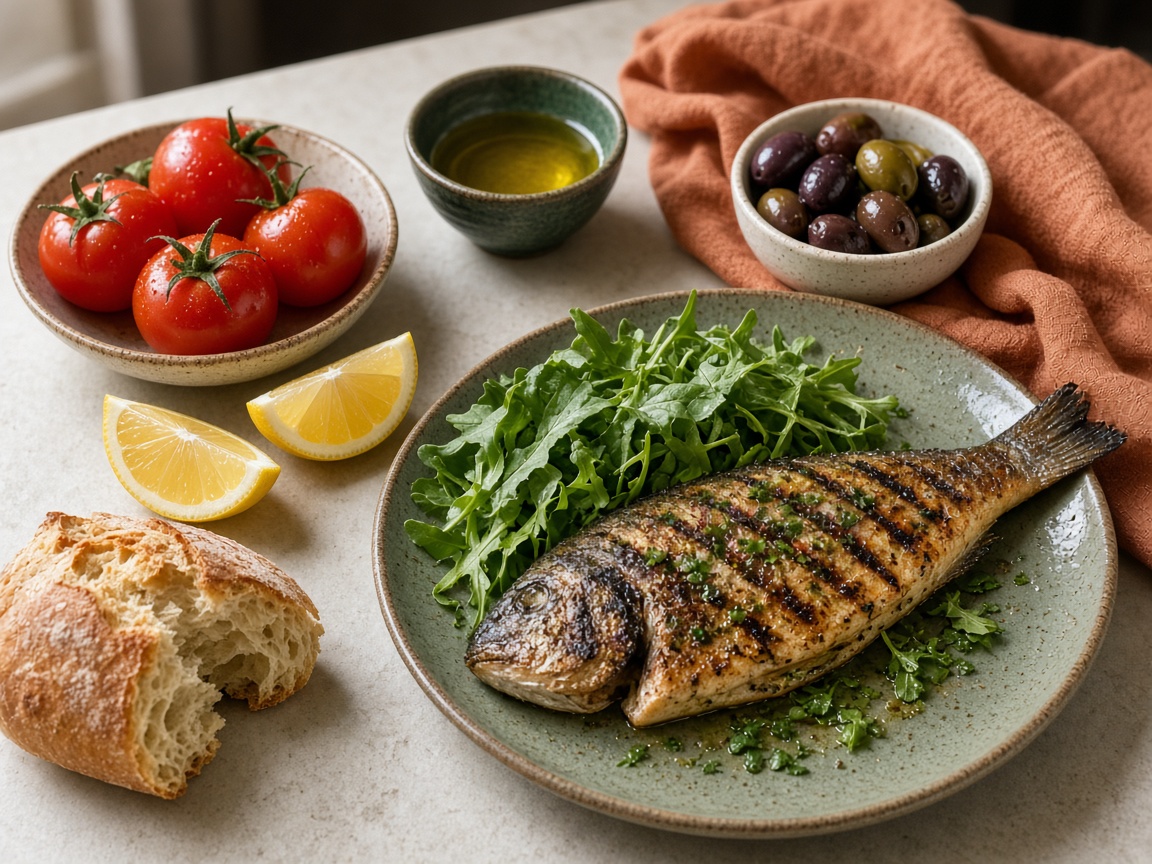
The DASH Eating Plan on the NHLBI site is a pattern developed and studied to lower blood pressure. It is not a crash diet and not a product for the scale. The plate holds vegetables, fruits, whole grains, low-fat dairy, fish, poultry, beans, nuts, and vegetable oils. Fatty meats, full-fat dairy, sweets, and sugary drinks sit in the limits, beside sodium.
What the plan includes
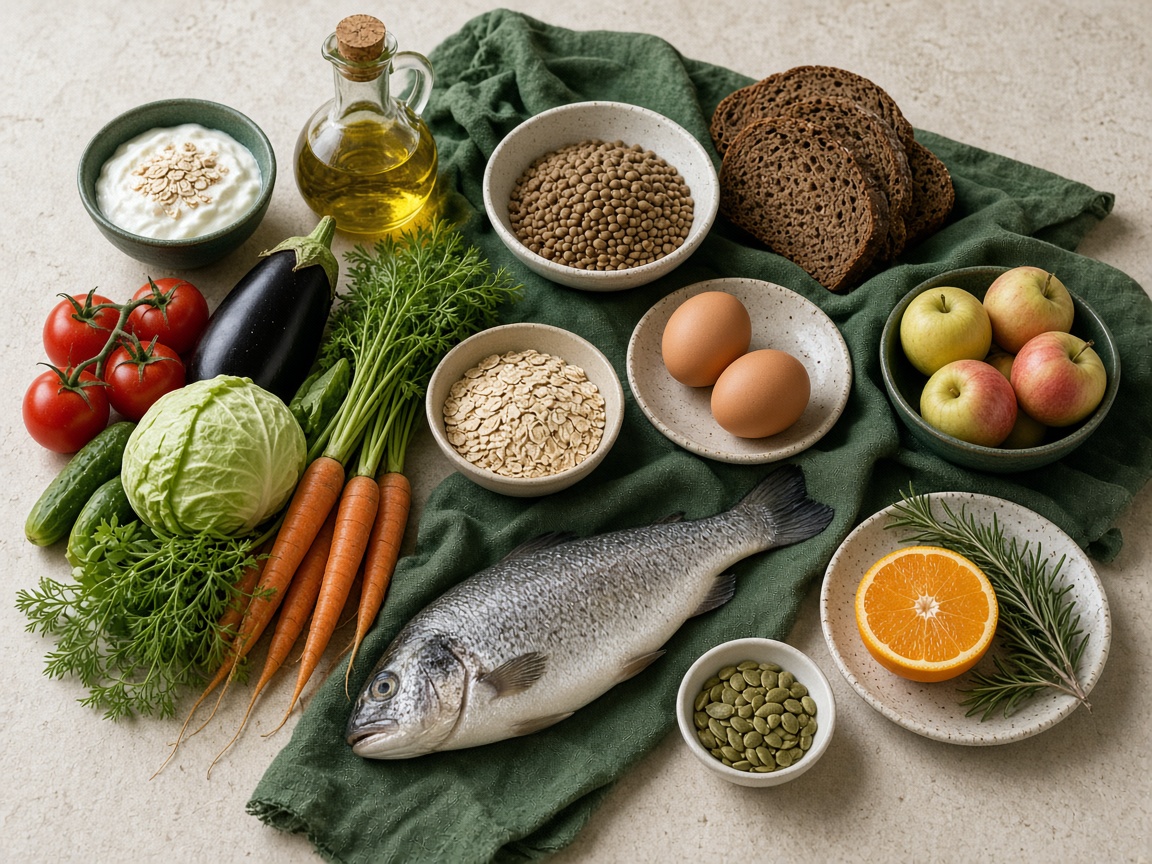
NHLBI describes vegetables, fruits, whole grains, fat-free or low-fat dairy, fish, poultry, beans, nuts, and vegetable oils. It limits fatty meats, full-fat dairy, sweets, and sugary drinks. Sodium is 2,300 mg a day in the standard version and 1,500 mg in the lower version. The lower version is not homework for every reader. It is a version of the plan, not a slogan that less salt is already treatment.
The same pattern sits comfortably next to MyPlate and the WHO fact sheet, and they remain different documents. Half the plate fruits and vegetables, half of grains whole, protein from fish, poultry, beans, and nuts, and low-fat dairy is the language of the U.S. guidelines. Vegetables and fruit at or above 400 g, salt under 5 g, saturated fat under 10% of energy is the language of WHO. DASH does not cancel those limits and does not replace them with its name.
What the trial showed, without extra numbers
In a plain account of the DASH trial, a pattern rich in fruit, vegetables, and low-fat dairy, with less saturated fat, lowered blood pressure compared with a typical American control diet. That is Appel and colleagues, New England Journal of Medicine, 1997. The comparison was with typical American control food, not with hunger and not with a juice course.
This page deliberately does not name the size of that change. It is not part of the plain account that can be used without invention. There is also no promise that any person will see the same shift by eating “something like it” for a week. The trial studied blood pressure. It was not set up as a scheme for fast weight change and it was not sold as a crash diet.
Why it is not a weight-loss course
The plan was developed and studied for blood pressure. The foods in it are nutrient-dense, and a person can eat them while weight goals differ, but the aim of the plan is not “drop it in two weeks.” CDC calls a goal such as losing 20 pounds in 2 weeks unrealistic and describes a gradual pace of about 1 to 2 pounds a week when weight is being changed at all. That pace cannot be signed with the name DASH. The pace belongs to the weight conversation. The DASH plan belongs to blood pressure and to the makeup of the food.
A popular-diet promise that throws out food quality and keeps only a ban parts company with DASH and with the WHO limits. The plan limits sugary drinks and sweets. It also limits fatty meat and full-fat dairy. Salt stays inside 2,300 mg or, in the lower version, 1,500 mg, and the WHO fact sheet keeps salt under 5 g. An empty plate, or one food for several days, is not what those frames describe.
Where the plan ends and a clinician begins
If blood pressure is already being treated, the pattern is not assembled from an article. Medicines are not stopped because lunch moved closer to DASH. CDC asks for a clinician when there is a medical condition. A food log can be material for the visit: it shows whether vegetables and low-fat dairy were there, and how salty the day was. Sodium, potassium, and tablets are prescribed from that material by a clinician.
An article cannot tell “I want less salt” from “my hypertension is on treatment.” The second is a clinical conversation. The first can be checked against the standard version of the plan and against the WHO salt limit, without calling that self-treatment. Kidneys, pregnancy, and a hospital diet are outside this text.
What this text draws on
- NHLBI DASH Eating Plan: vegetables, fruits, whole grains, fat-free or low-fat dairy, fish, poultry, beans, nuts, vegetable oils; limits fatty meats, full-fat dairy, sweets, and sugary drinks; sodium 2,300 mg in the standard plan or 1,500 mg in the lower version. Developed and studied to lower blood pressure, not as a crash diet.
- DASH trial in plain words: a pattern rich in fruit, vegetables, and low-fat dairy, with less saturated fat, lowered blood pressure compared with a typical American control diet (Appel et al., NEJM 1997). This page does not state the size of that change.
- WHO Healthy diet fact sheet: vegetables and fruit ≥400 g/day, legumes, nuts, whole grains; free sugars <10% of energy (below 5% for further benefit); fat <30%; saturated fat <10%; trans fat <1%; salt <5 g/day; unsaturated fats preferred.
- CDC, Steps for Losing Weight: a goal such as losing 20 pounds in 2 weeks is unrealistic; a gradual pace is about 1 to 2 pounds a week; evaluate claims; see a clinician for medical conditions. Popular-diet promises that skip food quality contradict the WHO limits on sugar, fat, and salt.
A short paraphrase of open guides and reviews (WHO, national recommendations, peer‑reviewed summaries). Not a quotation and not a treatment protocol.
Short answers
Was DASH invented for weight loss?
No. NHLBI developed and studied the plan to lower blood pressure. It is not a crash diet and not a product for the scale.
By how much does the plan lower blood pressure?
In the plain account of the trial, blood pressure was lower than on a typical American control diet. This page does not state the size of that change.