Without dairy
A day without dairy does not leave a hole in the US guidelines: fortified soy is named in the dairy group's place. A calcium figure from a package does not become a WHO target, because this sheet has no calcium target and one must not be invented.

What the text puts in the dairy group's place
The Dietary Guidelines and MyPlate describe low-fat or fat-free dairy, and beside it they name fortified soy. Soy here is the group's stand-in, not a dessert drink and not proof that the rest of the plate is no longer needed. Half the plate is still fruit and vegetables, half of grains are still whole, and protein foods are still varied.
A person can keep fish, eggs, or meat and remove only dairy: that is not the same pattern as leaving out animal food entirely. If animal food is little or absent, a separate NIH line about a B12 source applies, but it is not fastened to dairy avoidance alone. This page does not mix those two decisions up.
Why calcium advertising does not fill the sheet
The WHO fact sheet in this set speaks of energy, fruit and vegetables, free sugars, fat shares, and salt. Calcium in milligrams is not there. A figure from a carton, a commercial, or someone else's plan does not become the missing WHO line just because it is repeated often.
Fortified soy is named as the group's stand-in, without a homework assignment to reach a calcium number. This page does not prescribe that number and does not rank brands against each other. If a question about bone, a diagnosis, or a supplement is already medical, it goes to a clinician, the way CDC sends weight and medicine questions to a clinician.
Without dairy is not yet DASH
The DASH plan includes low-fat dairy together with vegetables, fruit, whole grains, fish, poultry, beans, nuts, and vegetable oils. A week from which dairy has been removed no longer repeats that list. Calling it DASH would swap out the NHLBI text.
Fortified soy can take the dairy place in the language of MyPlate, and the resemblance should stop there. Sodium at 2,300 mg or a 1,500 mg version, the fact that the plan was studied for blood pressure, and the refusal to read it as permission to eat everything belong to DASH, not to every plate without cheese. Millimeters of blood pressure are not carried over.
What an ordinary lunch looks like
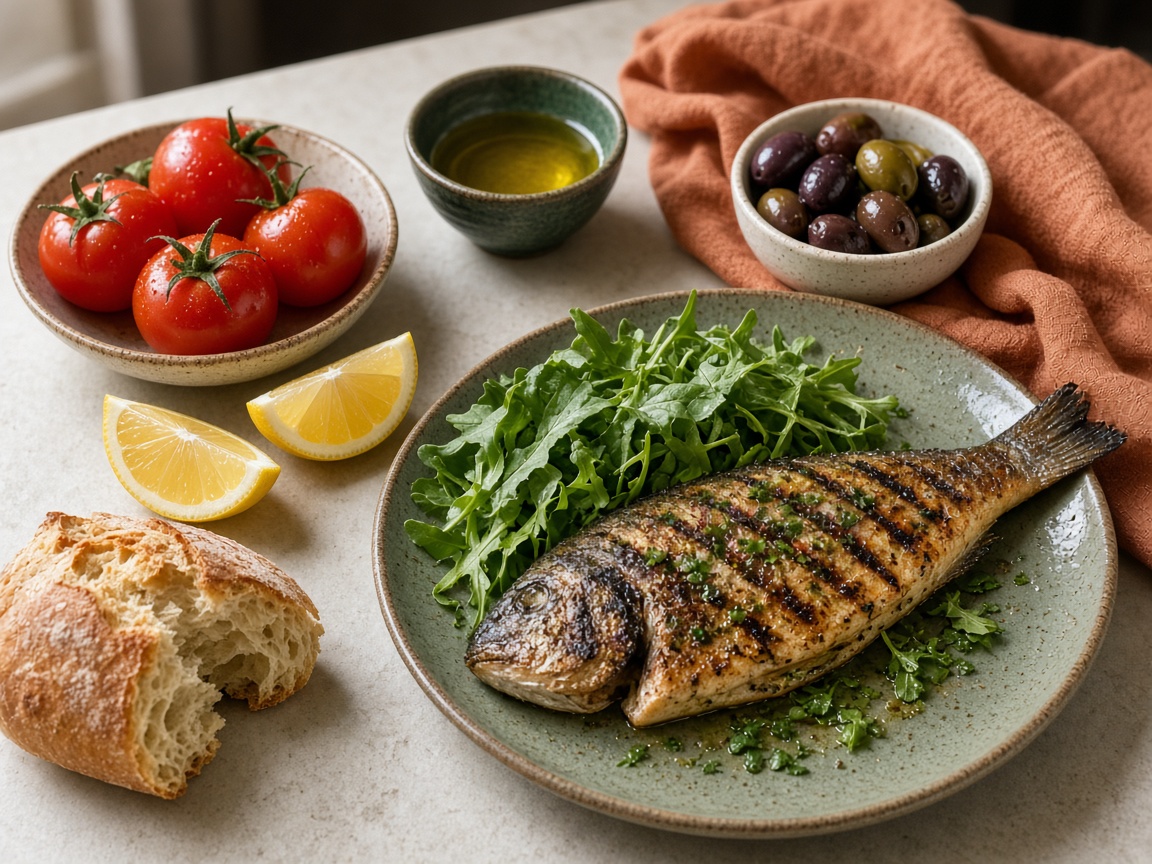
A lunch without dairy can still build half the plate from vegetables, keep a whole grain, and keep a protein food, and replace a drink in the dairy group with fortified soy if that group is wanted. Vegetable oil remains a preferred fat and still sits inside the share under 30% of energy. Salt under 5 g and free sugars under 10% of energy are not cancelled by a dairy-free label.
Adult fiber, at least 25 g from food, is gathered from vegetables, fruit, whole grain, and beans, not from the act of skipping a dairy food. The US guidelines ask that culture and budget be taken into account, so the swap can be plain and homemade. A brand with calcium on the label does not add a new target to this sheet.
What this text draws on
- Dietary Guidelines for Americans, 2020–2025, and USDA MyPlate: a nutrient-dense pattern shaped by culture and budget; added sugars <10% of calories from age 2; saturated fat <10%; sodium <2,300 mg/day; half the plate fruits and vegetables; half of grains whole; varied protein foods; low-fat or fat-free dairy or fortified soy. Drinking less is better than drinking more; not drinking is an option.
- WHO Healthy diet fact sheet: energy intake in balance with expenditure; fruit and vegetables ≥400 g/day; free sugars <10% of energy (below 5% for further benefit); fat <30%; saturated fat <10%; trans fat <1%; salt <5 g/day; unsaturated fats (fish, avocado, nuts, vegetable oils) preferred to saturated and industrial trans fats.
- NHLBI DASH Eating Plan: vegetables, fruits, whole grains, low-fat dairy, fish, poultry, beans, nuts, vegetable oils; less fatty meat, sweets, and sugary drinks; sodium 2,300 mg or a 1,500 mg version. Studied for blood pressure, not as a crash plan and not as permission to eat everything.
- WHO carbohydrate guideline, 2023: at least 25 g of fiber a day for adults, from food.
- NIH Office of Dietary Supplements, vitamin B12: people who eat little or no animal food need a reliable B12 source, a fortified food or a supplement. Plants do not contain B12. This article does not prescribe a dose.
- CDC, Steps for Losing Weight (January 17, 2025): a gradual pace of about 1 to 2 pounds a week is more likely to be kept than quicker loss; losing 20 pounds in 2 weeks is the example of an unrealistic goal. Modest loss, CDC’s example: 5% of 200 pounds is 10 pounds, can improve blood pressure, cholesterol, and blood sugar and could lower risk of heart disease, prediabetes, and type 2 diabetes — not a personal guarantee. Log food and drinks, activity, sleep, and stress. Goals are specific, two or three at a time; examples include water instead of a sugary drink, a 15-minute walk, a vegetable with supper. Setbacks are expected. Rewards are not food. Medicines, illness, stress, genes, hormones, environment, and age affect weight. Weight and medicine questions go to a clinician. Medicines and bariatric surgery are clinical options, not DIY.
A short paraphrase of open guides and reviews (WHO, national recommendations, peer‑reviewed summaries). Not a quotation and not a treatment protocol.
Short answers
What replaces the dairy group without inventing a calcium target?
MyPlate names fortified soy in that place. The WHO fact sheet here does not set calcium in milligrams, and this page does not add a figure.
Does skipping milk automatically make the week a DASH plan?
No: DASH includes low-fat dairy, and a week without it does not repeat that list. Fortified soy covers the dairy-group language in MyPlate, not a blood-pressure protocol.