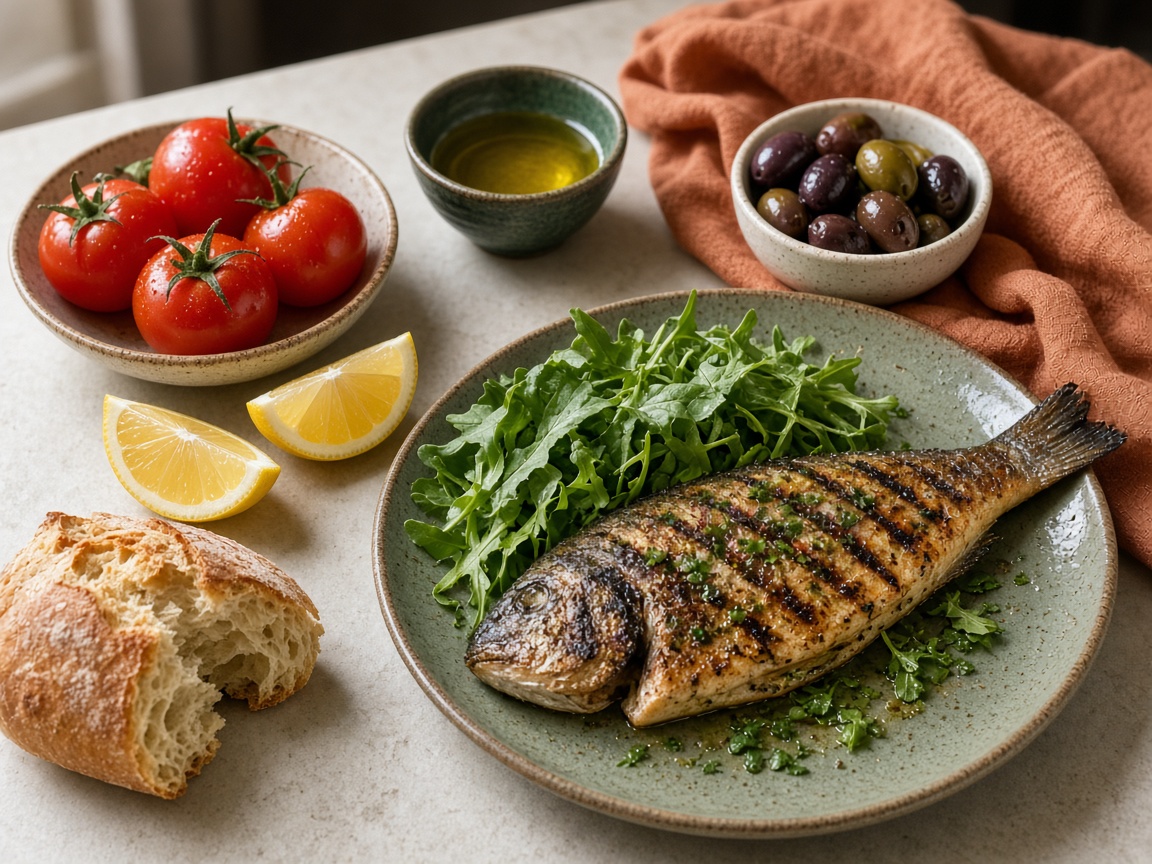
The high-volume plate
Fullness tracks calories, and it also tracks the weight of food, water, and fiber. A volume approach fills the plate with low-density foods and keeps dense foods small.

Energy density
Calories per gram decide how large a meal looks for the same energy. Vegetables, soup, fruit, and low-fat yogurt are low density. Nuts, oil, cheese, chocolate, and biscuits are high. Bread and grains sit in the middle.
A soup before a meal often reduced what people ate next in studies. Not broth magic: volume in the stomach. A cream soup breaks the idea.
How to build lunch
Start with vegetables or soup, then protein, then a known scoop of grain, oil by the spoon and not “poured with feeling.” If dessert is wanted, put it on the table already cut.
Water inside food and water in a glass are different. A glass is useful and does not hold fullness the way a plate of vegetables does. In the bot, water is logged apart.
Where it fails
You can eat a huge virtuous bowl and miss the biscuit beside it. You can drown vegetables in oil and get a dense salad that still looks “correct.” A ScanDish photo catches the second case if the dressing is in the frame.
People with a small appetite, after illness, or while gaining weight can be hurt by a high-volume plate: they fill up too soon and miss energy and protein. Then the plate is built denser on purpose.
The link with a goal
While losing, volume helps a person stay in a deficit without an empty plate. While maintaining, it helps against extra food eaten in passing. While gaining, you loosen it: less empty volume, more measured density.
What this text draws on
- NIH NIDDK: Healthy Weight, Nutrition, and Physical Activity — deficit, maintenance, habits.
- CDC: Losing Weight — pace and behavior steps (not a medical protocol).
- Rolls B. J., Volumetrics — energy density and fullness.
A short paraphrase of open guides and reviews (WHO, national recommendations, peer‑reviewed summaries). Not a quotation and not a treatment protocol.
Short answers
Do you eat only vegetables?
No. Vegetables take space. Protein, fat, and grain stay. Dense foods are simply visible and measured.
Does a smoothie count as volume?
A liquid is drunk faster than a plate is chewed. A smoothie is food, and often denser than it looks.