
DASH while gaining
The DASH plan was studied for blood pressure, and wanting to gain weight does not turn it into permission to eat everything. Fatty meat, sweets, sugary drinks, and sodium stay limited, while energy is sought inside the plan itself.
Not a scheme for fast weight
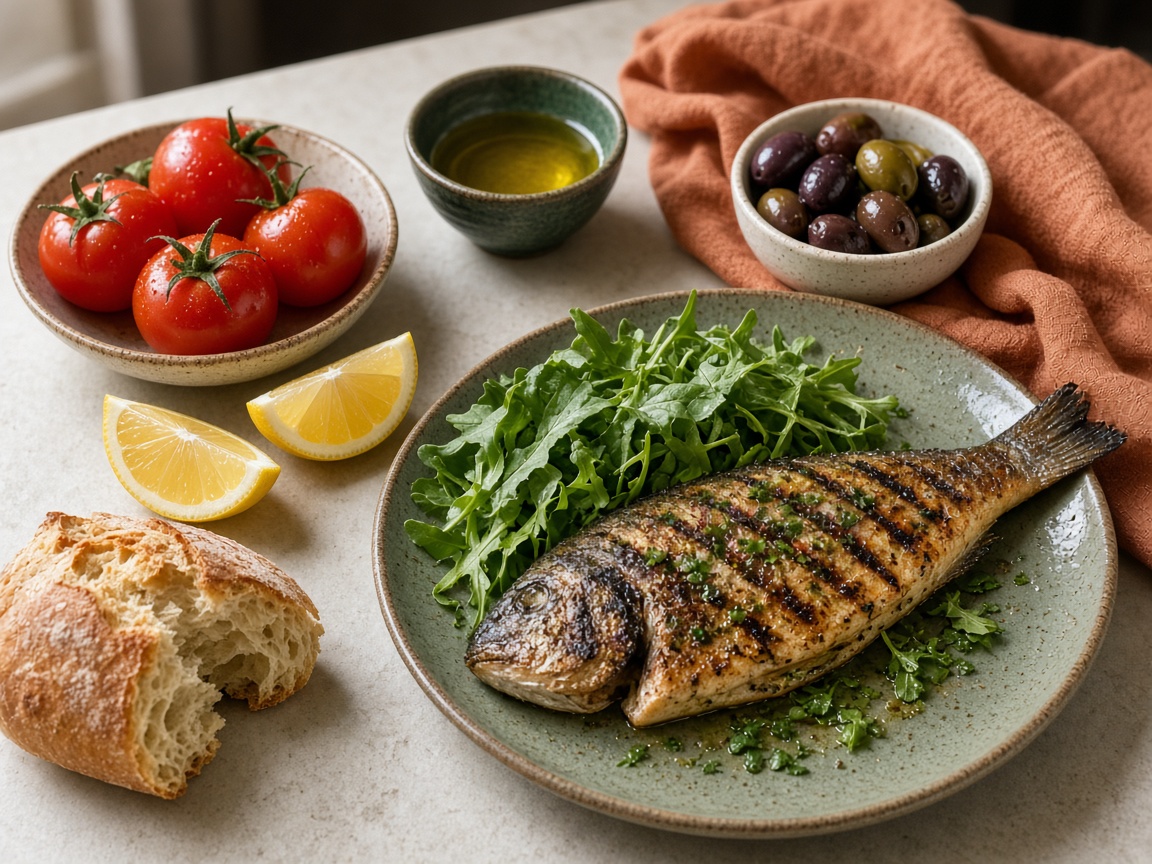
NHLBI describes DASH as vegetables, fruit, whole grains, low-fat dairy, fish, poultry, beans, nuts, and vegetable oils. Less fatty meat, sweets, and sugary drinks. The plan was studied for blood pressure. It is not a crash scheme and not permission to eat everything, and a wish to gain weight does not delete that clause.
The DASH trial, Appel and colleagues, NEJM 1997, compared a pattern higher in vegetables, fruit, and low-fat dairy and lower in saturated fat with a typical American control diet. Blood pressure fell. This article does not give millimeters of mercury. The trial does not hand a person kilocalories “above the plan.”
What does not loosen for an add-on
The plan asks for less fatty meat, sweets, and sugary drinks in a week when the needle is supposed to rise as well. WHO free sugars under 10% of energy say the same thing from another side: a dessert does not become a gain tool merely because DASH was chosen. Salt under 5 g a day does not disappear either, although that is a different unit from the plan’s sodium.
Sodium in the plan itself is 2,300 mg or a 1,500 mg version. This article does not choose the version for a person with high blood pressure and does not convert milligrams into grams of salt. If blood pressure is already being treated, the choice stays with a clinician. A home add-on does not cancel the ceiling the person has already been given.
Where energy sits inside the plan
Vegetable oils, nuts, whole grains, beans, fish, and low-fat dairy are already on the DASH list. The day is made more filling with those, without leaving the fence. Half of grains as whole grains and half the plate as vegetables and fruit match MyPlate and do not require a separate “gain menu.”
That kind of add-on stays food, not a kilocalorie number for everyone. WHO balance does not issue a shared supplement, and DASH does not issue one either. If appetite is small, a spoon of oil and a handful of nuts fit better than a sugary drink, which the plan specifically asks to reduce.
The heart is not postponed until the gain is over
Blood pressure was the point of both the plan and the trial. One cannot first eat “however it goes” and return to DASH once the weight is satisfactory. Saturated fat in the WHO fact sheet is also kept under 10% of energy, and total fat under 30%. Those shares live at the same time as the plan, not in a queue after the gain.
A food log helps show whether the day drifted into fatty meat and a sugary drink while the honest wish was simply to eat more. Two specific goals can be: fish instead of fatty meat, and the vegetable that is already supposed to be on the plate. A setback is expected. Questions about blood pressure and medicines go to a clinician, not to a saltier plate.
What this text draws on
- NHLBI DASH Eating Plan: vegetables, fruits, whole grains, low-fat dairy, fish, poultry, beans, nuts, vegetable oils; less fatty meat, sweets, and sugary drinks; sodium 2,300 mg or a 1,500 mg version. Studied for blood pressure, not as a crash plan and not as permission to eat everything.
- DASH, Appel et al., NEJM 1997: a pattern higher in vegetables, fruit, and low-fat dairy and lower in saturated fat lowered blood pressure compared with a typical American control diet. Do not give millimeters of mercury.
- WHO Healthy diet fact sheet: energy intake in balance with expenditure; fruit and vegetables ≥400 g/day; free sugars <10% of energy (below 5% for further benefit); fat <30%; saturated fat <10%; trans fat <1%; salt <5 g/day; unsaturated fats (fish, avocado, nuts, vegetable oils) preferred to saturated and industrial trans fats.
- Dietary Guidelines for Americans, 2020–2025, and USDA MyPlate: a nutrient-dense pattern shaped by culture and budget; added sugars <10% of calories from age 2; saturated fat <10%; sodium <2,300 mg/day; half the plate fruits and vegetables; half of grains whole; varied protein foods; low-fat or fat-free dairy or fortified soy. Drinking less is better than drinking more; not drinking is an option.
A short paraphrase of open guides and reviews (WHO, national recommendations, peer‑reviewed summaries). Not a quotation and not a treatment protocol.
Short answers
Can a person step out of DASH while gaining?
No. The plan is not permission to eat everything, and it does not become that when the goal is a gain. Fatty meat, sweets, sugary drinks, and sodium stay inside the plan.
Does the DASH trial give a kilocalorie figure for a gain?
No. The trial showed lower blood pressure compared with a typical American diet. This article gives neither millimeters nor an energy add-on.