Sodium 2300 and salt 5 g
Sodium under 2,300 mg a day and salt under 5 g a day are two limits from two documents and in two units. They are not treated as equal, and a goal of gaining weight does not merge them into one “salty allowance.”
Two lines, two measures
The American guidelines keep sodium under 2,300 mg a day. The WHO fact sheet keeps salt under 5 g a day. Milligrams of sodium and grams of salt are not synonyms, and this article does not give a factor to turn one into the other. The reader does not add 2,300 and 5 into a shared total and does not subtract one from the other.
The DASH plan speaks of sodium once more: 2,300 mg or a 1,500 mg version. That is sodium again, not the gram of salt from the WHO sheet. The 1,500 mg version is not “a saltier version of the five” and does not cancel the 5 g line. For a person with high blood pressure, an encyclopedia does not assign the version.
Why they are not glued together
Gluing them would look convenient, one figure for the refrigerator, but the sources are not built that way. Salt in the WHO wording includes what a person adds and what is already in foods, and the threshold is given in grams of salt. Sodium on a label and in the DGA is a separate column in milligrams. Mixing up the headings means counting the wrong column.
Gaining weight is not a bridge between the columns. One cannot say that, for the sake of an add-on, only one of the two lines applies today. Both remain, each in its own text. Both have a heart-related point, but the article does not substitute one for the other and does not declare one “softer for a gain.”
The label speaks per serving
On a label, sodium belongs to a serving, and a package can contain several servings. A labeled serving is not always 100 g. If the pack was eaten and the diary copied only the “per serving” line, the day’s sodium is understated, and the talk of 2,300 mg starts from an error.
Brands differ, and a dry-food row is not a cooked portion, because water changes the weight. That is not a conversion of salt into sodium. It is a separate caution: the grams on the plate should be the grams that were eaten. Otherwise both 5 g of salt and 2,300 mg of sodium are compared with imaginary food.
A filling day inside both limits
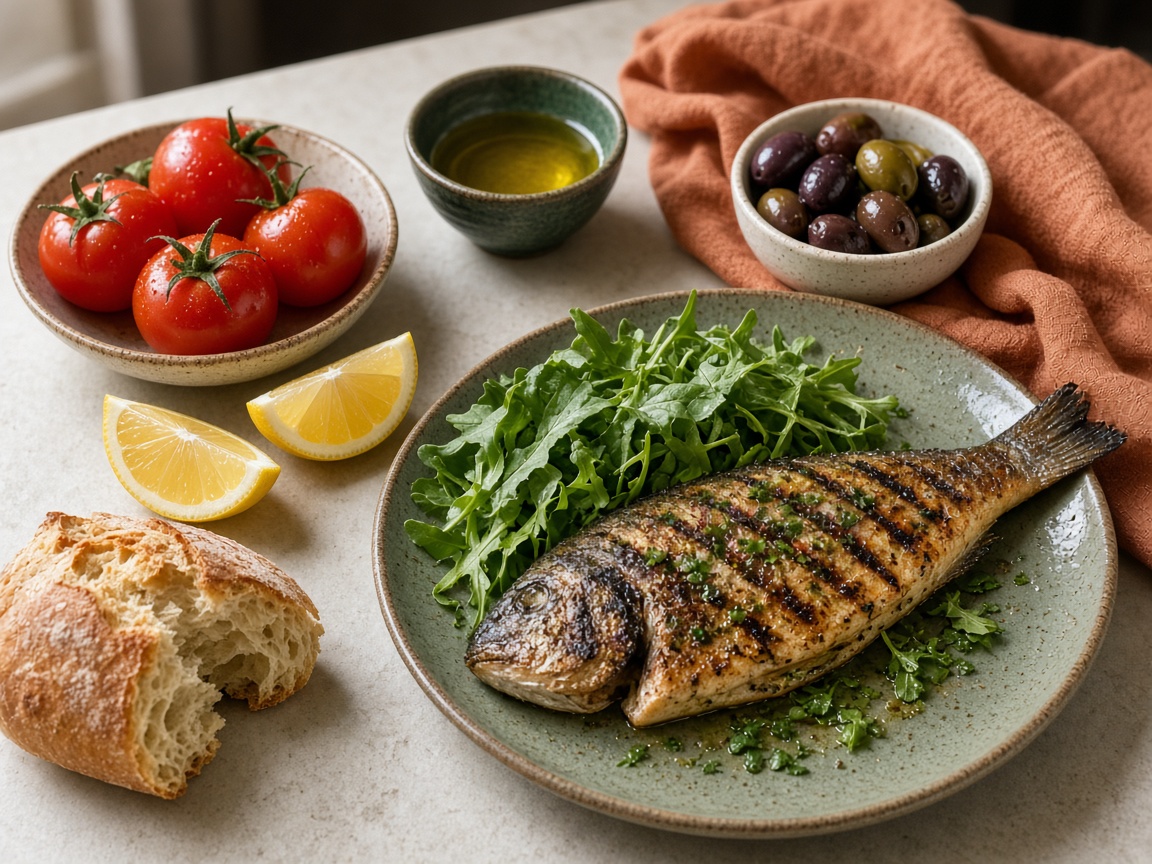
Energy is still added with oil, nuts, grain, and fish, not with a saltier sauce. Sauce, broth, and ready-made meat belong in the log, because the salt in them counts toward 5 g, and the sodium on the label counts toward the talk of 2,300 mg. Those are two checks, not one.
The DASH plan, even without a conversion, asks for less fatty meat, sweets, and sugary drinks. A log of several days shows which ceiling the day touches more often. One salty morning on the scale does not prove that muscle grew, and it cancels neither the grams of salt nor the milligrams of sodium.
What this text draws on
- Dietary Guidelines for Americans, 2020–2025, and USDA MyPlate: a nutrient-dense pattern shaped by culture and budget; added sugars <10% of calories from age 2; saturated fat <10%; sodium <2,300 mg/day; half the plate fruits and vegetables; half of grains whole; varied protein foods; low-fat or fat-free dairy or fortified soy. Drinking less is better than drinking more; not drinking is an option.
- WHO Healthy diet fact sheet: energy intake in balance with expenditure; fruit and vegetables ≥400 g/day; free sugars <10% of energy (below 5% for further benefit); fat <30%; saturated fat <10%; trans fat <1%; salt <5 g/day; unsaturated fats (fish, avocado, nuts, vegetable oils) preferred to saturated and industrial trans fats.
- NHLBI DASH Eating Plan: vegetables, fruits, whole grains, low-fat dairy, fish, poultry, beans, nuts, vegetable oils; less fatty meat, sweets, and sugary drinks; sodium 2,300 mg or a 1,500 mg version. Studied for blood pressure, not as a crash plan and not as permission to eat everything.
- FDA Nutrition Facts: energy is stated per labeled serving; a package can contain several servings. A labeled serving is not always 100 g.
- USDA FoodData Central: guides per 100 g; brands differ. A dry-food row is not a cooked portion, because water changes the weight. Do not use a “rice triples” factor.
A short paraphrase of open guides and reviews (WHO, national recommendations, peer‑reviewed summaries). Not a quotation and not a treatment protocol.
Short answers
Are 5 g of salt and 2,300 mg of sodium the same thing?
No. They are two limits in two units from different documents. This article does not treat them as equal and does not convert one into the other.
While gaining, can a person watch only one of the limits?
No. A gain does not choose which line is off duty today. Salt under 5 g and sodium under 2,300 mg each remain in their own text.