Bread on the plate
Bread is a grain food at the edge of the plate, and a whole-grain slice helps the rule that half the day's grains should be whole. The slice does not cancel the vegetable half, and salt on the label still enters the day's count.

The slice is a grain
A sandwich is easy to take for the whole meal, because the bread holds the filling and fills the hand. In the MyPlate drawing bread remains a grain. Fruit and vegetables are still needed on half the plate and in a sum of at least 400 g a day. A slice, a cucumber, and a cutlet do not build that half if the vegetable is only a transparent round; beside the bread or inside it there needs to be a vegetable that is actually eaten.
Culture and budget may calmly leave bread frequent. The American guidelines do not require it to be replaced with someone else's side dish. They require that grain not eat the other groups. A protein filling takes its own part, and dairy, if it is there, stays its own group; bread does not do their work for them and does not become a vegetable because it is dark.
Whole bread and half the day
The rule that half of grains are whole looks at grain across the day, not at every slice. Whole-grain bread moves that half. White bread remains a grain and does not close the line by itself. A day can mix both, if whole grain really is half of the grain food, with porridge or without it.
Whole bread is also closer to fiber of at least 25 g a day from food than crumb made from white flour. The article does not assign how many grams of fiber are in a particular slice. It speaks about a place. Vegetables, fruit, and beans help the same line beside it, or the bread stays the day's only hope and usually does not carry it; the words whole grain on the bag still have to be checked against what was eaten.
The serving on the label
The FDA states energy per labeled serving, and a package can contain several servings. Eating half a loaf and logging "one serving" means describing the wrong bread. A labeled serving is not always 100 g and not always the slice cut at home. A FoodData Central guide is also per 100 g, and brands differ, so someone else's row does not have to match this loaf.
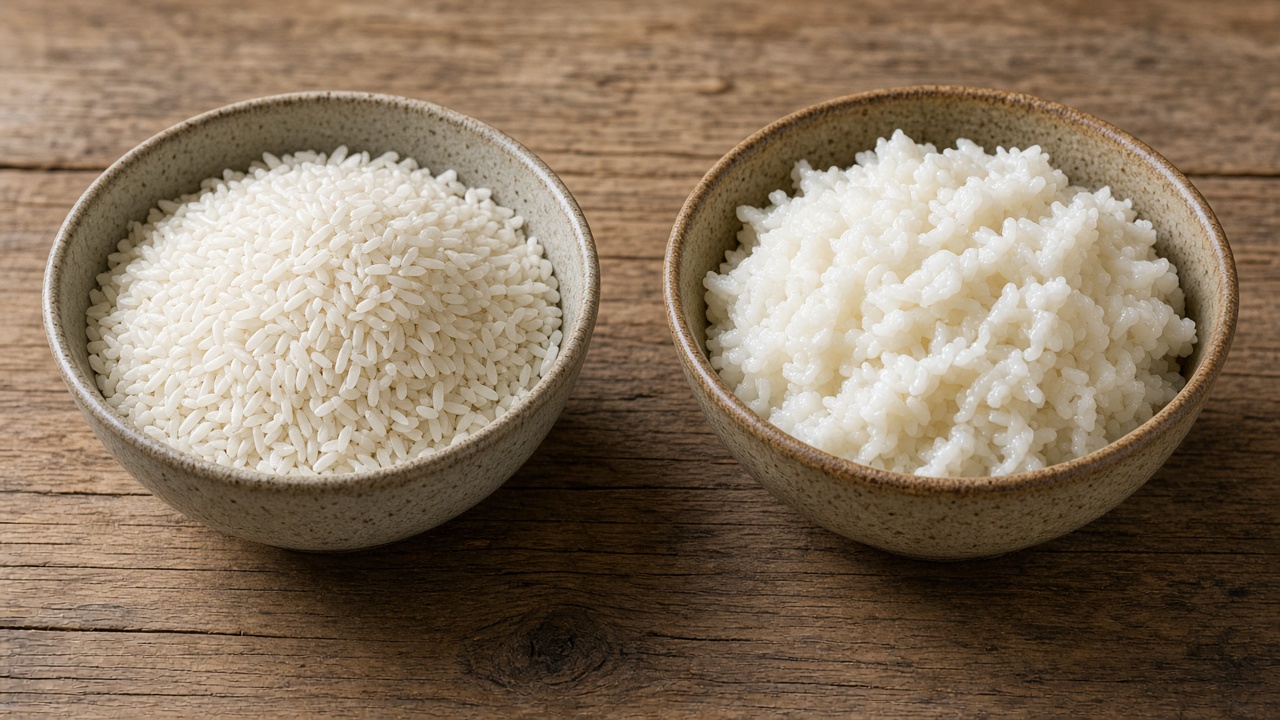
Water and toasting change the weight, even though the name bread stays. A dry-food row is not the food already on the plate, and a factor such as "rice triples" is not used for bread. Toast and a soft slice are compared by what was eaten, not by one convenient database row. Butter on the toast is a separate spoon of fat, not part of the word whole.
Salt in the crumb
Bread often brings salt before the shaker does. That salt belongs to the WHO limit: less than 5 g a day. Sodium on the label belongs to another line, less than 2,300 mg a day in the American guidelines, or to the 2,300 and 1,500 mg versions in DASH. The article does not translate grams of salt in the crumb into milligrams of sodium and does not take the reverse step; a person reads the quantity that is written and calls it by the name it has.
A whole-grain stamp does not erase salt. A sweet bun also spends free sugars under 10% of energy and added sugar under 10% of calories. Fat in the rich dough stays in the share under 30% of energy, saturated fat under 10%. A log of the sandwich therefore includes the bread, the filling, the fat, and the sauce, not the single word snack; a photo in ScanDish stays a draft until the person confirms the meal and the day.
What this text draws on
- Dietary Guidelines for Americans, 2020–2025, and USDA MyPlate: a nutrient-dense pattern shaped by culture and budget; added sugars <10% of calories from age 2; saturated fat <10%; sodium <2,300 mg/day; half the plate fruits and vegetables; half of grains whole; varied protein foods; low-fat or fat-free dairy or fortified soy. Drinking less is better than drinking more; not drinking is an option.
- WHO Healthy diet fact sheet: energy intake in balance with expenditure; fruit and vegetables ≥400 g/day; free sugars <10% of energy (below 5% for further benefit); fat <30%; saturated fat <10%; trans fat <1%; salt <5 g/day; unsaturated fats (fish, avocado, nuts, vegetable oils) preferred to saturated and industrial trans fats.
- WHO carbohydrate guideline, 2023: at least 25 g of fiber a day for adults, from food.
- FDA Nutrition Facts: energy is stated per labeled serving; a package can contain several servings. A labeled serving is not always 100 g.
- USDA FoodData Central: guides per 100 g; brands differ. A dry-food row is not a cooked portion, because water changes the weight. Do not use a “rice triples” factor.
- NHLBI DASH Eating Plan: vegetables, fruits, whole grains, low-fat dairy, fish, poultry, beans, nuts, vegetable oils; less fatty meat, sweets, and sugary drinks; sodium 2,300 mg or a 1,500 mg version. Studied for blood pressure, not as a crash plan and not as permission to eat everything.
A short paraphrase of open guides and reviews (WHO, national recommendations, peer‑reviewed summaries). Not a quotation and not a treatment protocol.
Short answers
Does dark bread automatically cover half of grains?
No. Half the day's grains should be whole, and the color of the crust does not prove that by itself. Look at whether it is whole grain, and whether it is the only grain all day.
Can salt on the bread label be ignored if the shaker stayed shut?
No. Salt in the bread belongs to the limit of less than 5 g a day. This article does not translate milligrams of sodium on that label into grams of salt.