A dry grain and a cooked plate weigh differently
USDA FoodData Central gives guides per 100 g, and brands differ. A dry-food row is not a cooked portion, because water changes the weight. This page does not use a “rice triples” coefficient.
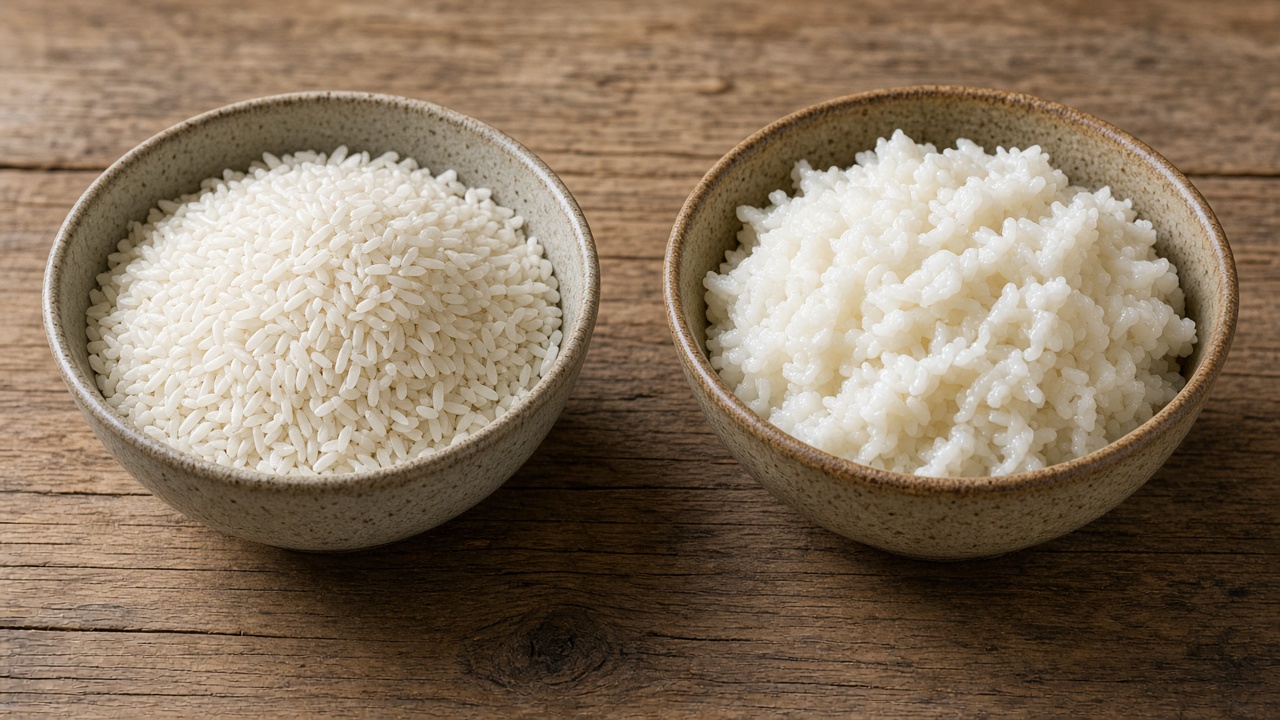
Why 100 g of dry grain is not a plate
There is little water in a dry grain. In the pot, water enters the weight. The same grains eaten after cooking weigh more, and the calories of the grains are not multiplied by the water. If the calories of 100 g dry are applied to 100 g cooked, the plate becomes “heavier” in energy than it really was, or the reverse, if the rows are swapped.
The source forbids exactly this transfer and separately asks not to use a “rice triples” coefficient. Even if rice swelled about threefold in someone’s kitchen, that is not a rule of the database and not a ScanDish multiplier.
Brands and a guide
A guide per 100 g is not the law of a particular pack. Brands differ. An FDA label counts its serving, and that serving is not always 100 g. If the pack says a serving of 40 g of dry grain, that is not 100 g from the database and not a bowl of porridge.
25 g of fiber a day comes from food, not from one row per 100 g. 400 g of vegetables and fruit are not derived from grain either. “100 g in the database” and “the day is closed” cannot be mixed.
How a draft handles this
A photo of porridge in ScanDish stays a draft until the person confirms the meal and the day. The person sees that the plate is already cooked, and should not confirm a dry-product row as if they ate dry grains with a spoon. Confirmation is the moment when the mix-up of a dry and a cooked row can still be corrected.
The bot does not promise to guess the water. A database guide is a guide. The brand in the photo may differ from the row.
The protein and calories of a grain do not become the day’s target
0.83 g of protein per kg is about the day and body weight, not about 100 g of buckwheat. The WHO minute range does not burn the grain. A dry or cooked row does not subtract a workout.
If kidney disease or another clinical reason changes food, a table per 100 g is not more important than a clinician.
What this text draws on
- USDA FoodData Central: guides per 100 g; brands differ. A dry-food row is not a cooked portion, because water changes the weight. Do not use a “rice triples” factor.
- FDA Nutrition Facts: energy is stated per labeled serving; a package can contain several servings. A labeled serving is not always 100 g.
- WHO carbohydrate guideline, 2023: at least 25 g of fiber a day for adults, from food.
A short paraphrase of open guides and reviews (WHO, national recommendations, peer‑reviewed summaries). Not a quotation and not a treatment protocol.
Short answers
Can cooked rice be multiplied by three?
No. The source explicitly asks not to use a “rice triples” coefficient. Water changes the weight, but this page does not give a ready multiplier.
Is 100 g in a photo of porridge the database row?
Only if the person confirmed that the row is about the same form of the food: dry or already cooked. Brands differ, and a draft does not guarantee this by itself.