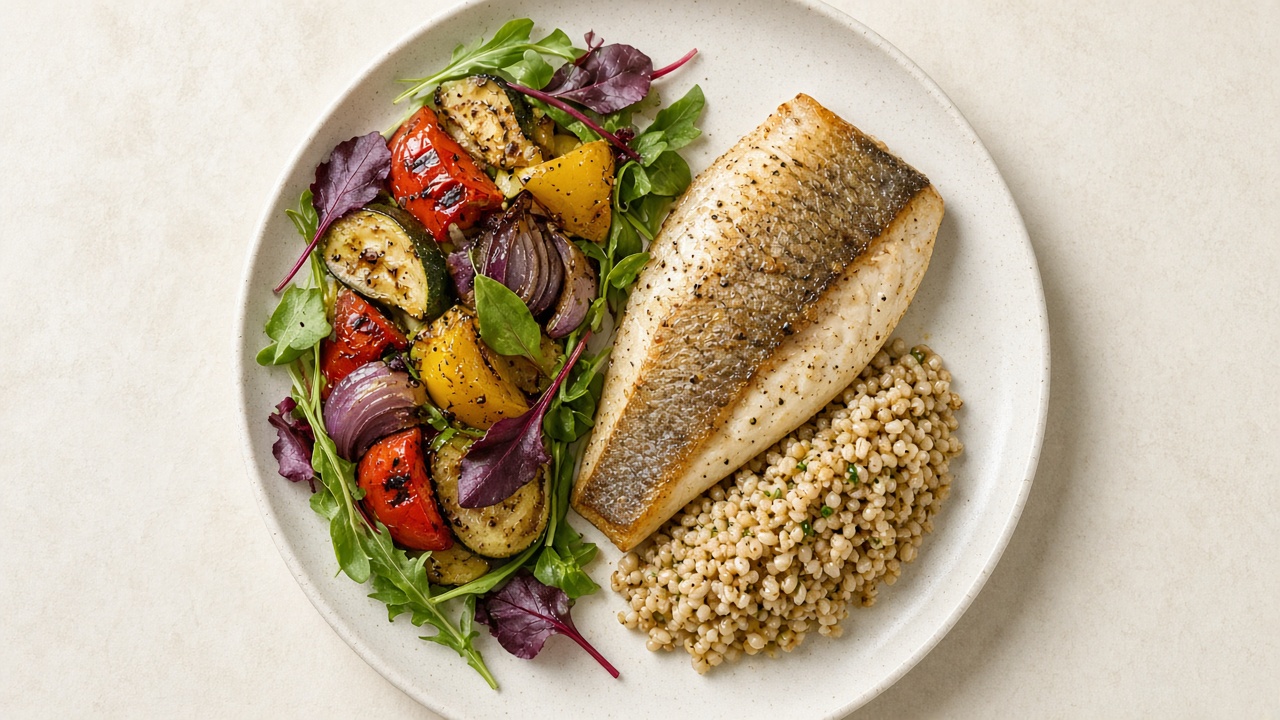
One's own cooking on MyPlate
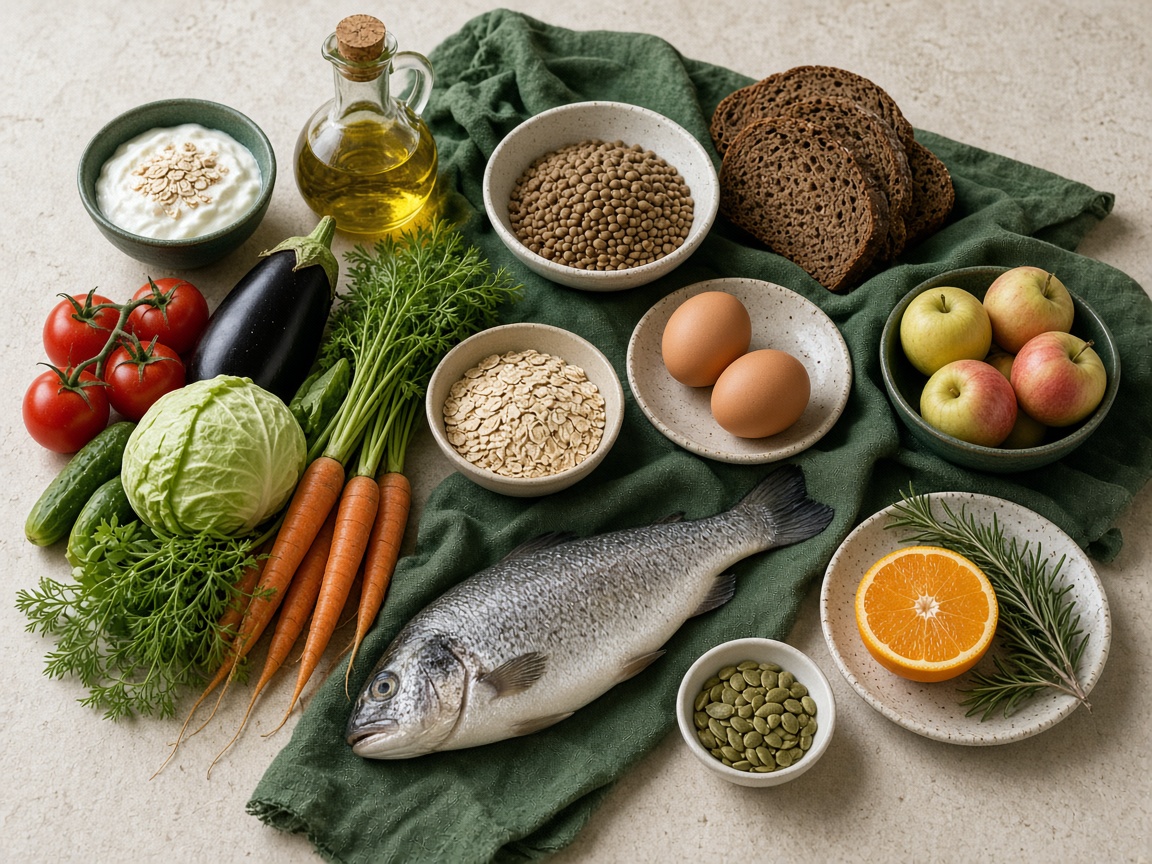
The Dietary Guidelines describe a nutrient-dense pattern shaped by culture and budget, not one foreign way of serving a plate. A stew, a grain with vegetables, and a soup can show the same shares: fruits and vegetables, grain, a protein food, and dairy where it is present.
One pot can still be read
MyPlate draws half the plate as fruits and vegetables, half of grains as whole, protein foods as varied, and dairy as low-fat or fat-free, or as fortified soy. Those shares do not require a plate with dividers. In a soup the vegetables are visible in the broth, the grain sits as its own handful or inside the bowl, and a piece of fish, beans, or meat names the protein food.
When the parts are mixed, they can still be named by group instead of declaring the dish unreadable. A spoon of stew that holds a vegetable, a grain, and beans carries three groups at once. An empty bowl of broth with no vegetable and no protein food does not show those shares, even when the recipe is homemade and loved.
Home cooking does not cancel the limits
Culture in the guidelines is a way to build the pattern from familiar food, not permission to ignore sugar, fat, and sodium. Added sugars stay under 10% of calories from age two, saturated fat under 10%, sodium under 2,300 mg a day. Sour cream, sausage, and a sweet drink in a family recipe enter those shares, even when the dish is called traditional.
The WHO fact sheet says the same thing in its own words. Fruit and vegetables are at least 400 g a day, free sugars under 10% of energy and under 5% for further benefit, total fat under 30%, saturated fat under 10%, trans fat under 1%, salt under 5 g. Unsaturated fats are preferred: fish, avocado, nuts, vegetable oils. A home pie does not argue with that list and does not replace it.
Grain and protein inside a familiar dish
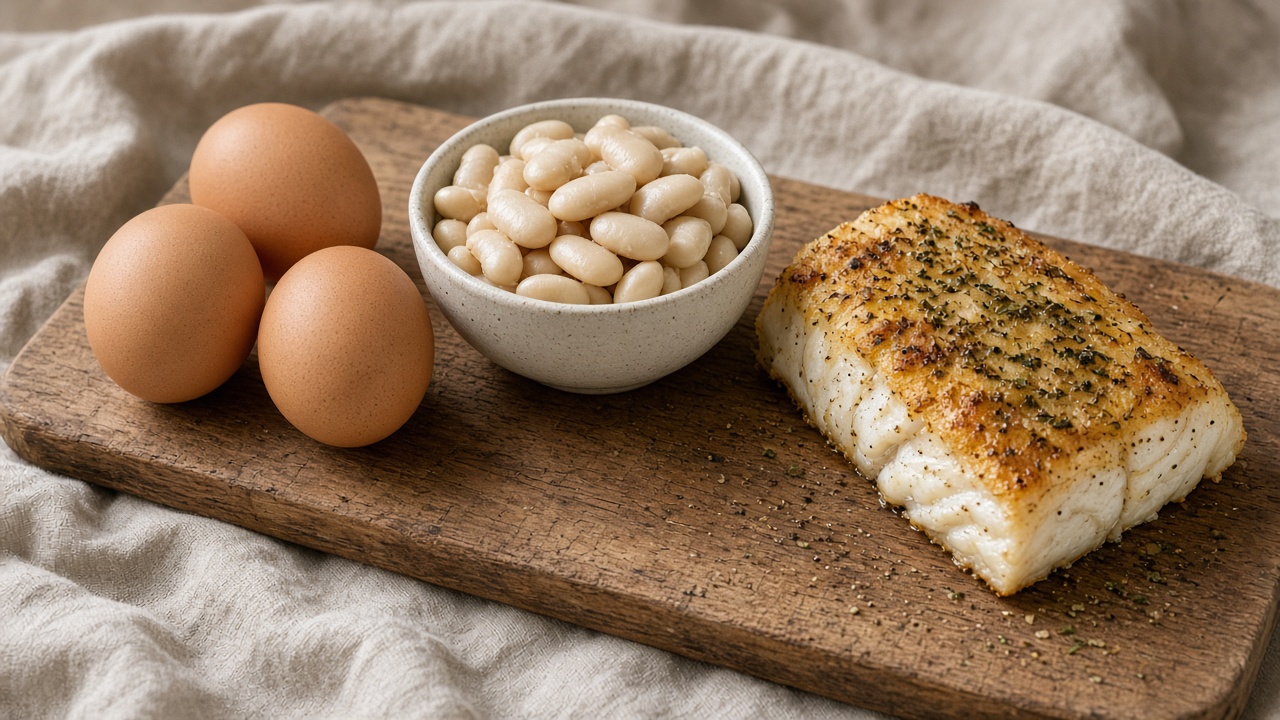
Half of grains across the day are whole, and that is a share of the day, not a duty for every recipe to be only whole grain. A pilaf, a porridge, or noodles can be that grain part if the day also holds a whole option: oats, whole bread, a less refined grain. The guidelines ask for varied protein foods: fish, meat, poultry, eggs, beans, nuts, soy, not the same cut every evening.
The FAO, WHO, and UNU safe protein level for adults is 0.83 g per kg of body weight per day. That is a population guide, not a muscle-gain plan and not a quota for one bowl. Kidney disease changes the figure through a clinician. Home cooking can carry a protein food in a meal a person actually eats without turning the whole pot into meat.
Fiber and half a plate in one bowl
WHO recommends at least 25 g of fiber a day for adults, from food. Vegetables in the soup and a whole grain beside them help that line, but this article does not turn a spoon of stew into grams of fiber. Four hundred grams of fruit and vegetables also do not appear from the label homemade if the pot barely has any.
Half the plate as fruits and vegetables remains a visual way to check the bowl: how much vegetable is there relative to the rest. A fruit can sit apart, after the meal or in the morning, and still enter the day's sum. Home cooking then stays itself and still shows the shares the texts have already named.
What this text draws on
- Dietary Guidelines for Americans, 2020–2025, and USDA MyPlate: a nutrient-dense pattern shaped by culture and budget; added sugars <10% of calories from age 2; saturated fat <10%; sodium <2,300 mg/day; half the plate fruits and vegetables; half of grains whole; varied protein foods; low-fat or fat-free dairy or fortified soy. Drinking less is better than drinking more; not drinking is an option.
- WHO Healthy diet fact sheet: energy intake in balance with expenditure; fruit and vegetables ≥400 g/day; free sugars <10% of energy (below 5% for further benefit); fat <30%; saturated fat <10%; trans fat <1%; salt <5 g/day; unsaturated fats (fish, avocado, nuts, vegetable oils) preferred to saturated and industrial trans fats.
- WHO carbohydrate guideline, 2023: at least 25 g of fiber a day for adults, from food.
- FAO/WHO/UNU, 2007: the safe protein level for adults is 0.83 g per kg body weight per day. A population figure, not a muscle-gain plan. Kidney disease changes it through a clinician.
A short paraphrase of open guides and reviews (WHO, national recommendations, peer‑reviewed summaries). Not a quotation and not a treatment protocol.
Short answers
Does MyPlate require a plate with sections?
No. The sections are a picture of shares. A stew, a soup, and a bowl of grain can show the same groups if the parts can be named.
Does a traditional dish automatically meet the WHO lines?
No. Culture chooses foods and meals, while sugar, fat, salt, and vegetables are checked against the same lines as any other food.