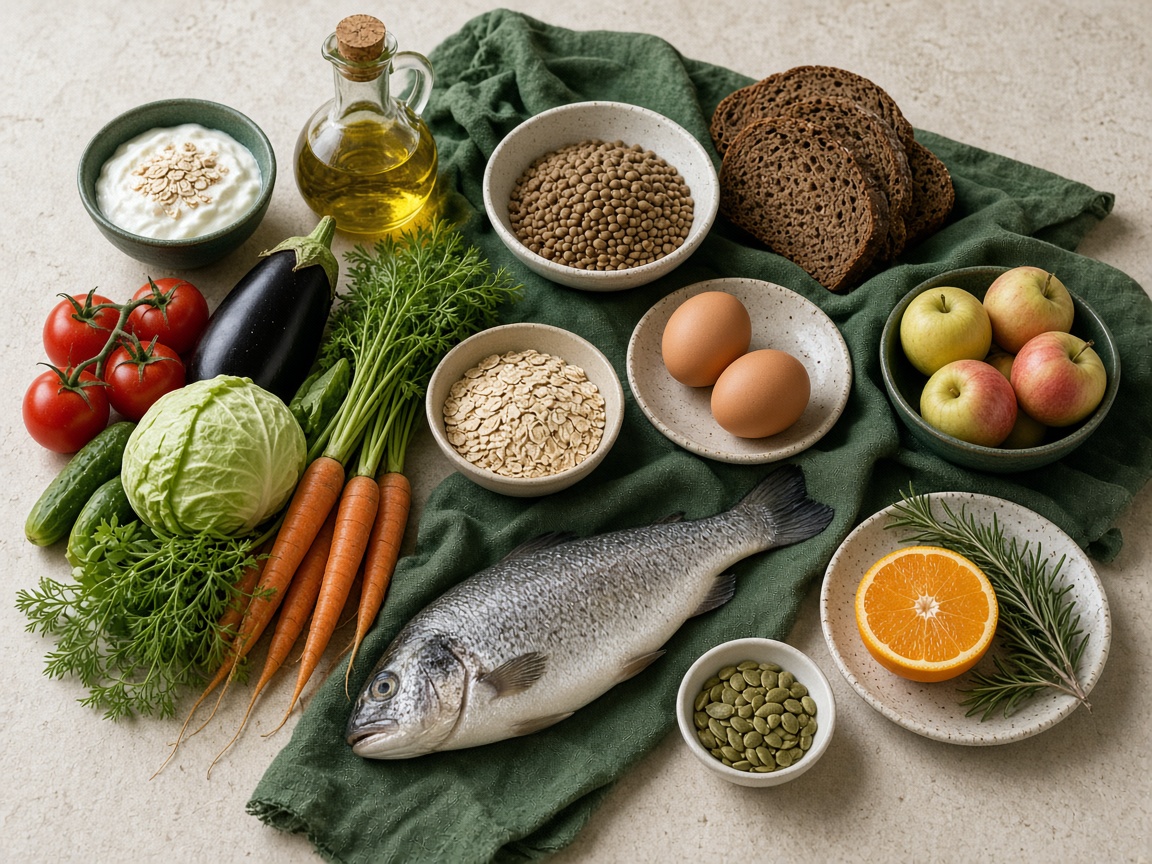
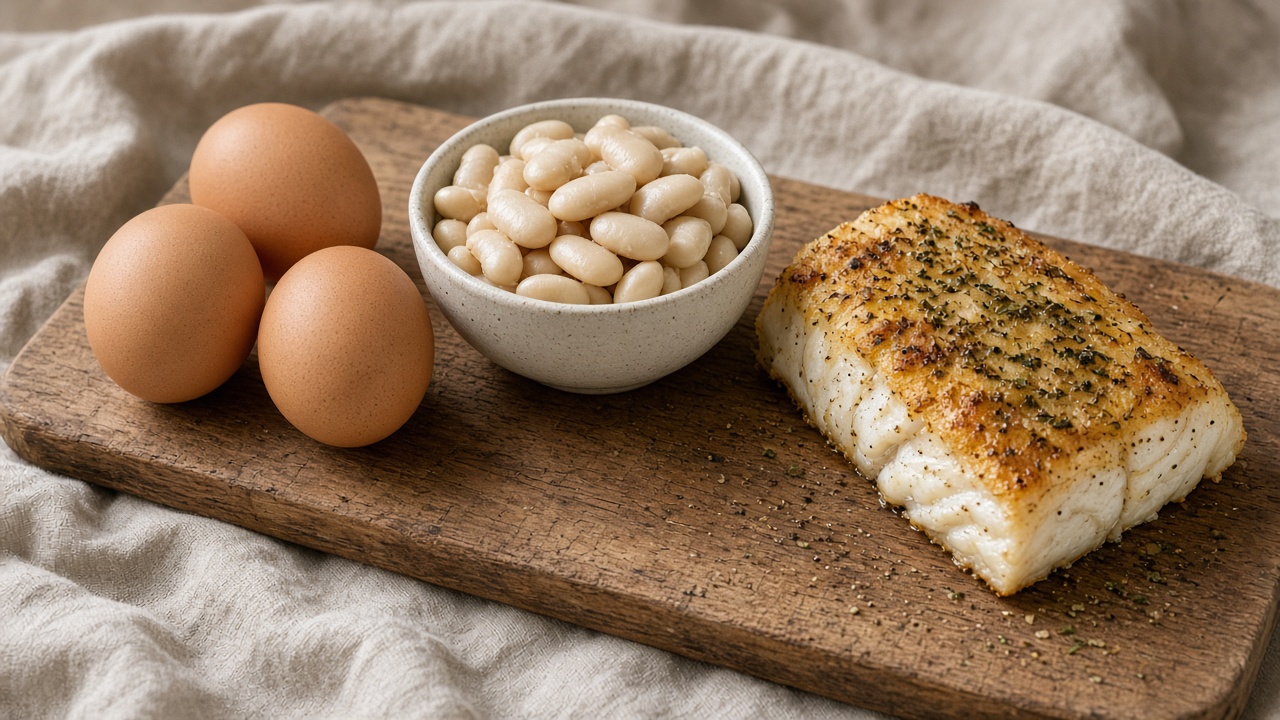
Half the plate is vegetables and fruit, half the grains are whole
MyPlate in the Dietary Guidelines asks that half the plate be vegetables and fruit, and that half of grains be whole. That is a picture of a meal. It does not cancel the day’s 400 g of vegetables and fruit at WHO and is not equal to them one for one.
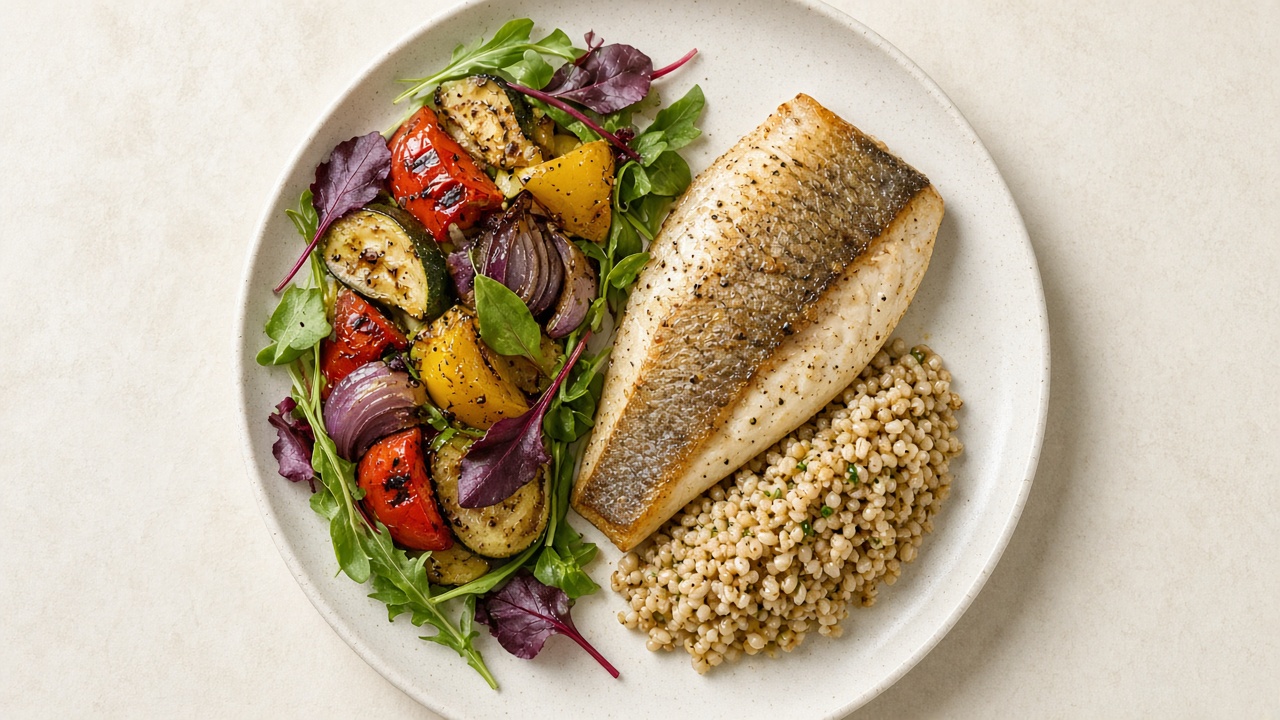
What is drawn on the plate
Vegetables and fruit take half. Grains are a separate share, and half of them are whole. Protein foods are varied. Dairy is low-fat or fat-free, or fortified soy. The picture takes culture and budget into account: nutrient-dense food does not have to be one national plate.
Half is not 400 g. The 400 g at WHO are the lower edge of vegetables and fruit for the day. There can be several such plates in a day, and one “correct” half does not yet close the grams, while a day of several modest vegetable portions can approach the grams even if no plate looked like the diagram.
What the picture does not permit
Added sugars are under 10 percent of calories from age 2. Saturated fat is under 10 percent. Sodium is under 2,300 mg a day. A plate half full of vegetables does not switch off a sugary drink and does not switch off salt. Drinking less is better than drinking more, and not drinking is an option: that is about alcohol in the same guidelines, not about water.
Fat at WHO is limited to 30 percent of energy, saturated fat to 10, trans fat to 1, with a preference for fish, avocado, nuts, and vegetable oils. MyPlate and the fact sheet look in one direction and do not argue for a right to eat “anything on the protein quarter.”
The protein quarter does not become a muscle plan
“Varied protein foods” is about variety of food, not about 0.83 g per kg and not about building muscle. 0.83 g per kg per day is the FAO/WHO/UNU safe level for adults, a population figure, and kidney disease changes it through a clinician. MyPlate does not raise that figure.
Two strength days at WHO are about movement, not about the size of the protein share on the plate. A photo does not join them. A ScanDish draft confirms food after the meal and the day are confirmed and does not know whether there was a strength day.
Fiber and whole grain sit beside each other, not instead
Half of grains as whole grains helps fiber, and the WHO fiber target is at least 25 g a day from food. The whole half of a plate is not declared equal to 25 g. A dry grain and a cooked portion weigh differently, and “rice triples” is not used here.
A vegetable with supper from the CDC examples is a specific goal, one of two or three. It can be a piece of this half plate. It replaces neither 400 g for the day, nor 25 g of fiber, nor the 15 minutes of walking that sit separately in the same example.
What this text draws on
- Dietary Guidelines for Americans, 2020–2025, and USDA MyPlate: a nutrient-dense pattern shaped by culture and budget; added sugars <10% of calories from age 2; saturated fat <10%; sodium <2,300 mg/day; half the plate fruits and vegetables; half of grains whole; varied protein foods; low-fat or fat-free dairy or fortified soy. Drinking less is better than drinking more; not drinking is an option.
- WHO Healthy diet fact sheet: energy intake in balance with expenditure; fruit and vegetables ≥400 g/day; free sugars <10% of energy (below 5% for further benefit); fat <30%; saturated fat <10%; trans fat <1%; salt <5 g/day; unsaturated fats (fish, avocado, nuts, vegetable oils) preferred to saturated and industrial trans fats.
- WHO carbohydrate guideline, 2023: at least 25 g of fiber a day for adults, from food.
A short paraphrase of open guides and reviews (WHO, national recommendations, peer‑reviewed summaries). Not a quotation and not a treatment protocol.
Short answers
Is half a plate the same as 400 g?
No. Half is a picture of a meal in MyPlate. 400 g is the daily lower edge of vegetables and fruit at WHO. One does not stand in for the other.
Does the diagram require full-fat dairy?
No. MyPlate names low-fat or fat-free dairy, or fortified soy.