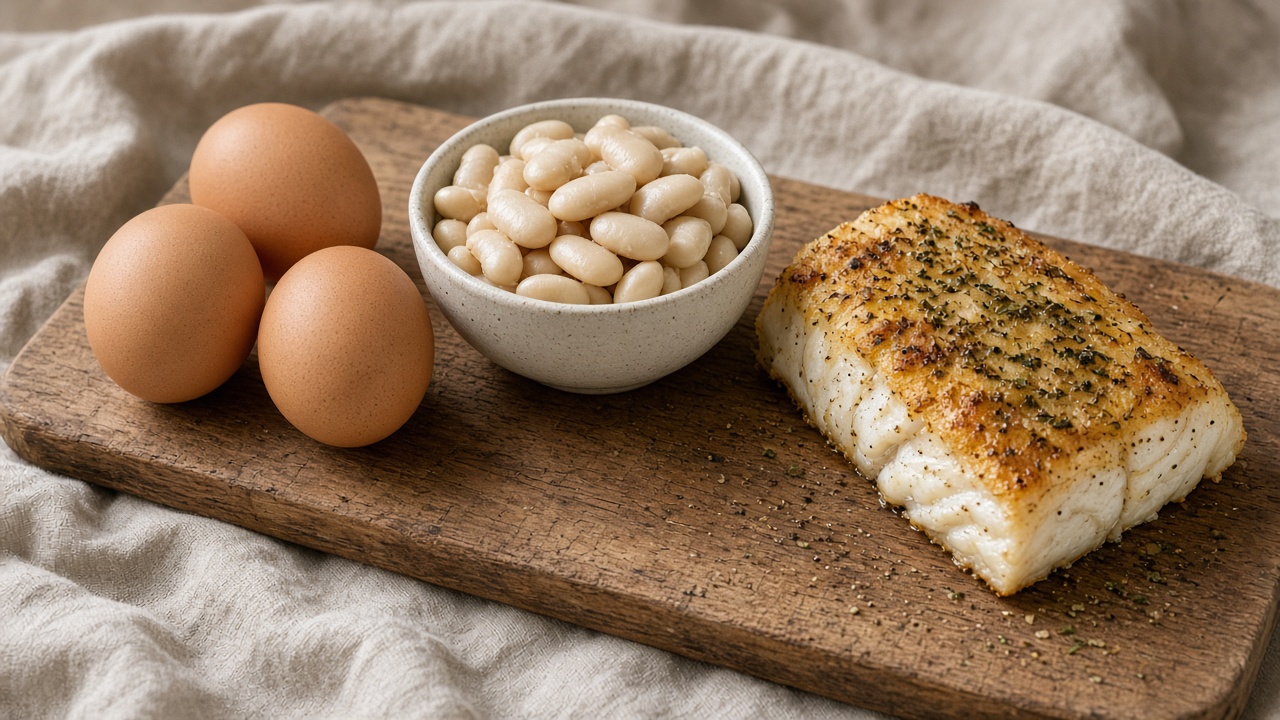
Food energy and expenditure: a balance WHO does not calculate on the plate for you
The WHO healthy-diet fact sheet begins with energy from food in balance with expenditure. It does not publish a ready calorie deficit and does not subtract a walk from supper. Balance here is a frame, not the formula of a day.
What sits beside that first sentence
Next come vegetables and fruit of at least 400 g, free sugars under 10 percent of energy with further benefit below 5, fat under 30 percent, saturated fat under 10, trans fat under 1, salt under 5 g. Balance does not replace these shares and does not permit breaking them “if one walked a lot.”
Expenditure in that sentence is not decoded into steps, METs, and heart rate. Activity minutes live in another fact sheet: 150–300 moderate or 75–150 vigorous. This page will not glue the two fact sheets into “minutes equal the calories of supper.”
The resting estimate is not that balance
Mifflin estimates rest from weight, height, and age and itself makes clear that this is not a measurement of what was eaten. The product’s activity factors and the floors of 1500 and 1200 kcal are ScanDish settings, not the WHO line about balance. They must not be pasted into the fact sheet.
Body mass index is not an energy balance either. It is a screening of weight against height. The category 25 or 30 does not say how much energy was on the plate.
How balance looks in a record
Food is written as food, minutes as minutes, sleep and stress in their own columns. That is what the CDC asks. The WHO balance does not require the four columns to be collapsed into one figure. It requires not pretending that expenditure and the plate are the same thing.
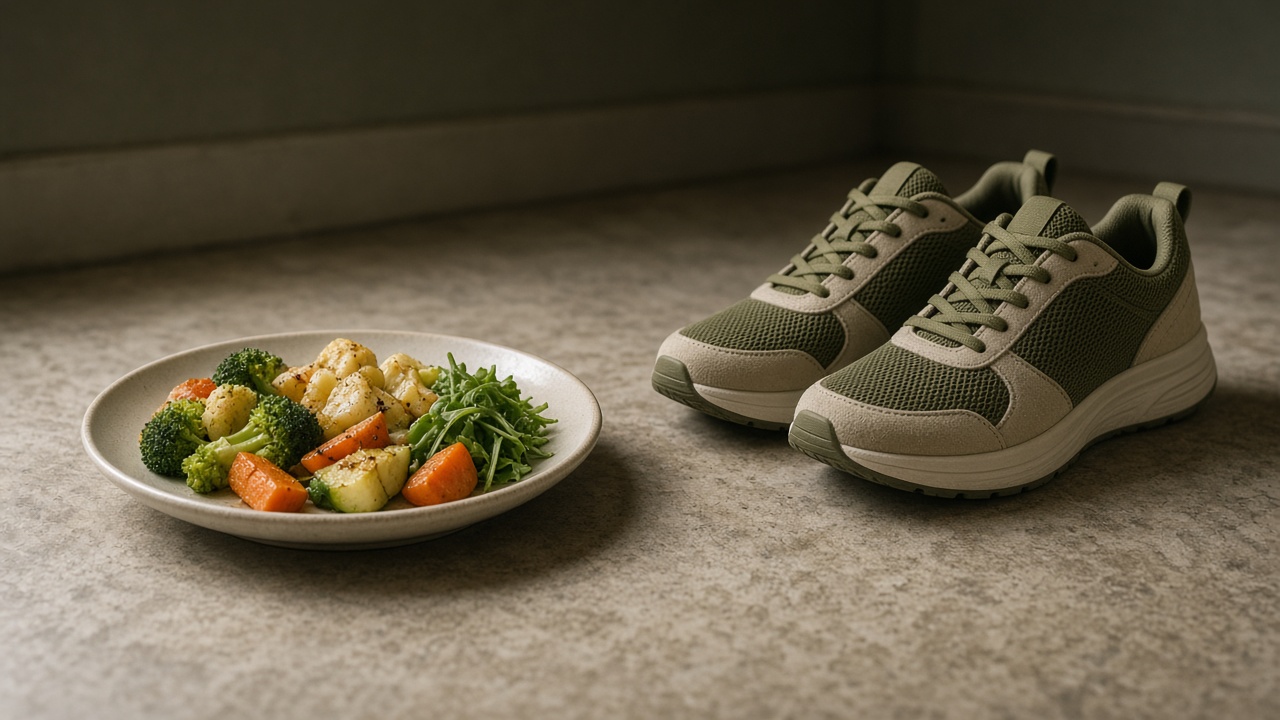
A photo of the plate confirms food after the person confirms it. It does not see expenditure. Shoes by the door are not in the supper frame, and that is honest: they should not become a calorie line.
Balance does not treat and does not shame
Illness, medicines, hormones, and age affect weight according to the CDC page. The fact sheet’s balance does not cancel that list and does not diagnose “you are out of balance” from one day. A setback is expected. The reward is not food.
A question of clinical nutrition stays with a clinician. The first sentence of the fact sheet is not a prescription.
What this text draws on
- WHO Healthy diet fact sheet: energy intake in balance with expenditure; fruit and vegetables ≥400 g/day; free sugars <10% of energy (below 5% for further benefit); fat <30%; saturated fat <10%; trans fat <1%; salt <5 g/day; unsaturated fats (fish, avocado, nuts, vegetable oils) preferred to saturated and industrial trans fats.
- Mifflin M. D. et al., Am J Clin Nutr, 1990; 51(2):241-247: a resting estimate. Men (10 × kg) + (6.25 × cm) − (5 × age) + 5. Women the same with −161 instead of +5. Not a measurement of what was eaten and not a prescription.
- CDC, Steps for Losing Weight (January 17, 2025): a gradual pace of about 1 to 2 pounds a week is more likely to be kept than quicker loss; losing 20 pounds in 2 weeks is the example of an unrealistic goal. Modest loss, CDC’s example: 5% of 200 pounds is 10 pounds, can improve blood pressure, cholesterol, and blood sugar and could lower risk of heart disease, prediabetes, and type 2 diabetes — not a personal guarantee. Log food and drinks, activity, sleep, and stress. Goals are specific, two or three at a time; examples include water instead of a sugary drink, a 15-minute walk, a vegetable with supper. Setbacks are expected. Rewards are not food. Medicines, illness, stress, genes, hormones, environment, and age affect weight. Weight and medicine questions go to a clinician. Medicines and bariatric surgery are clinical options, not DIY.
A short paraphrase of open guides and reviews (WHO, national recommendations, peer‑reviewed summaries). Not a quotation and not a treatment protocol.
Short answers
Does WHO give a calorie deficit?
No. The fact sheet has energy in balance with expenditure, and it has shares of sugar, fat, and salt. A ready calorie deficit is not there, and this page does not write one in.
Does a walk enter the balance as a discount?
Expenditure and food are linked by the frame of balance, but minutes are not subtracted from supper. They are written separately.