What DASH was compared with
In the DASH trial, a pattern higher in vegetables, fruit, and low-fat dairy and lower in saturated fat was compared with a typical American control diet, and blood pressure fell against that background. The meaning of the result sits in the comparison, the page gives no blood-pressure figure, and the NHLBI eating plan remains a separate document.

The name of the control diet
The control in the 1997 NEJM paper by Appel and colleagues was a typical American diet. The comparison pattern had more vegetables, fruit, and low-fat dairy and less saturated fat. The fall in blood pressure is stated against that control, not against an abstract judgment that a person eats badly. Remove the control group from the sentence and what remains is a slogan without an experiment.
A typical American diet is the name of the comparison here, not a moral grade for a country. The page does not write out the control supper dish by dish beyond what the source already named. Inventing the control group’s menu would be fiction. The named contrast between two patterns is enough for the meaning.
What stood on the experimental side
The experimental side is not one supplement and not one ban. It is a pattern: more vegetables, fruit, and low-fat dairy, less saturated fat. The result belongs to that pattern against the typical American control. A single vegetable lifted out of the pattern was not tested on its own.
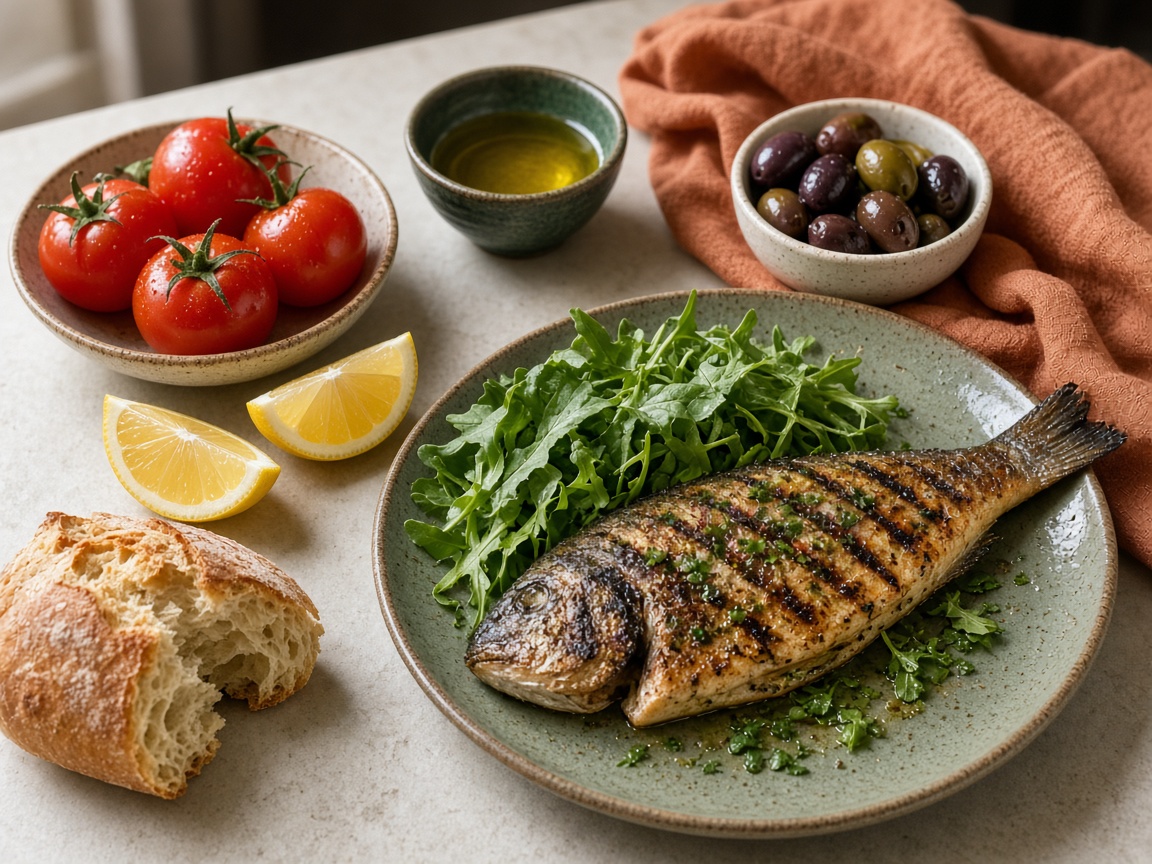
The DASH eating plan published by the NHLBI describes a related set: vegetables, fruit, whole grains, low-fat dairy, fish, poultry, beans, nuts, and vegetable oils, with less fatty meat, sweets, and sugary drinks. The plan was studied for blood pressure. It is not a crash plan and not permission to eat everything. The 1997 paper and the plan share the theme of a food pattern, but they do not collapse into one paragraph.
Which outcome can be spoken
The outcome that can be spoken is that blood pressure fell compared with a typical American control diet. The page does not say how far it moved. Leaving the magnitude out is deliberate: the retelling does not receive a number it was not given. The form of the result stays qualitative: lower in the comparison.
A reader who wants a blood-pressure scale to paste into a personal log will not find it in this article. Supplying a magnitude from memory or from another text would be a new study, and there is no new study here. The honest report is short. An experimental pattern of eating, a typical American control, lower blood pressure on the experimental side, and no number.
Why the comparison stays whole
The phrase “DASH lowers blood pressure,” with no control, sounds like a property of the abbreviation. In the paper the property belongs to a comparison of two patterns. Some people ate the experimental pattern, others ate a typical American control, and blood pressure differed in favor of the experimental pattern. Without the second half, the sentence stops being a report of a trial.
A headline that keeps only the fall in blood pressure throws out the control diet and, with it, the question of compared with what. The NHLBI plan names sodium at 2,300 mg or a 1,500 mg version and answers a question about the shape of a public menu. It does not fill in the missing blood-pressure magnitude from the 1997 paper. The comparison and the plan stand side by side and do not replace each other.
What this text draws on
- DASH, Appel et al., NEJM 1997: a pattern higher in vegetables, fruit, and low-fat dairy and lower in saturated fat lowered blood pressure compared with a typical American control diet. Do not give millimeters of mercury.
- NHLBI DASH Eating Plan: vegetables, fruits, whole grains, low-fat dairy, fish, poultry, beans, nuts, vegetable oils; less fatty meat, sweets, and sugary drinks; sodium 2,300 mg or a 1,500 mg version. Studied for blood pressure, not as a crash plan and not as permission to eat everything.
A short paraphrase of open guides and reviews (WHO, national recommendations, peer‑reviewed summaries). Not a quotation and not a treatment protocol.
Short answers
What was the DASH pattern compared with?
With a typical American control diet. The fall in blood pressure is stated against that diet, not as a property of the abbreviation by itself.
Why is there no blood-pressure number?
Because this retelling does not give the size of the change. It can say that blood pressure fell against the control, and it stops there.