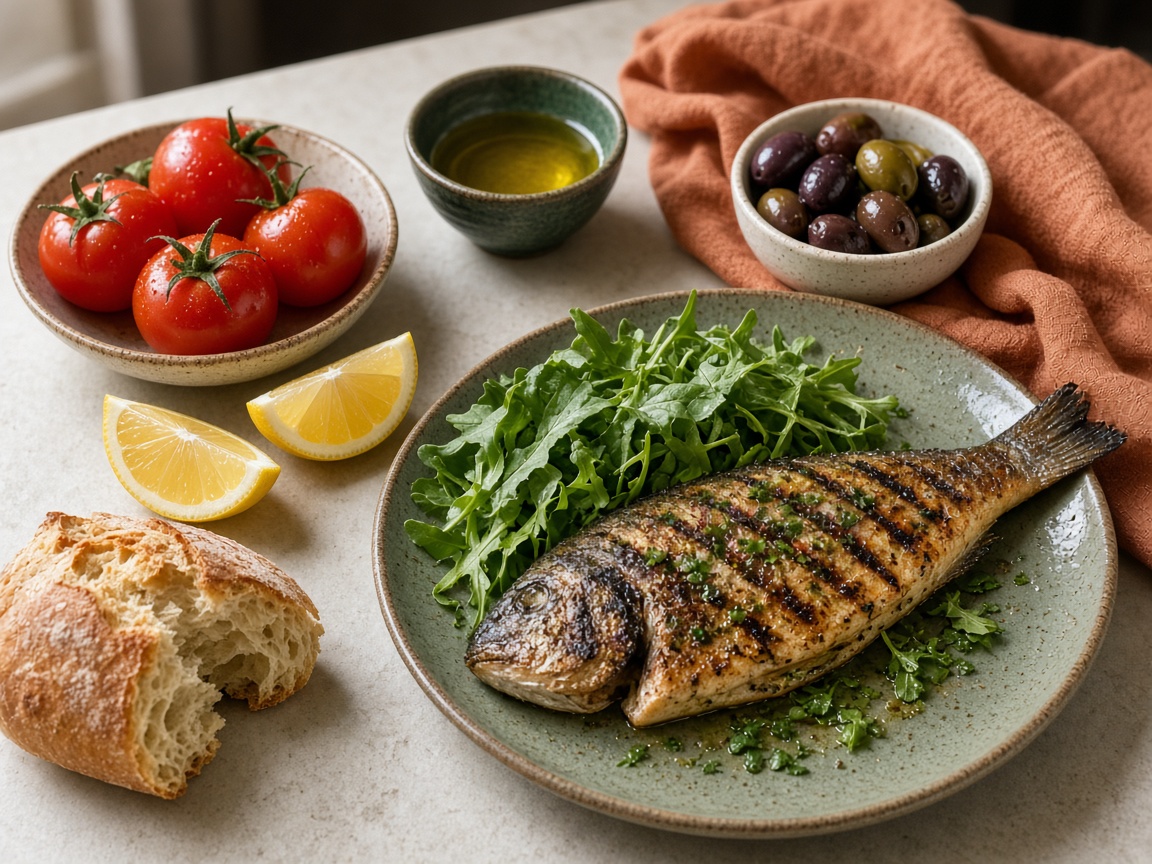
PREDIMED compared a pattern in people who already had high risk
PREDIMED, Estruch and colleagues in NEJM, looked at adults who already had high cardiovascular risk. A Mediterranean pattern with extra-virgin olive oil or with nuts was compared with advice to eat less fat. The Mediterranean groups had fewer major events. It was not a weight-loss trial.
Who was studied
People without high risk do not automatically carry the result onto themselves. This page does not promise “fewer” events to a healthy reader and does not promise them to a person who merely bought a bottle of oil. The subject is a comparison of groups in a trial.
The 2013 paper was retracted and republished in 2018 because of randomization problems. The republication kept the finding of fewer events. This page does not hide that fact and does not inflate it into “the study can be trusted in nothing” or into “the finding became stronger than it was.”
What cannot be read out of the oil
The source asks not to give a percent or a hazard ratio, and this page does not give one. “Fewer events” stays a qualitative wording. Oil and nuts in the trial agree with the WHO preference for unsaturated fats, but the WHO fat shares — to 30 percent of energy, saturated to 10, trans to 1 — are not cancelled by the trial.
Advice to eat less fat was the control, not proof that any fat is harmful. Extra-virgin olive oil in the Mediterranean group was exactly not that advice. Confusing the groups means paraphrasing the trial backwards.
Weight and blood pressure are other texts
The trial did not test weight loss as its task. The pace of 1 to 2 pounds and the example of 5 percent of 200 pounds live at the CDC and are not carried here as a PREDIMED result. DASH is a different trial, about blood pressure, without millimeters of mercury in our paraphrase.
The WHO activity minutes were not assigned by the trial. A workout does not become part of the “Mediterranean group” only because the person walked. Walking is counted separately.
Oil in a photo does not enroll the person in the trial
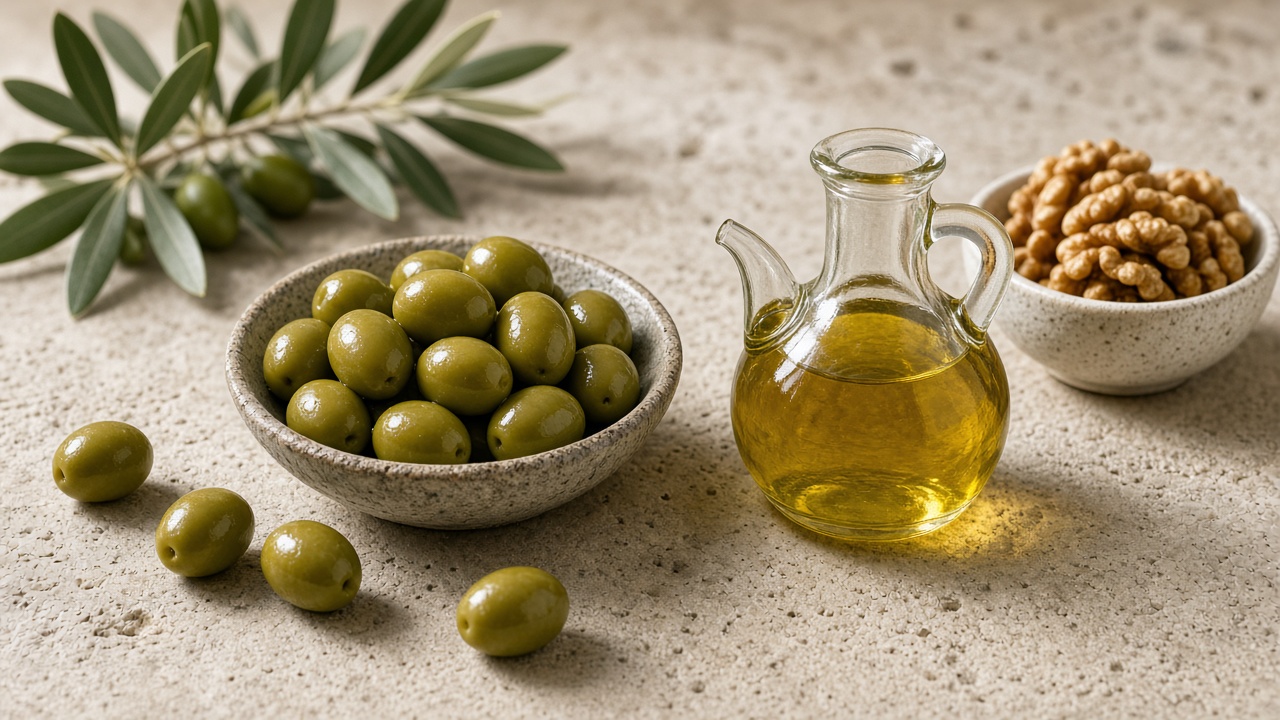
A ScanDish draft confirms food. It does not know cardiovascular risk and does not assign a group. Nuts and oil, if they were there, stay foods in the record, not “completion of PREDIMED.”
High risk is a reason to see a clinician, not to copy the trial alone. This page does not prescribe medicines.
What this text draws on
- PREDIMED, Estruch et al., NEJM: adults who already had high cardiovascular risk. A Mediterranean pattern with extra-virgin olive oil or with nuts was compared with advice to eat less fat. The Mediterranean groups had fewer major cardiovascular events. The 2013 paper was retracted and republished in 2018 because of randomization problems; the republication kept the finding of fewer events. Not a weight-loss trial. Do not give a percent or a hazard ratio.
- WHO Healthy diet fact sheet: energy intake in balance with expenditure; fruit and vegetables ≥400 g/day; free sugars <10% of energy (below 5% for further benefit); fat <30%; saturated fat <10%; trans fat <1%; salt <5 g/day; unsaturated fats (fish, avocado, nuts, vegetable oils) preferred to saturated and industrial trans fats.
- DASH, Appel et al., NEJM 1997: a pattern higher in vegetables, fruit, and low-fat dairy and lower in saturated fat lowered blood pressure compared with a typical American control diet. Do not give millimeters of mercury.
A short paraphrase of open guides and reviews (WHO, national recommendations, peer‑reviewed summaries). Not a quotation and not a treatment protocol.
Short answers
Does PREDIMED prove that oil causes weight loss?
No. It was not a weight-loss trial. Events were compared in people who already had high risk, with no percent and no hazard ratio in this paraphrase.
Can the 2013 retraction be left out?
No. The paper was retracted and republished in 2018 because of randomization. The republication kept the finding of fewer events. Both facts stay in the paraphrase.